 Installation guide
 Owner’s manual
 Error Codes



What are the dimensions of a GE GSD3200J00WW dishwasher?
A GE GSD3200J00WW built-in dishwasher is a standard 24-inch class unit. Most installations for this model type use an opening about 24 inches wide, 34 inches high, and 24 inches deep (not counting the door handle). For the exact cutout and leveling details, use the installation guide.
Typical built-in dishwasher dimensions (what to expect)
These are the measurements most homeowners use for planning cabinet openings and clearances:
- Width: ~24 inches (standard built-in)
- Height: adjustable around ~34 inches (leveling legs)
- Depth: ~24 inches to the front of the door (handle can add extra)
- Toe-kick clearance: varies by cabinet and leveling
- Side clearance: minimal, but allow room so the door opens freely
How to measure your dishwasher correctly
Measure in three places (top, middle, bottom) because cabinets can be out of square.
- Opening width: inside cabinet to inside cabinet
- Opening height: floor to underside of countertop
- Opening depth: back wall to front edge of cabinet frame
| What you are measuring | Measure from | Why it matters |
|---|---|---|
| Cutout width | cabinet side to cabinet side | Ensures the tub fits without binding |
| Cutout height | floor to countertop | Confirms the unit can slide in and level |
| Depth | back wall to cabinet front | Prevents the door from sticking out too far |
Why it matters
Dishwashers like the GE GSD3200 series must be installed so they can be removed later for service, and correct clearances help prevent door rubbing, vibration, and leaks caused by a twisted cabinet opening.
Last updated: February 2026
How do I fix an E4 error on my GE dishwasher?
An E4 error on a GE dishwasher typically points to a water fill or water level problem (overfill, underfill, or a fill that is taking too long). On your GE GSD3200J00WW, start by resetting the cycle, then confirm the incoming hot water supply meets the required temperature and pressure listed in the owner's manual.
Quick fixes to try first
- Press START/RESET to cancel the cycle; wait about 90 seconds for the unit to drain and reset.
- Make sure the door is fully closed and latched before restarting.
- Run the hot water at the sink nearest the dishwasher until it is hot.
- Confirm the hot water temperature is 120°F to 150°F.
- Confirm hot water supply pressure is 20 to 120 PSI.
- If the dishwasher is newly installed or recently serviced, flush the water line to clear debris.
Water supply checks (most common E4 causes)
A restricted or inconsistent water supply is the most common reason a dishwasher throws a fill-related error.
| What to check | What “good” looks like | What to do if it’s not good |
|---|---|---|
| Hot water temperature | 120°F to 150°F | Increase water heater setting (within safe limits) and purge hot water line before starting |
| Water pressure | 20 to 120 PSI | Open the shutoff valve fully; correct kinks or restrictions in the supply line |
| Debris in line | Clean flow | Flush the line into a bucket before reconnecting |
Parts that commonly fix fill or drain-related errors
If the supply checks out and the error returns, a failed valve, drain restriction, or pump issue can trigger water level problems.
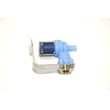
- Water inlet valve: controls water entering the tub (common failure point). Consider the dishwasher water inlet valve WD15X10003.
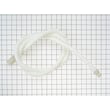
- Drain hose: a kink or partial clog can cause poor draining and false level issues. Inspect the dishwasher drain hose WD24X10014.
- Pump and motor assembly: if the unit cannot circulate or evacuate water correctly, it can contribute to level errors. Check the mechanism WD26X10013.
Why it matters
Fill and water level errors affect cleaning performance and can lead to standing water, poor wash action, or repeated cycle cancellations. Getting the incoming water temperature, pressure, and flow right prevents repeat errors and protects the pump and heater.
Last updated: February 2026
What is the most common problem with a GE dishwasher?
On the GE GSD3200J00WW dishwasher, the most common issue we see is the dishwasher not running or not starting a cycle. In many cases, the cause is simple (power interruption or the cycle needing a reset), but a door-latch or control-related problem can also stop operation.
Quick checks first (fastest fixes)
- Check the home breaker or fuse; reset/replace if needed.
- Make sure the dishwasher door is fully closed and latched.
- Try resetting the cycle using the START/RESET pad (as described in the owner's manual).
- Confirm the unit has power (lights on, or any response when buttons are pressed).
- Listen for a motor hum; a humming motor can point to a start/run issue.
What to check next if it still will not run
If the quick checks do not help, focus on the most common “no-run” causes in this order:
- Power supply problem: loose wiring, failed junction connection, or a tripped breaker that will not hold.
- Door latch not engaging: the dishwasher will not run if it thinks the door is open.
- Control not advancing: some models can appear “stuck” until reset.
- Motor/pump issue: if the motor hums but the dishwasher does not circulate water, the pump and motor assembly can be involved.
If you suspect a circulation problem, the mechanism WD26X10013 is the pump and motor assembly used for wash circulation on this model.
Symptoms and likely causes
| Symptom | What it usually points to | What to do |
|---|---|---|
| No lights, no response | Power supply issue | Check breaker/fuse and power connection |
| Lights on, won’t start | Door latch or control/reset issue | Close door firmly; use START/RESET |
| Hums but won’t wash | Motor/pump not starting or jammed | Inspect for obstructions; consider pump/motor |
| Starts then stops | Intermittent power or control issue | Reset; recheck power stability |
Why it matters
A dishwasher that will not start is often a safety lockout (power or door-latch logic). Doing the quick checks first prevents unnecessary parts replacement and helps you pinpoint whether you have an electrical issue, a latch issue, or a circulation motor problem.
Last updated: February 2026





