Installation guide
 Owner’s manual
 Error Codes


What is the advantage of a bottom mount fridge?
A bottom-mount refrigerator like the Electrolux EI28BS51IS0 keeps the fresh-food compartment at eye and waist level, so you reach everyday items more easily and bend less often. The freezer stays below, which works well when you access refrigerated foods more than frozen foods.
Key advantages in daily use
- Fresh foods are easier to see and grab because shelves sit higher.
- Less bending for common tasks like getting milk, produce, and leftovers.
- Freezer drawers/baskets can hold bulky frozen items and slide out for access.
- Better organization for fresh foods because the main compartment is the most accessible.
- Door sealing and alignment are easier to maintain when the cabinet is level and doors close evenly.
What to expect compared with other refrigerator styles
| Style | Fresh-food access | Freezer access | Best fit for |
|---|---|---|---|
| Bottom mount | Easiest (most-used items up high) | Requires bending | Households that cook often and use fresh foods daily |
| Top freezer | Requires bending more often | Easiest | People who use the freezer most |
| Side-by-side | Moderate | Moderate | Narrow kitchens, frequent freezer access |
Setup tips that help you get the most benefit
A bottom-mount design feels best when the refrigerator is installed and leveled correctly so doors close and seal consistently.
- Leave proper airflow clearance (sides/top and rear) for efficient cooling.
- Place the refrigerator near a grounded outlet; do not use an extension cord.
- If you have an ice maker or dispenser, plan for a cold-water supply line.
- Level the cabinet so it tilts slightly back; this helps doors close on their own.
- Make sure doors can fully open so freezer baskets and drawers slide out completely.
For model-specific installation and leveling guidance, follow the installation guide.
Why it matters
When fresh food is at eye level, you spend less time searching with the door open, which helps temperature stability, reduces compressor run time, and supports better food preservation.
Last updated: February 2026
What is a refrigerator bottom mount?
A bottom-mount refrigerator (like the Electrolux EI28BS51IS0) keeps the freezer on the bottom and the fresh-food section on top, so everyday refrigerated items sit at a more comfortable, eye-level height while frozen foods are stored below.
How a bottom-mount layout is organized
In most bottom-mount designs, you will see these zones:
- Fresh-food compartment on top for milk, produce, leftovers, and condiments
- Freezer drawer or lower door on the bottom for frozen foods and ice storage
- Crispers and deli drawers in the lower area of the fresh-food section
- Door bins and shelves in the upper section for frequent access
For model-specific features and operating details, use the owner's manual.
Why people choose a bottom-mount refrigerator
Bottom-mount refrigerators are built around how most households use a fridge day to day.
- Less bending for fresh foods you grab often
- Better visibility of refrigerated groceries at eye level
- Freezer storage is typically deeper and drawer-based
- Works well for kitchens where the refrigerator is opened frequently
Bottom-mount vs. top-mount: quick comparison
| Feature | Bottom-mount refrigerator | Top-mount refrigerator |
|---|---|---|
| Fresh-food access | Higher, easier reach | Lower, more bending |
| Freezer access | Lower drawer/door | Upper door |
| Best for | Frequent fresh-food use | Frequent freezer use |
| Typical feel | More “kitchen workflow” focused | More traditional layout |
Why it matters
The bottom-mount design affects everyday ergonomics (how often you bend), kitchen clearance needs (door and drawer swing), and installation planning. For example, installation guidance for this style emphasizes allowing doors to fully open and maintaining airflow clearances for proper operation.
Last updated: February 2026
How to fix sy ef code?
The SY EF code on your Electrolux EI28BS51IS0 refrigerator points to an evaporator fan or airflow problem (often the freezer evaporator fan circuit). We fix it by restoring airflow first, then checking the fan, wiring, and temperature sensing so the control can clear the code.
Quick reset and airflow checks (do these first)
- Unplug the refrigerator for 5 to 10 minutes, then plug it back in.
- Make sure the freezer vents are not blocked by food packages.
- Check for heavy frost on the freezer back wall (a defrost issue can stop airflow).
- Listen for the evaporator fan: it should run when the unit is cooling.
- Confirm doors and drawer are sealing; air leaks can create frost and airflow faults.
Parts to inspect on EI28BS51IS0
If the code returns after a power reset, these are the most common items to check.
- Evaporator fan area: look for ice buildup or a fan blade rubbing.
- Fan blade condition: cracks, wobble, or interference.
- Sensor input: a bad temperature sensor can misreport conditions and trigger fan-related errors.
Common replacement parts from this model’s parts list
| Symptom you notice | What it often means | Part to consider |
|---|---|---|
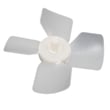
| Fan noise, rubbing, or fan not spinning freely | Damaged or obstructed blade | Refrigerator evaporator fan blade 5308000010 |
| Temps swing, fan runs oddly, code returns | Sensor reading is unreliable | Refrigerator temperature sensor 240597220 |
Door and freezer drawer seal check (prevents repeat errors)
A poor seal can drive frost buildup that restricts airflow and leads to SY EF.
- Inspect the gasket contact all the way around the freezer drawer.
- If the seal is uneven, slightly loosen the drawer screws, square the drawer, then retighten.
- Recheck the seal after tightening.
For the exact leveling and drawer adjustment procedure, follow the installation guide.
Why it matters
The evaporator fan moves cold air through the freezer and fresh food sections. When airflow drops (ice blockage, fan issue, wiring, or sensor input), temperatures rise and the control can post SY EF to protect cooling performance.
Last updated: February 2026
What is the life expectancy of an Electrolux refrigerator?
Electrolux refrigerators typically last 10 to 15 years. For your Electrolux EI28BS51IS0 bottom-mount refrigerator, routine care (keeping temperatures set correctly, maintaining door seals, and staying on top of airflow and filtration) helps you reach that normal service life; see the EI28BS51IS0 owner's manual for model-specific care and operating guidance.
Typical lifespan and what affects it
Most refrigerators fail early for a few predictable reasons. These are the biggest factors we see:
- Door seal condition (warm air leaks force longer run times)
- Condenser airflow (dust buildup raises operating temperatures)
- Stable temperatures (frequent warm-ups shorten compressor life)
- Water and ice system upkeep (clogs and leaks create secondary damage)
- Timely small repairs (a noisy fan or bad sensor can snowball into cooling problems)
Maintenance that extends life (high impact)
Use this checklist to keep an EI28BS51IS0 running efficiently year after year:
- Keep the refrigerator and freezer set to safe, steady temps; allow 24 hours after changes for temperatures to stabilize.
- Confirm doors close squarely and seals contact the cabinet on all sides.
- Clean dust from the condenser area periodically (frequency depends on pets and dust).
- Replace filtration on schedule to keep airflow and water flow normal.
- Address unusual noises promptly (often fans, ice maker components, or loose panels).
Parts that commonly support long life
These are common “wear” items that help prevent odor, airflow restriction, and temperature swings:
| What you maintain | What it helps prevent | Example part for EI28BS51IS0 |
|---|---|---|
| Air filtration | Odors and stale air | Air filter EAFCBF |
| Water filtration | Slow dispensing, taste/odor issues, sediment | Refrigerator filter EWF01 |
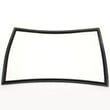
| Door sealing | Warm air leaks, frost, long run times | Refrigerator door gasket 5304537408 |
Why it matters
A refrigerator that runs longer and hotter than necessary (often from a leaking gasket or restricted airflow) puts extra load on the sealed system. Keeping seals tight and temperatures stable is the simplest way to protect the compressor and cooling components.
Last updated: February 2026
How many cubic feet is a 28 in wide refrigerator?
A 28-inch-wide refrigerator is usually 16 to 20 cu. ft. total, but width alone does not determine capacity. Your Electrolux EI28BS51IS0 is a larger French door, bottom-mount design; confirm its exact total and compartment capacities in the EI28BS51IS0 owner’s manual.
Typical capacity by 28-inch width (what most shoppers see)
Most 28-inch-wide models are built as space-saving units, so capacity commonly falls in these ranges:
- Top-freezer: 14 to 18 cu. ft.
- Bottom-freezer: 16 to 20 cu. ft.
- Counter-depth French door (narrow): 16 to 20 cu. ft.
- Standard-depth French door (some models): 20+ cu. ft.
Why your model can be much larger than the “typical” range
Two refrigerators can both be “about 28 inches wide” and still have very different cubic feet. Capacity increases when the cabinet is deeper and taller, and when the interior layout is optimized.
Key factors that change cubic feet at the same width:
- Depth class (counter-depth vs. standard-depth)
- Overall height and hinge design
- Insulation thickness and door construction
- Ice maker and dispenser taking interior space
- Air ducting and evaporator cover size
Quick comparison table
| Refrigerator style (about 28 in wide) | Typical total capacity | What usually drives the difference |
|---|---|---|
| Top-freezer | 14 to 18 cu. ft. | Shorter cabinet, simpler doors |
| Bottom-freezer | 16 to 20 cu. ft. | Taller cabinet, larger fresh-food section |
| French door (counter-depth) | 16 to 20 cu. ft. | Reduced depth for flush fit |
| French door (standard-depth) | 20+ cu. ft. | Deeper cabinet increases volume |
Why it matters
Cubic feet helps compare storage, but fit and airflow clearance matter just as much for performance. Use the EI28BS51IS0 installation guide to plan ventilation space, water line routing, and full door swing.
Last updated: February 2026