Error Codes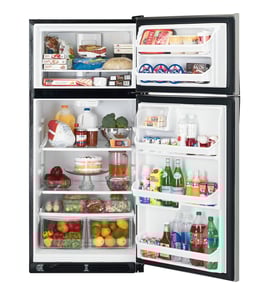



Is 1 or 5 coldest on a Hotpoint fridge?
On a Hotpoint top-mount refrigerator like model CTX14CYTDRWH, 5 is the coldest and 1 is the warmest. For most kitchens, a mid-range setting (around 3) keeps fresh food cold without freezing items in the refrigerator section.
How to choose the right setting
Use the dial number as a starting point, then fine-tune based on actual food temperature.
- Start at 3 and wait 24 hours for temperatures to stabilize
- Move toward 5 if food is not staying cold enough
- Move toward 1 if items in the refrigerator section are freezing
- Keep the refrigerator 2/3 full for steadier temperatures
- Avoid blocking air vents with large containers
Target temperatures (what “cold enough” means)
A setting number is only a guide; food safety depends on the actual temperature.
| Compartment | Recommended temperature | Quick check |
|---|---|---|
| Refrigerator section | 37°F to 40°F | Milk and deli items stay consistently cold |
| Freezer section | 0°F | Ice cream stays firm, not soft |
Why it matters
If the control is set too warm, food spoils faster and the freezer may struggle to hold 0°F. If it is set too cold, you can get frozen produce, excess frost, and longer run times that waste energy.
If the setting is correct but temperatures are still off
These issues are common on top-mount refrigerators and can mimic a “bad temperature control.”
- Dirty condenser coils (poor heat release)
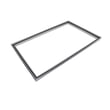
- Door not sealing (warm air leaks); check the refrigerator freezer door gasket (white) WR24X10228
- Frost buildup from a defrost problem
- Fan or airflow issues between freezer and fresh-food section
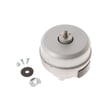
For step-by-step airflow troubleshooting, use how to fix your evaporator cooling fan.
Last updated: January 2026
What is the difference between top mount and bottom mount refrigerators?
A top-mount refrigerator like the Hotpoint CTX14CYTDRWH has the freezer on top and the fresh-food section below; a bottom-mount flips that layout. The biggest day-to-day difference is ergonomics: bottom-mount designs put refrigerated items at eye level, while top-mount designs make freezer access easier.
Quick comparison
| Feature | Top-mount refrigerator | Bottom-mount refrigerator |
|---|---|---|
| Freezer location | Top | Bottom |
| Most-used section (fresh food) | Lower, requires more bending | Higher, easier to reach |
| Freezer access | Easier to see and reach | Often requires bending |
| Typical cost and complexity | Usually simpler, often lower cost | Often more features, higher cost |
| Storage style | Traditional shelves and bins | Often wider fridge area, freezer drawers |
How to choose for your kitchen and habits
- Choose top-mount if you use the freezer often, want a simpler layout, or prefer a more traditional design.
- Choose bottom-mount if you use fresh food most and want less bending for everyday items.
- Measure door swing and aisle clearance; freezer drawers on bottom-mount units need space to pull out.
- Consider who uses it most; kids often reach the lower fresh-food section more easily on top-mount models.
- Think about organization; bottom freezers are commonly drawer-based, while top freezers are typically shelf-based.
Why it matters
The layout affects comfort, visibility, and how you organize groceries. For example, if you are frequently opening the refrigerator section (milk, produce, leftovers), a bottom-mount can reduce bending. If you rely on frozen foods daily, a top-mount keeps the freezer at a more convenient height.
Related repair and maintenance tip
If you are comparing styles because of temperature performance or energy use, start with basic maintenance first: good door sealing and airflow matter on both designs. A worn gasket can cause longer run times and temperature swings; for this model, the refrigerator freezer door gasket (white) WR24X10228 is a common sealing part.
Last updated: January 2026
What are the advantages of a top mount fridge?
A top-mount refrigerator like the Hotpoint CTX14CYTDRWH keeps the fresh-food section at a comfortable height, typically costs less to buy and run than many bottom-freezer styles, and uses a simple, proven layout that’s easy to organize and service.
Key advantages you’ll notice day to day
- Easy access to fresh foods: the refrigerator compartment is at eye and waist level.
- Often better value: top-mount designs are commonly more budget-friendly.
- Simple airflow and controls: fewer complex features can mean easier troubleshooting.
- Good capacity for the footprint: many top-mounts offer strong usable fridge space.
- Straightforward maintenance: common wear items (like door gaskets and light parts) are easy to identify.
Top-mount vs. bottom-freezer: quick comparison
| Feature | Top-mount refrigerator | Bottom-freezer refrigerator |
|---|---|---|
| Fresh-food access | Higher, more convenient | Lower, more bending |
| Freezer access | Higher, less bending | Lower drawer, easier for bulk items |
| Typical cost | Lower | Higher |
| Complexity | Often simpler | Often more features |
What to check if you’re choosing (or optimizing) a top-mount
- Measure your kitchen opening and door swing clearance.
- Confirm shelf and bin layout fits how you store groceries.
- Keep door seals clean and sealing evenly; a worn gasket wastes energy.
- Set temps for food safety: 37°F to 40°F fresh food, 0°F freezer.
- If the interior light is out, use the correct bulb type and wattage.
Why it matters
Top-mount refrigerators are popular because they balance convenience, efficiency, and cost. If you keep the doors sealing well and the temperatures set correctly, a top-mount like the CTX14CYTDRWH delivers reliable everyday performance.
If you’re dealing with warm temps or moisture around the doors, start by inspecting the gasket, such as the refrigerator freezer door gasket (white) WR24X10228.
Last updated: January 2026
How to reset Hotpoint CTX14CYTDRWH fridge freezer?
To reset a Hotpoint CTX14CYTDRWH top-mount refrigerator, we power-cycle it: turn both temperature controls to Off (or the lowest setting), unplug the refrigerator for about 15 minutes, then plug it back in and restore your normal settings. This clears many control and cooling “glitches.”
Reset steps (safe power-cycle)
- Turn the fresh food and freezer controls to Off (or the warmest/lowest setting available).
- Unplug the refrigerator from the wall outlet.
- Wait 15 minutes.
- Plug the refrigerator back in.
- Set controls back to normal and allow 24 hours for temperatures to stabilize.
What to check if it still is not cooling right
A reset helps when the control is “stuck,” but it will not fix airflow, frost, or sealing problems. Check these common causes:
- Door not sealing; inspect the gasket for gaps, tears, or warping.
- Heavy frost on the freezer back wall (defrost system issue).
- Warm refrigerator section but freezer is cold (airflow/evaporator fan issue).
- Condenser area clogged with dust (poor heat release).
- Interior light staying on (can warm the compartment).
Parts that commonly relate to “reset” symptoms
If you find a specific failure while troubleshooting, these model-matched parts are commonly involved:
| Symptom you see | Common suspect | Example model-matched part |
|---|---|---|
| Door won’t seal, moisture/frost | Door gasket | Refrigerator freezer door gasket (white) WR24X10228 |
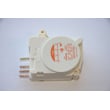
| Frost buildup, warming temps | Defrost control | Refrigerator defrost control WR9X502 |
| Light stays on or flickers | Door switch or bulb/socket | Light switch WR23X37285, terminal socket WR2X9391, 40A15/22 40A15 |
Why it matters
A proper reset restores normal operation after a brief power interruption or control hiccup, but stable temperatures depend on good door sealing, correct airflow, and a working defrost system. If food safety is a concern, verify temperatures with a thermometer.
Last updated: January 2026