Installation guide
 Owner’s manual
 Error Codes




What's the average cost to install a gas stove?
For a GE PGB975SEM1SS gas range, the average installed cost is typically $200 to $600 when you are swapping in a new range to an existing, code-compliant gas shutoff and outlet. If a new gas line, shutoff valve, venting changes, or permits are needed, total cost commonly rises to $800 to $3,500+.
Installation pricing is mostly about the gas supply setup and any required code work, not the range itself.
- Existing gas line and shutoff already in place (lowest cost)
- New gas line run or resizing (often the biggest add-on)
- Permit and inspection requirements (varies by location)
- Electrical outlet or grounding corrections (ranges must be properly grounded)
- Haul-away and disposal of the old range
- LP conversion (if you are switching to propane, conversion must be done by a qualified installer)
| Scenario | What’s included | Typical total cost |
|---|---|---|
| Simple replacement hookup | Disconnect old range, connect new flexible connector, leak test, level | $200 to $600 |
| Moderate install | Minor gas line adjustments, new shutoff/connector, basic corrections | $600 to $1,200 |
| New gas line or major changes | New line run, permits, inspection, carpentry or flooring work | $800 to $3,500+ |
The installation instructions for this range call out several items that can affect labor and materials.
- Installation must follow local codes and the National Fuel Gas Code (ANSI Z223.1/NFPA 54)
- Use a NEW flexible connector; never reuse an old one
- Plan for a gas shutoff valve, pipe joint sealant or approved thread tape, and leak-check solution
- Gas supply pressure must be correct (natural gas and LP have different requirements)
For the exact requirements and tool list, use the installation guide.
A correct hookup helps prevent gas leaks, ignition problems, and poor burner performance. It also reduces the chance of nuisance issues like weak flames or an oven that will not heat consistently.
Last updated: February 2026
Can I still use a gas stove without electricity?
Yes. On the GE PGB975SEM1SS gas range, you can use the surface burners during a power outage by lighting them with a match, but the oven and broiler will not operate because this model uses electric ignition and safety controls that require power (see the owner's manual).
- Surface burners: Work with manual lighting.
- Oven bake burner: Will not light or run without electricity.
- Broil burner: Will not light or run without electricity.
- Oven controls/ignition system: Require electrical power on this electric-ignition range.
| Function | Works without electricity? | Notes |
|---|---|---|
| Cooktop surface burners | Yes | Light carefully with a match or long lighter |
| Oven (bake) | No | Gas will not flow unless the glow bar is hot |
| Broiler | No | Same glow-bar safety behavior as bake |
- Turn the burner knob to LITE.
- Hold a lit match (or long-reach lighter) at the burner.
- Once the flame is established, adjust to the desired flame size.
- If the burner does not light quickly, turn the knob OFF, wait a minute, then try again.
- Keep your face, hair, and loose clothing away from the burner area.
- Do not attempt to operate the oven during an electrical power failure on this model.
- Do not keep turning knobs if you smell gas; turn everything OFF and ventilate the area.
- Do not leave burners unattended; ignition can be delayed if the match goes out.
Your PGB975SEM1SS uses an electric ignition system with a glow-bar safety design for the oven. That design prevents gas flow unless the igniter is hot, which is why the oven and broiler cannot be lit manually during an outage.
Last updated: February 2026
What is the most reliable brand of gas stove?
For long-term reliability, we see the best results from brands with strong parts availability, proven burner and ignition designs, and serviceable components; GE is a solid, dependable choice in that group, including the GE PGB975SEM1SS gas range. Reliability still varies by model and usage, so comparing features and maintenance needs in the owner's manual helps you choose confidently.
A reliable gas stove is one that lights consistently, holds stable flame, and keeps oven temperatures accurate over years of use.
Key reliability factors we look for:
- Consistent ignition (surface spark and oven igniter performance)
- Stable oven temperature control (sensor and control accuracy)
- Sealed burner design that resists spills and clogs
- Readily available replacement parts (igniters, caps, burner heads)
- Clear operating and cleaning guidance in the manual
Instead of chasing a single “best” brand, we recommend choosing the brand and model that best matches how you cook and how easy it is to maintain.
| What you care about most | What to look for | Why it helps reliability |
|---|---|---|
| Fast, repeatable lighting | Strong ignition system | Fewer no-light and clicking issues |
| Even cooking results | Good burner layout and cookware guidance | Less scorching and uneven heating |
| Easy cleanup | Sealed burners and removable caps | Less clogging from spills |
| Repairability | Common, stocked parts | Faster, cheaper fixes |
Most “unreliable range” complaints come down to a few wear items. On gas ranges, igniters and burner components are common service parts; choosing a model with easy-to-find parts can turn a frustrating failure into a straightforward repair.
Common parts tied to reliability on this GE model:
- Oven igniter WB13K21 (a frequent fix for an oven that will not heat)
- Range spark module WB13X26360 (often involved when burners keep clicking)
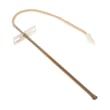
- Range oven temperature sensor WB20K10015 (helps correct temperature swings)
Last updated: February 2026
How long do GE PGB975SEM1SS ovens last?
A GE gas range oven like model PGB975SEM1SS typically lasts 15 years with normal household use. Regular cleaning, keeping burner flames and airflow unobstructed, and replacing wear parts (like igniters or sensors) on time helps you reach that expected lifespan.
Most full-size gas range ovens are built for long service, but a few factors make the biggest difference:
- How often you bake or broil (daily use shortens life)
- Self-clean frequency (high heat stresses components)
- Keeping the oven door seal intact to prevent heat loss
- Promptly fixing weak ignition or temperature problems
- Avoiding repeated power surges and control interruptions
On the GE PGB975SEM1SS, these parts often drive repair decisions because they affect heating performance and reliability:
- Igniters: weak igniters cause delayed ignition or no heat
- Temperature sensor: drifting readings cause overbaking or underheating
- Door seal: heat leaks lead to longer cook times and uneven results
- Light socket and bulb: not critical to cooking, but common wear items
If you are troubleshooting heat issues, the parts list for this model includes the oven igniter WB13K21, range oven temperature sensor WB20K10015, and range oven door seal WB04K10021.
| What you’re seeing | Most likely direction | Why |
|---|---|---|
| Oven will not heat or takes a long time to ignite | Repair | Igniter issues are common and usually straightforward |
| Oven temperature is consistently off | Repair | Sensor or thermostat calibration is often the fix |
| Heat escaping around the door, longer bake times | Repair | A worn door seal wastes heat and stresses components |
| Multiple major issues at once (heat + controls + door) | Consider replacement | Stacked repairs can exceed the value of the range |
A gas range that is struggling to ignite or hold temperature runs longer to do the same job. That extra runtime increases wear on igniters, sensors, and seals, which can shorten the practical life of the oven.
For model-specific operating and care guidance (including self-cleaning and troubleshooting tips), use the owner's manual.
Last updated: February 2026