Owner’s manual
How to read compressor model number?
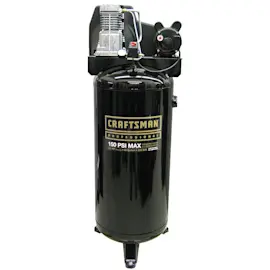
For Craftsman air compressor model 919176830, we read the model and related identification numbers directly from labels on the rear of the air tank and on the motor nameplate. These numbers tell you exactly which unit and components you have so you can match the correct parts and service information in the owner's manual.
Where to find the numbers on model 919176830
Look for these labels and plates (the manual calls them out specifically):
- Model number: on the label on the rear of the air tank
- Code number: on the foil label on the rear of the air tank
- Manufacturer’s number (MFG. No.) (ASME code compressors): on the metal date plate welded to the backside of the tank (painted the same color as the tank)
- Motor manufacturer name: on the motor label/spec plate
- Motor MFG. number: also on the motor label/spec plate
How to “read” what each number means
These identifiers are used for different purposes. Use this quick guide:
| What you’re looking at | What it identifies | When you use it |
|---|---|---|
| Model number (919176830) | The air compressor model | Finding the correct manual, diagrams, and parts list |
| Code number | Production/version code | Matching the right revision when parts changed over time |
| MFG. No. (ASME units) | Tank manufacturing data | Verifying tank plate info and service records |
| Motor nameplate info | The motor itself | Ordering motor-related parts or matching motor specs |
Tips to avoid mix-ups when ordering parts
Use these steps so the parts lookup matches your exact unit:
- Write the model number exactly as shown (for example, 919.176830 may appear with a dot on the label).
- Record both the model number and code number from the tank labels.
- If the issue involves the motor, copy all motor nameplate details (manufacturer name and motor MFG. number).
- Use the parts diagrams and lists in the owner's manual to confirm the part description before ordering.
Why it matters
Air compressors often share similar-looking pumps, pressure switches, gauges, and regulators across multiple models. Using the correct model number and code number helps ensure the replacement part fits and the pressure settings and electrical ratings stay correct.
Last updated: February 2026
What is the average lifespan of an air compressor?
Most homeowner-style piston air compressors like the Craftsman 919176830 typically last 10 years with normal DIY use and basic maintenance. With lighter use and consistent care (clean air intake, correct lubrication, moisture control), it’s common to reach 15 years.
Typical lifespan by compressor type
Lifespan depends more on compressor design and duty cycle than brand name.
- Oil-lubricated piston (DIY/garage): 10 years
- Oil-free piston (DIY/light duty): 8 years
- Heavy-duty piston (shop use): 12 years
- Rotary screw (industrial): 20 years
| Compressor type | Typical use | Typical lifespan |
|---|---|---|
| Oil-lubricated piston | DIY, intermittent | 10 years |
| Oil-free piston | DIY, lighter duty | 8 years |
| Rotary screw | Continuous duty | 20 years |
What extends the life of your Craftsman 919176830
Your manual calls out key items such as operating location, airflow clearance, and routine maintenance (air filter, oil, check valve, safety valve). Use the owner's manual as your maintenance checklist.
- Run it in a clean, dry, well-ventilated area
- Keep the unit at least 12 inches from walls/obstructions for cooling airflow
- Inspect and replace the air intake filter on schedule
- Check and maintain the oil level (for oil-lubricated pumps)
- Drain moisture from the tank regularly to reduce internal corrosion
- Fix small air leaks early (fittings, hose, check valve)
Signs it’s nearing end of life
These symptoms usually mean wear is accumulating in the pump, valves, or controls.
- Takes much longer to build tank pressure
- Won’t reach normal cut-out pressure, or cycles too often
- Knocking noise tied to check valve, pulley, belt, or mounting hardware
- Excessive air leaks that return soon after tightening fittings
Why it matters
A compressor that’s past its useful life costs more to run, struggles to meet SCFM demands for air tools, and can overheat from longer run times. Staying on top of filter, oil, and leak checks helps you get the full expected lifespan.
Last updated: February 2026
What is the most common cause of air compressor failure?
The most common cause of air compressor failure is poor maintenance that leads to overheating, air leaks, and internal wear. On the Craftsman 919176830 air compressor, the issues we see most often are restricted air intake, leaking fittings or valves, and running the unit too hard for the air demand (all of which accelerate pump and motor damage).
What fails most often (and what to check first)
Start with the items that commonly cause symptoms like “won’t build pressure,” “won’t start,” or “keeps leaking air.”
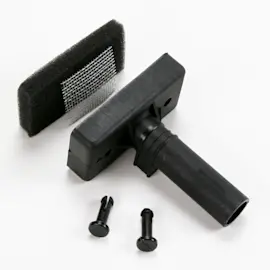
- Restricted air intake filter: a clogged filter makes the pump run hotter and reduces output.
- Air leaks at fittings and connections: loose tube fittings waste air and increase run time.
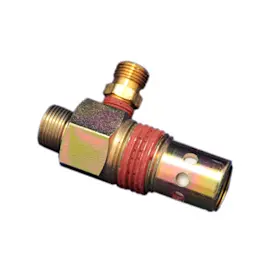
- Dirty or defective check valve: can cause constant leaking at the pressure release valve after shutoff.
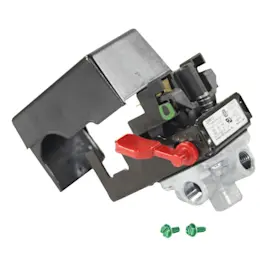
- Pressure switch problems: if it does not shut off at cut-out pressure, the safety valve can pop.
- Regulator internal wear or dirt: can cause continuous leaking at the outlet.
- Carbon buildup in the pump: reduces efficiency and can prevent the compressor from keeping up.
For model-specific troubleshooting steps and safety notes (unplugging the unit and relieving tank pressure before service), use the owner's manual.
Quick symptom-to-cause guide
| What you notice | Most likely cause | What we do next |
|---|---|---|
| Safety valve pops open | Pressure switch not shutting off | Turn switch OFF; replace pressure switch if contacts are welded |
| Constant leak after shutoff | Dirty/defective check valve | Clean or replace check valve; do not overtighten |
| Low air output | Restricted filter, leaks, excessive use | Clean/replace filter; soap-test fittings; reduce demand |
| Tank leak | Defective air tank | Replace the tank (do not drill, weld, or modify) |
Why it matters
Most “failures” start as small airflow or control problems that force the compressor to run longer and hotter. That extra heat and run time speeds up wear on the pump, valves, belt drive, and motor, turning a simple leak or clogged filter into a major repair.
Helpful DIY resources
Last updated: February 2026
What company makes Craftsman air compressors?
Craftsman air compressors (including model 919176830) are built for the Craftsman brand by contract manufacturers, and the maker can vary by model and production run. The most reliable way to identify the actual manufacturer for your specific unit is to match the MFG. No. and motor nameplate information listed on the compressor.
How to identify the manufacturer on model 919176830
Use the labels called out in the owner's manual. On this Craftsman air compressor, you can typically find:
- Model number on the label on the rear of the air tank
- Code number on the foil label on the rear of the air tank
- Manufacturers number (MFG. No.) on the metal date plate welded to the backside of the air tank (often painted the same color as the tank)
- Motor manufacturer name on the motor label or specification plate
- Motor MFG. number on the motor label or specification plate
What “Craftsman” means for air compressor manufacturing
Craftsman is the brand name on the tank; the compressor, pump, and motor may be sourced from different suppliers. That is why two Craftsman air compressors can look similar but use different pressure switches, check valves, regulators, or pump rebuild parts.
Quick reference: which number helps with what
| What you need | Use this label/number | Why it matters |
|---|---|---|
| Correct parts list for the unit | Model number 919176830 | Ties you to the right diagrams and part descriptions |
| Identify who built the tank/unit | MFG. No. on the welded date plate | Points to the contract manufacturer for that production run |
| Motor-specific service parts | Motor nameplate info | Motors often have their own manufacturer and part IDs |
Why it matters when ordering parts or troubleshooting
Using the correct identification numbers prevents mismatched parts and speeds up diagnosis for common issues like no-start, low pressure, or air leaks.
- If it will not start, use air compressor won't start
- If it will not build pressure, use air compressor won't build tank pressure
- If it leaks air, use air compressor air leaks
Last updated: February 2026
Are air compressor parts interchangeable?
Most air compressor parts are not interchangeable across brands or even across different models of the same brand. For the Craftsman 919176830 air compressor, major components (pump, motor, pulleys, belts, safety valve, pressure switch, and tank) must match the original design and pressure ratings listed for this model in the owner's manual.
What you can usually swap (if the size and thread match)
These items are often standardized, but you still need to match the thread type and size to prevent leaks:
- Quick-connect couplers and plugs (match the coupler style and body size)
- Air hose fittings (commonly NPT sizes like 1/4-inch or 3/8-inch)
- Basic external adapters and reducers
- Some inline accessories (filter, regulator, lubricator) if rated for your PSI
What you should not swap on the 919176830
The manual is clear that certain substitutions create safety and performance risks. Avoid mixing models for:
- Compressor pump (do not replace with a different model)
- Air tank (do not replace with a different model or larger tank)
- Safety valve and pressure switch (replacement must use the same pressure rating)
- Motor, pulleys, and belts (use standard service replacement parts designed for this unit)
- Any attempt to increase pump speed or modify the tank (no drilling or welding)
Quick compatibility checklist
Use this table to decide whether a part is a “maybe” or a “no” before you buy.
| Part type | Interchangeable? | What must match |
|---|---|---|
| Pump, motor, tank | No | Model-specific design and mounting |
| Safety valve, pressure switch | No | Exact pressure rating and style |
| Pulley, belt | No | Correct size, alignment, and load rating |
| Couplers, plugs, hose fittings | Sometimes | Thread type/size and coupler profile |
| Filter/regulator/lubricator | Sometimes | PSI rating, flow needs, port size |
Why it matters
Interchanging the wrong parts can cause chronic air leaks, poor SCFM output, nuisance tripping, or unsafe over-pressurization. On the 919176830, the safety system depends on correct pressure-rated components, and the pump and tank are not designed to be “upgraded” by substitution.
Helpful DIY guidance
If you are troubleshooting a no-start or pressure problem that is driving the parts question, use our step-by-step symptom help: air compressor won't start.
Last updated: February 2026