Owner’s manual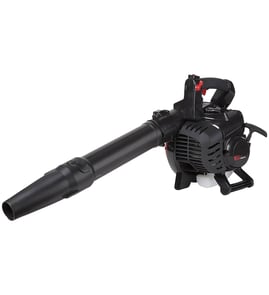






Is a higher mph or CFM better for a leaf blower?
Higher CFM is better when you want to move more leaves at once, while higher MPH is better when you need more “punch” to break loose wet, stuck, or compacted debris. For the Craftsman 358794776 gas leaf blower, the best choice depends on your typical cleanup tasks, not just one number; see the 358794776 manual for operating tips and nozzle use.
- Choose higher CFM for large yards, open areas, and moving piles efficiently.
- Choose higher MPH for wet leaves, gravel-edge cleanup, and debris stuck in cracks.
- Balance matters: strong performance usually comes from a good mix of both.
- Nozzle and tube setup changes results: a narrower outlet often increases “felt” force.
- Technique counts: sweeping side-to-side and working with the wind can outperform raw specs.
| Your main job | Spec that helps most | What you’ll notice |
|---|---|---|
| Clearing big areas fast | Higher CFM | Wider “push” of leaves per pass |
| Moving wet, heavy piles | Higher MPH | Better ability to break piles apart |
| Cleaning corners and cracks | Higher MPH | More targeted blast |
| General weekly cleanup | Balanced CFM + MPH | Less time switching tools/attachments |
CFM and MPH describe different parts of airflow. If you buy based on only one rating, you can end up with a blower that either moves a lot of air without enough force at the ground, or hits hard but takes longer to clear wide areas.
Airflow drops quickly when the engine cannot breathe or fuel cleanly. For Craftsman 358794776, routine maintenance often restores “power” more than chasing higher specs.
- Clean or replace the air filter on schedule; consider the leaf blower air filter 545146501.
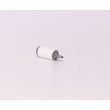
- Replace a restricted fuel filter if the engine surges or bogs; consider the Craftsman lawn & garden equipment engine fuel filter 530095646.
- Use fresh, properly mixed fuel (for 2-cycle models).
- Check for loose tubes or air leaks that reduce effective airflow.
Last updated: January 2026
What is the best gas leaf blower for the money?
For “best value,” we match the blower to the job. Your Craftsman model 358794776 can be a great value if it already meets your cleanup needs and you keep it tuned; if you are shopping new, the best value is usually the lightest blower that still delivers enough air speed and airflow for your yard size. See the 358794776 owner’s manual for safe operation and maintenance basics.
We look for the best mix of performance, comfort, and long-term ownership cost.
- Airflow (CFM) for moving piles of leaves
- Air speed (MPH) for lifting wet leaves and debris
- Weight and vibration for comfort during longer jobs
- Starting reliability (fuel system condition, carburetor tune)
- Maintenance cost (filters, fuel lines, wear items)
Before you buy, compare these items side-by-side:
| What to compare | Why it matters | What to prioritize |
|---|---|---|
| CFM and MPH | Determines real-world clearing ability | Enough power for your typical debris |
| Dry weight | Impacts fatigue | Lighter is usually better for homeowners |
| Fuel system design | Affects starting and surging | Easy access to filter and primer |
| Parts support | Keeps it running for years | Common service parts available |
If your current blower is hard to start, lacks power, or surges, basic maintenance often restores performance for far less than replacing the unit.
- Replace a restricted fuel filter such as the Craftsman lawn & garden equipment engine fuel filter 530095646
- Clean or replace the leaf blower air filter 545146501
- Inspect the primer bulb for cracks and fuel leaks
- Check the spark arrestor screen (if equipped) for carbon buildup
- Use fresh, properly mixed fuel and drain old fuel before storage
A “cheap” blower that is heavy, hard to start, or needs frequent service costs more over time. The best gas leaf blower for the money is the one that clears your yard quickly, starts consistently, and has affordable maintenance parts.
Last updated: January 2026
How to tell if a spark plug is bad leaf blower?
On the Craftsman 358794776 gas leaf blower, a bad spark plug usually shows up as hard starting, rough running, or no start. We confirm it by removing the plug and checking for heavy carbon, oil wetness, a damaged electrode, or weak/no spark during a spark test; any of these means replacement is the right next step.
After removing the spark plug boot and taking the plug out (follow the steps in the 358794776 owner’s manual), inspect the tip and porcelain.
- Dry, black soot: running too rich, clogged air filter, or too much choke
- Wet with fuel: flooded engine, weak ignition, or repeated start attempts
- Oily wet: possible internal engine wear (less common, but important)
- Cracked porcelain or burned electrode: replace the plug
- Heavy corrosion/rust: replace the plug and check storage conditions
- Reinstall the plug into the boot.
- Hold the metal threads of the plug firmly against bare engine metal.
- Pull the starter rope.
You want a strong, blue snap of spark.
| Result | What it usually means | Next step |
|---|---|---|
| Strong blue spark | Ignition is likely OK | Check fuel, air, and compression next |
| Weak/orange spark | Plug or ignition issue | Try a new plug first |
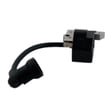
| No spark | Plug, boot/wire, switch, or ignition module | Inspect wiring and switch; test ignition |
On the 358794776, these are the most common follow-ups we check:
- Air filter condition (clean or replace the leaf blower air filter 545146501)
- Fresh fuel mix and correct ratio
- Fuel delivery (clogged filter or lines; consider the Craftsman lawn & garden equipment engine fuel filter 530095646)
- Choke lever operation and linkage
- Start/stop switch function
A weak or fouled spark plug can mimic fuel problems and lead to repeated flooding. Confirming spark first helps you avoid unnecessary carburetor adjustments and gets the blower running faster.
Last updated: January 2026