 Owner’s manual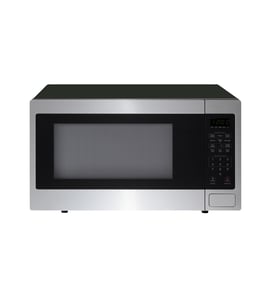


How many cubic feet is a Kenmore Model 72169122010 microwave?
The Kenmore microwave model 72169122010 has a 1.7 cubic foot oven capacity. For the most reliable confirmation, match the capacity listing to the rating label details and specifications in the 72169122010 owner's manual.
Quick specs snapshot
| Item | What to expect |
|---|---|
| Model | Kenmore 72169122010 |
| Type | Countertop microwave |
| Capacity | 1.7 cu. ft. |
How we recommend confirming capacity on your unit
Capacity is a published spec, but we always recommend verifying it against your exact unit information (especially if the microwave has been replaced or the model number was read from packaging).
- Check the model and serial tag (often inside the door opening or on the back panel)
- Confirm the model number reads 72169122010 exactly
- Review the specifications section in the 72169122010 owner's manual
- Compare the listed capacity to what you see on the product label
Why it matters
Microwave capacity affects what fits inside (cookware size and food volume) and can influence cooking performance and sensor cooking results. It also helps ensure you order the correct Kenmore parts for the right platform.
Last updated: January 2026
What is the standard size of a countertop microwave?
Most countertop microwaves, including Kenmore model 72169122010, fall into a common “standard” size range rather than one exact size: about 21 to 25 inches wide, 12 to 15 inches tall, and 16 to 20 inches deep (door closed), with 1.0 to 2.2 cubic feet of capacity. For the exact cutout-free footprint and clearance guidance, use the 72169122010 owner's manual.
Typical countertop microwave size ranges
These are the measurements we see most often across countertop models:
- Width: 21 to 25 inches
- Height: 12 to 15 inches
- Depth (door closed): 16 to 20 inches
- Capacity: 1.0 to 2.2 cubic feet
- Weight: commonly 30 to 60 lb (varies by wattage and build)
Quick sizing table (what to expect)
| Size class | Typical capacity | Typical width | Best for |
|---|---|---|---|
| Compact | 0.7 to 1.0 cu ft | 17 to 20 in | Dorms, small kitchens |
| Standard | 1.1 to 1.6 cu ft | 21 to 24 in | Most households |
| Large | 1.7 to 2.2 cu ft | 24 to 25+ in | Large plates, big families |
How we recommend measuring your space
Measure before you buy or relocate the microwave:
- Measure the countertop width available (left to right).
- Measure depth from the wall to the counter edge; include room for the cord.
- Measure height clearance to cabinets or shelves above.
- Plan for ventilation space around the sides and top (follow the manual’s guidance).
Why it matters
Microwaves that are too tight in a cabinet nook can run hotter, trip thermal protection, or perform poorly. Correct sizing also helps prevent door interference and makes sure the power cord reaches the outlet without strain.
Last updated: January 2026
Can I use an over-the-range microwave on a countertop?
Over-the-range microwaves are built to be installed above a range with a specific mounting and venting setup, so we do not recommend using one as a countertop unit. For safe clearances and approved installation methods, follow the 72169122010 owner's manual.
What to consider before you do it
- Venting and airflow: Over-the-range models are designed to move heat, steam, and cooking odors through a built-in vent system.
- Mounting and stability: They are meant to be supported by a wall bracket and upper cabinet bolts, not countertop feet.
- Clearances: Countertop placement still needs open space around the sides, top, and back for cooling air.
- Power and cord routing: The cord and plug location may not be practical or safe on a counter.
- Door swing and tipping risk: A heavy unit can shift when the door opens if it is not mounted.
Recommended options (best to worst)
| Option | Best for | Why |
|---|---|---|
| Use a true countertop microwave | Most kitchens | Designed for countertop airflow and stability |
| Install an over-the-range microwave as intended | Replacing an existing OTR unit | Correct venting, mounting, and clearances |
| Place an OTR microwave on a counter | Not recommended | Higher risk of overheating, instability, and poor fit |
If you must place a microwave in a cabinet opening
We recommend using a countertop model or a built-in kit designed for the exact microwave. If you are placing any microwave in an open-front cabinet space:
- Leave ventilation space on the sides and above (many microwaves need at least 1 inch or more).
- Keep the back from being sealed tight against a wall.
- Do not block intake or exhaust vents.
- Avoid placing it directly above heat sources.
Why it matters
Microwaves rely on airflow to keep internal components (like the magnetron and high-voltage parts) within safe operating temperatures. Poor ventilation can shorten component life and cause heating problems.
For related troubleshooting, see why is my microwave not heating.
Last updated: January 2026
Are Kenmore microwaves good?
Kenmore microwaves are a solid choice for everyday heating and defrosting, and many owners consider them a good value for the features you get. For the Kenmore 72169122010 countertop microwave, long-term satisfaction usually comes down to proper use, keeping the cavity clean, and replacing common wear or electrical parts when symptoms show up (see the 72169122010 owner's manual).
What “good” usually means for a countertop microwave
Most customers judge a microwave on consistent heating, simple controls, and reliability over time. Kenmore models commonly perform well for basic cooking tasks, especially when the turntable system and door switches are working correctly.
Typical strengths
- Good day-to-day performance for reheating and defrosting
- Straightforward replacement parts availability for many common failures
- Practical size and features for most kitchens
Common complaints (across many brands, including Kenmore)
- Control panel or keypad issues over time
- “Runs but won’t heat” symptoms tied to high-voltage components
- Door not latching or not starting due to interlock switch problems
Quick reliability checklist for model 72169122010
Use this list to judge whether your unit is operating normally or heading toward a repair.
- Heats a cup of water consistently (same time, similar temperature rise)
- Turntable rotates smoothly (no grinding, no stalling)
- Door closes firmly; unit starts every time without “jiggling” the door
- No burning smell, arcing, or unusual buzzing
- Interior stays clean; no heavy grease buildup around vents
If it’s not heating, what that usually points to
A microwave that powers on but does not heat often involves the high-voltage heating circuit. Common parts associated with “no heat” symptoms include:
| Symptom | Common direction | Example part for this model |
|---|---|---|
| Runs, light/fan on, no heat | High-voltage circuit issue | Microwave magnetron 6324W1A001L |
| Runs, no heat, intermittent | Diode/capacitor/connection issue | Microwave high-voltage capacitor (model-specific match required) |
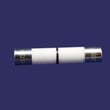
| Dead/no power | Power supply protection issue | Microwave fuse 3B74133Q |
For step-by-step troubleshooting, use why is my microwave not heating.
Why it matters
A “good” microwave is one that heats safely and consistently. When heating performance drops or the door/interlock system becomes unreliable, cooking results suffer and the unit can stop mid-cycle.
Last updated: January 2026


