
How do I know what model my garage door opener is?
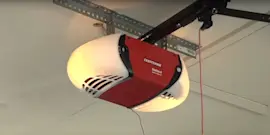
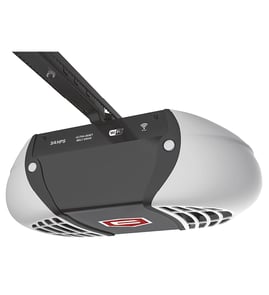
To identify your Craftsman garage door opener model (including model 139654300), look for the model and serial label on the motor unit (the opener head) mounted to the ceiling. The label is usually under a light lens/cover or behind a front cover, depending on the opener style.
Where to look on the opener
Check these common label locations on Craftsman openers:
- One-light models: under the light cover/lens
- Two-light models: under the light cover on the side opposite the controls and antenna
- Jackshaft (wall-mount) operators: under the front cover
- All styles: sometimes on the side of the motor housing near the wiring terminals
If you see multiple numbers, use the model number (often printed as “Model” or “M/N”) rather than the FCC ID or logic board number.
What the label usually includes
Most Craftsman garage door opener labels list:
- Model number (example: 139654300)
- Serial number
- Electrical rating (typically 120V)
- Manufacturing date code (varies by series)
- FCC ID (for the radio receiver; not the model number)
Quick ID checklist (fastest way)
Use this order to confirm you have the right model:
- Find the label on the motor unit, not the rail.
- Write down the full model number exactly as shown.
- Match that model number to the parts list for ordering and diagrams.
- If the label is missing, use opener features (light layout, wall control style, safety sensor behavior) to narrow it down.
Common “model number vs. other numbers” guide
| What you found | What it means | Use it to order parts? |
|---|---|---|
| Model / M/N | The opener’s actual model | Yes |
| Serial / S/N | Unique unit identifier | No |
| FCC ID | Remote receiver identifier | No |
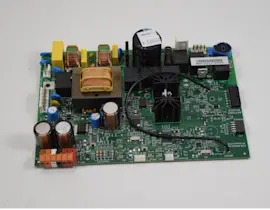
| Logic board number | Circuit board identifier | Sometimes (only when matching a board) |
Why it matters
Using the exact model number ensures the right match for key items like the wall control, safety sensors, travel module, and drive components. It also helps when diagnosing blinking-light patterns and error codes.
For troubleshooting after you identify the model, use our Craftsman error codes reference to interpret diagnostic flashes and symptoms.
Last updated: February 2026
Can you get a universal remote for an old garage door opener?
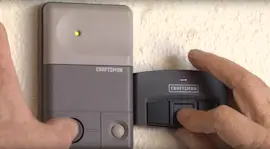
Yes. For an older Craftsman garage door opener like model 139654300, you can typically use a universal garage door opener remote, and if the opener is too old to pair directly, you can add a compatible external receiver kit so a universal remote will work.
What usually works (from easiest to most flexible)
- Program a universal remote directly to the opener using the opener’s Learn/Program button (if equipped).
- Replace the remote with a compatible style remote that matches the opener’s radio frequency and “learn” system.
- Add an external receiver (wired to the opener) and then pair one or more universal remotes to that receiver.
- Use a universal keypad (often pairs the same way as a remote).
Quick compatibility checklist
Use this to decide whether a universal remote will pair directly or if you will need an external receiver.
- Look for a Learn/Smart/Learn Code button on the motor unit (often near the light lens).
- Check whether the opener uses DIP switches (older style) or a learn button (newer style).
- Confirm the remote supports the opener’s frequency and coding type.
- If pairing fails after multiple attempts, plan on an external receiver solution.
| What you see on the opener | What it usually means | Best path |
|---|---|---|
| DIP switches (in opener and remote) | Very common on older units | Universal remote that supports DIP switches, or add external receiver |
| Learn/Program button | Rolling code or learn-to-pair system | Universal remote that supports learn-button pairing |
| No clear pairing method | Very old or nonstandard setup | External receiver + universal remote |
Why it matters
A universal remote is the fastest fix, but the opener’s radio system determines whether it can pair directly. Adding an external receiver is the most reliable way to modernize an older opener without replacing the motor unit.
Helpful DIY resources
- Use our how to program garage door opener remotes video to walk through common pairing steps.
- If the opener flashes lights or shows diagnostic behavior, check Craftsman error codes to narrow down issues that can look like “remote problems.”
Last updated: February 2026
Is it cheaper to repair or replace a garage door opener?
For a Craftsman garage door opener model 139654300, it’s cheaper to repair when the problem is isolated (safety sensors, remote control, wall control wiring, or a loose chain/belt) and the opener is otherwise reliable. Replace when the unit is older, has repeated failures, or the repair cost is close to half the price of a new opener.
Quick decision guide (repair vs. replace)
Use these rules of thumb to decide what makes sense for your garage door opener.
- Repair when the opener runs but has a specific symptom (won’t close, remotes won’t work, lights blink, intermittent operation).
- Repair when the fix is adjustment or setup (travel limits, force settings, sensor alignment).
- Replace when the motor/control board is failing repeatedly or the unit struggles even after adjustments.
- Replace when the opener is 10 to 15 years old and parts plus labor add up quickly.
- Replace when the door hardware is binding and the opener has been overworked (you may need door service either way).
Typical cost comparison
Actual pricing varies by region and whether you DIY or hire service, but these ranges help set expectations.
| Scenario | Typical cost range | Best choice |
|---|---|---|
| Sensor alignment, force/travel adjustment | $0 to $150 | Repair |
| Remote/wall control troubleshooting or replacement | $25 to $200 | Repair |
| Gear/motor or control board type repair | $150 to $400+ | Depends |
| New opener installed | $300 to $650+ | Replace |
What to check first on model 139654300
These checks often solve the most common “repair vs replace” situations without major parts.
- Safety sensors: confirm both sensor LEDs are on solid and sensors point directly at each other.
- Door balance: disconnect the opener and lift the door by hand; it should move smoothly and stay near mid-travel.
- Force and travel settings: if the door reverses or stops early, settings may be off.
- Wall control: test the wall button vs. remote; different behavior points to control or signal issues.
- Diagnostic flashes/codes: use the opener’s light blink pattern or diagnostic indicator to narrow the failure.
For code-based troubleshooting, use our Craftsman error codes guide.
Why it matters
A garage door opener can look “bad” when the real issue is door friction, misaligned safety sensors, or incorrect force/travel settings. Fixing those first prevents repeat breakdowns and helps you avoid replacing an opener that still has useful life.
Last updated: February 2026
Where can I buy Craftsman garage door opener parts?
You can buy replacement parts for your Craftsman garage door opener model 139654300 through our Craftsman garage door opener parts resources on Sears PartsDirect. Start by matching the symptom (remote won’t work, door won’t close, lights blinking) to the right part category, then order the part that fits your exact model.
Best way to find the right part for model 139654300
- Use the model number 139654300 to keep compatibility accurate.
- Identify the symptom first (no power, won’t open, won’t close, reverses, clicking).
- Check common wear items: safety sensors, wall control, logic board, drive gear, sprocket, chain/belt components.
- If the opener lights blink, use the blink pattern to narrow the failure.
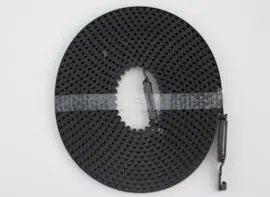
- Confirm whether your unit is chain drive or belt drive before ordering drive parts.
Troubleshooting help before you order
Many “parts problems” are setup or safety-sensor issues. These checks prevent buying the wrong part:
- Make sure the safety sensor lenses are clean and aligned.
- Verify the door moves smoothly by hand (a binding door can mimic opener failure).
- Check the wall control wiring connections for looseness or damage.
- Replace remote batteries and reprogram the remote if needed.
- Look for diagnostic LED or light-blink codes on the motor unit.
| What you notice | Most common cause | What to do next |
|---|---|---|
| Door won’t close and lights blink | Safety sensor issue | Align sensors; clear obstructions; verify wiring |
| Remote won’t operate door | Remote/programming issue | Replace battery; reprogram remote |
| Motor runs but door doesn’t move | Stripped drive gear or trolley issue | Inspect drive system; plan for gear repair |
| Door reverses during travel | Force/travel out of adjustment or door binding | Check door balance; then adjust force/travel |
Why it matters
Ordering by symptom alone often leads to the wrong Craftsman garage door opener part. Using model 139654300 plus error-code or blink-code troubleshooting helps you pinpoint the correct repair the first time.
For code-based troubleshooting, use our Craftsman error codes guide.
Last updated: February 2026
What are the common problems with Craftsman garage door openers?
The most common problems we see with the Craftsman 139654300 garage door opener are safety sensor issues (door will not close, lights blink), remote or wall control problems, and drive or gear wear that causes grinding or a humming motor with no movement. Use Craftsman error codes to match blinking-light patterns to the most likely cause.
Most common symptoms and what they usually mean
- Door will not close; opener lights blink: safety sensors blocked, misaligned, or wired incorrectly
- Door reverses while closing: force setting too high, binding door hardware, or sensor interruption
- Remote works sometimes: weak remote battery, radio interference, or opener antenna/receiver issue
- Motor hums but door does not move: stripped drive gear, broken chain/belt, or trolley disengaged
- Grinding or clicking noise: worn drive gear/worm gear, loose sprocket, or dry rail/chain
- No power or no lights: tripped breaker/GFCI, loose outlet connection, or failed logic board
Quick checks we recommend first (fast and safe)
- Check the safety sensor path: remove anything in the doorway and wipe the sensor lenses.
- Confirm sensor alignment: both sensor LEDs should be steady (not flickering).
- Test the wall control: if the wall button works but remotes do not, focus on remote programming/batteries.
- Pull the emergency release and move the door by hand: it should move smoothly and stay balanced.
- Listen during operation: humming with no travel points to a drive/gear issue.
Troubleshooting guide by symptom
| Symptom | Most likely cause | What to do next |
|---|---|---|
| Won’t close; lights blink | Safety sensors | Follow garage door wont close safety sensor troubleshooting video lights blink 10 times |
| Won’t open or close consistently | Force/travel out of adjustment | Use how to make force adjustments if a garage door wont open or close video |
| Door moves but is loud | Dry rail/chain, loose hardware | Follow how to maintain a garage door opener |
| Remotes don’t work | Battery, programming, interference | Use how to program garage door opener remotes video and garage door opener remotes wont work video |
Why it matters
Most “won’t close” complaints are safety-related, so the opener is doing its job by stopping to prevent injury or damage. Catching sensor alignment, door binding, or gear wear early helps prevent bigger failures and keeps the door operating smoothly.
Last updated: February 2026