Installation guide
 Owner’s manual
 Error Codes


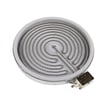
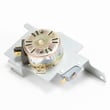
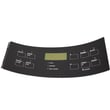
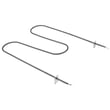
Where can I find my Kenmore electric range model number?
On Kenmore electric range model 79092109012, the model and serial plate is located on the lower right front frame of the appliance; an alternate location is under the cooktop. Use the exact model number from that plate when ordering parts or checking wiring requirements in the installation guide.
Quick places to check on model 79092109012
- Lower right front frame (primary serial plate location)
- Under the cooktop (alternate serial plate location)
- Around the oven door frame area (common spot on many ranges)
- Behind the storage or warmer drawer area (common spot on many ranges)
How to read the label and use it
Write down the full model number and serial number exactly as shown. Then use them to:
- Match the correct Kenmore electric range parts and diagrams
- Confirm electrical connection requirements (3-wire vs 4-wire)
- Reference the correct safety and installation steps
| What you see on the plate | What it’s used for |
|---|---|
| Model number (example: 79092109012) | Parts lookup, manuals, compatibility |
| Serial number | Production details, service identification |
Why it matters
Kenmore 790-series ranges can have similar-looking panels and elements, but the model number drives the correct fit for items like a range bake element 316075103 and electrical connection hardware. Using the plate information prevents ordering the wrong part and avoids installation issues.
Last updated: February 2026
Why is my Kenmore electric oven not working?
If your Kenmore electric range model 79092109012 has surface burners working but the oven will not heat, the most common causes are a failed bake element, a bad oven temperature sensor, or a control problem. Start with safe power checks, then test the heating circuit components.
Quick checks we recommend first
- Confirm the range has full power (a range needs 240V for baking and broiling; it can look “on” at 120V).
- Make sure the oven is not in a delayed start or Sabbath mode (if equipped).
- Try Bake and Broil; if neither heats, suspect power supply, wiring, or control.
- If Broil works but Bake does not, suspect the bake element.
- If the oven heats but temperatures are wrong, suspect the sensor.
Parts that commonly fix “oven not heating”
If testing points to a failed component, these model-matched parts are common fixes:
- Range bake element 316075103
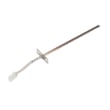
- Frigidaire range oven temperature sensor 316490000
- Frigidaire range broil element 316203200
Symptom-to-likely-cause guide
| What you see | Most likely cause | What to do next |
|---|---|---|
| Bake does not heat; broil still works | Bake element open | Inspect for blisters/breaks; test element continuity |
| Neither bake nor broil heats | Power supply issue, terminal block/wiring, control | Verify breaker and cord/terminal connections; then diagnose control |
| Oven heats but runs hot/cold | Temperature sensor out of spec | Test sensor resistance at room temp; replace if out of range |
Electrical and connection issues to rule out
A loose or burned power connection can stop oven heating. The installation instructions stress keeping terminal block connections secure and reinstalling the rear access cover after wiring.
- Turn off the breaker before inspecting wiring.
- Check for signs of overheating at the cord connection area.
- If the terminal block is damaged, replace it with the correct part.
For wiring and grounding details specific to this range, use the installation guide.
Why it matters
An oven that will not heat is often a simple heating-circuit failure (element or sensor), but it can also be a power connection issue. Correct diagnosis prevents repeat failures and helps avoid damaging wiring or the control.
Last updated: February 2026
What is the average lifespan of 79092109012?
A Kenmore electric range like model 79092109012 typically lasts 13 to 15 years with normal household use. Lifespan depends most on how often you bake/broil, how well the door seals, and whether heating and control parts are kept in good working order.
What affects lifespan the most
- Heating elements: Frequent high-heat use can shorten the life of the bake and broil elements.
- Oven temperature accuracy: A drifting sensor can cause longer cook times and extra wear.
- Door sealing and insulation: Heat loss makes the oven run longer to maintain temperature.
- Electrical connections: Loose or overheated connections can cause intermittent power issues.
- Cleaning habits: Spills left to bake on can damage finishes and increase smoke and heat stress.
Common “end-of-life” symptoms (and what they usually mean)
| Symptom | Most common cause | Typical fix |
|---|---|---|
| Oven won’t heat or heats unevenly | Failed lower element | Replace range bake element 316075103 |
| Oven temperature is off by 25 to 50 degrees | Sensor out of spec | Replace frigidaire range oven temperature sensor 316490000 |
| Door doesn’t seal, longer preheat, heat escaping | Worn gasket | Replace frigidaire range oven door seal 316405000 |
| No power or burning smell at cord area | Loose/overheated terminal connections | Inspect/replace universal/multiflex (frigidaire) range terminal block 5303935271 |
Maintenance that helps you reach 13 to 15 years
- Keep the oven door seal clean and intact; replace it if it’s torn, flattened, or loose.
- Wipe up spills after the oven cools to reduce smoke and heat stress.
- Avoid slamming the oven door; it can damage hinges and affect sealing.
- If preheat times suddenly increase, test the bake element and sensor before continued use.
- During installation or service, follow the electrical and clearance requirements in the installation guide.
Why it matters
A range usually does not “wear out” all at once; it becomes unreliable when key parts (elements, sensor, door seal, terminal connections) start failing. Replacing those wear items on time helps your 79092109012 cook evenly, preheat normally, and operate safely.
Last updated: March 2026