Error Codes


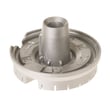
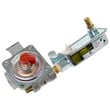
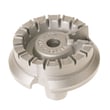
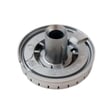
Where is the igniter on a Hotpoint gas oven?
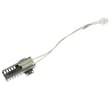
On the Hotpoint RGBS300DM2BB free standing gas range, the oven igniter is mounted inside the oven cavity at the burner area, typically under the oven bottom panel near the rear. It sits next to the bake burner so it can glow and light the gas.
Where to look (bake igniter location)
In most Hotpoint gas ovens like model RGBS300DM2BB, you’ll find the igniter:
- Inside the oven cavity (not behind the control panel)
- Under the removable oven bottom panel
- Near the bake burner tube, usually toward the back
- Wired to the range harness through the rear of the oven cavity
- Positioned so it “sees” the burner ports and lights the gas quickly
If you’re replacing it, the correct part for this model is the bake burner ignition WB13X40208.
Quick access steps (typical)
- Turn off power to the range (unplug or switch off the breaker).
- Shut off the gas supply valve.
- Remove oven racks.
- Lift out the oven bottom panel (often held by screws at the rear).
- Locate the igniter attached to the bake burner; disconnect the wire connector and remove mounting screws.
Symptoms that point to a bad igniter
A weak or failed igniter is one of the most common reasons a gas oven will not heat.
| What you notice | What it usually means |
|---|---|
| Igniter never glows | Open igniter, wiring issue, or control problem |
| Igniter glows but no flame | Igniter too weak to open the gas valve fully |
| Long delay before flame | Weak igniter (late ignition) |
| Oven heats inconsistently | Igniter weakening or poor connection |
Why it matters
The igniter is the “switch” that allows the oven gas valve to open; if it’s weak, the burner may not light or may light late, which leads to poor baking performance and unreliable preheating.
Last updated: February 2026
What are signs of a faulty gas stove part?
On a Hotpoint RGBS300DM2BB free standing gas range, a faulty part usually shows up as ignition trouble, weak or uneven flames, temperature problems, or gas odor. Start by noting whether the issue is on the cooktop, the oven bake burner, or both; that points to the most likely failed component.
Common warning signs to watch for
- Persistent clicking after a burner lights (spark ignition keeps trying)
- Burner will not ignite or takes several tries to light
- Yellow, lifting, or uneven flames instead of steady blue flames
- Oven won’t heat or heats inconsistently (bake performance changes)
- Gas smell near the range (turn gas off and ventilate immediately)
- Knobs feel loose or don’t set temperature smoothly
Quick checks you can do safely
- Turn off power to the range (unplug or switch off the breaker) before inspecting parts.
- For cooktop issues, remove grates and caps; clean ports and dry everything fully.
- For oven bake issues, watch the igniter sequence: you should see the igniter glow and then the burner light.
- If flames are weak on one burner only, the issue is often localized (cap, orifice, tube).
What the symptom usually points to
| Symptom | Most likely area | Example model-matched part to consider |
|---|---|---|
| Oven won’t bake or takes very long to heat | Bake ignition system | Bake burner ignition WB13X40208 |
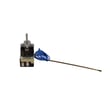
| Oven temperature swings widely | Oven temperature control | Range oven control thermostat WB24X24270 |
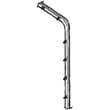
| Burner flame is uneven on one burner | Burner gas path | Range surface burner tube and orifice, right front WB28X26604 |
| Gas smell or multiple burners act up | Gas supply control | Range gas valve and regulator assembly WB21X38548 |
Why it matters
Gas and ignition problems can affect cooking results and, more importantly, safe operation. Catching early signs (clicking, delayed ignition, yellow flames) helps prevent worsening performance and reduces the chance of a no-heat situation.
Last updated: February 2026
What are the parts of a gas stove?
A gas stove (gas range) like the Hotpoint RGBS300DM2BB is made up of a cooktop burner system for stovetop cooking plus an oven burner system for baking and broiling, along with controls and safety components that regulate gas flow and temperature.
Main parts you will see on the cooktop
- Burner grates (support cookware)
- Burner caps (shape and stabilize the flame)
- Burner heads and bases (mix gas and air)
- Orifices and orifice holders (meter gas into each burner)
- Control knobs and valve stems (turn burners on and adjust flame)
Main parts inside the oven section
- Bake burner and ignition system (lights the bake flame)
- Oven temperature control (sets and maintains temperature)
- Oven door and door seal (keeps heat in)
- Oven bottom panel (covers the burner area on many ranges)
Common RGBS300DM2BB parts that match these functions
| What it does | Example part on this model | When it’s usually needed |
|---|---|---|
| Ignites the bake burner | Bake burner ignition WB13X40208 | Oven will not light, clicking but no flame |
| Regulates gas flow to burners | Range gas valve and regulator assembly WB21X38548 | Weak flame, no gas flow, pressure issues |
| Controls oven temperature | Range oven control thermostat WB24X24270 | Oven runs too hot or too cool |
| Seals heat at the door | Range oven door gasket WB35X29720 | Heat leaks, long preheat, uneven baking |
Why it matters
Knowing which “system” a part belongs to (surface burner vs. oven burner vs. controls) helps you troubleshoot faster and order the correct Hotpoint range parts the first time.
Quick safety checks before troubleshooting
- Turn off all burner knobs and let surfaces cool.
- If you smell gas, do not operate the range; shut off the gas supply.
- For electrical testing, unplug the range or switch off the breaker.
Last updated: February 2026
How to relight a Hotpoint gas oven?
On the Hotpoint RGBS300DM2BB free standing gas range, most ovens use an electronic hot-surface igniter and do not have a standing pilot to relight. If your oven will not light, the fix is usually cleaning the burner area or replacing a failed igniter such as the bake burner ignition WB13X40208.
Before you start (safety first)
- Turn the oven control to OFF and let everything cool.
- If you smell gas, do not try to light anything; shut off the gas supply and ventilate.
- Unplug the range or switch off the breaker before accessing internal parts.
- Use a flashlight; do not use matches or a lighter inside the oven.
Quick checks that solve most “won’t light” problems
- Confirm bake is selected (not broil) and set a temperature.
- Watch for igniter glow: a working igniter typically glows bright orange within 30 to 90 seconds.
- Listen for gas ignition: if it glows but never lights, the igniter can be weak.
- Clean the burner and ports: debris can delay ignition.
- Check the gas supply: make sure the shutoff valve is fully open.
What you’ll see and what it usually means
| What happens when you set BAKE | Most likely cause | What to do next |
|---|---|---|
| No glow, no heat | Failed igniter or wiring issue | Inspect connections; replace bake burner ignition WB13X40208 if damaged |
| Igniter glows, no flame | Weak igniter or gas flow issue | Replace igniter first; then consider gas valve/regulator |
| Flame lights but temps swing | Thermostat issue | Check/replace range oven control thermostat WB24X24270 |
Why it matters
A gas oven that does not ignite promptly can cause delayed ignition, poor baking performance, and unnecessary wear on the gas valve and ignition system.
Last updated: February 2026