Owner’s manual
 Error Codes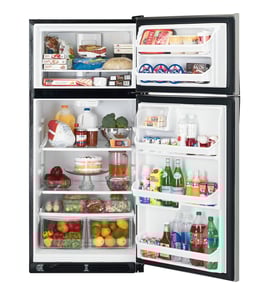


What are the disadvantages of a top mount fridge?
Top-mount refrigerators like the Samsung RT21M6215SG put the freezer on top and the fresh-food section below; the main disadvantages are more bending to reach everyday items, fewer convenience features on many models, and less flexible organization compared with bottom-freezer designs. For model-specific features and setup cautions, use the RT21M6215SG owner's manual.
Common drawbacks (what most owners notice)
- More bending for fresh food: the refrigerator compartment sits lower, so you reach down more often.
- Less “eye-level” organization: produce drawers and lower shelves can be harder to see and access.
- Fewer premium options on many top-mounts: water/ice dispensing and advanced storage features are less common.
- Freezer can feel crowded: top freezers often have fewer dividers and bins than larger bottom-freezer layouts.
- Door loading matters: overloading door bins can stress hinges and affect door closing.
How to reduce the downsides (practical tips)
- Put daily-use items on the upper refrigerator shelves to reduce bending.
- Keep airflow clear; don’t block vents with food (helps prevent warm temps and frost).
- Leave proper clearance around the cabinet (a common guideline is at least 2 in./5 cm at the sides and rear).
- After moving or installing, let the refrigerator stand about 2 hours before loading food.
- If you need more door storage, replace cracked or sagging bins with the exact-fit Samsung refrigerator door bin DA63-08646A.
Quick comparison: top-mount vs bottom-freezer
| Feature | Top-mount (RT21M6215SG style) | Bottom-freezer |
|---|---|---|
| Fresh-food access | Lower, more bending | Higher, easier access |
| Freezer access | Eye-level | Lower drawer/pull-out |
| Typical features | Simpler, fewer add-ons | More organization options |
| Best for | Budget, basic storage | Frequent fresh-food use |
Why it matters
Ergonomics and airflow are the two big factors. If you use fresh food more than frozen, a top-mount layout can feel less convenient day to day. Keeping vents clear and doors closing properly helps the refrigerator cool evenly and avoid frost buildup.
Last updated: February 2026
What is the average lifespan of a Samsung fridge?
Most Samsung refrigerators last 10 to 15 years on average with normal household use. For the Samsung RT21M6215SG top-mount refrigerator, consistent maintenance (cleaning, airflow, and fixing small issues early) is what most directly determines whether you land closer to 10 years or closer to 15.
Typical lifespan and what affects it
A refrigerator’s life is mostly driven by compressor run time, heat removal, and how well the doors seal.
- Usage and loading: frequent door openings and overpacking increase run time
- Airflow: blocked interior vents can cause overcooling and stress components
- Cleaning: dust on condenser areas raises operating temperatures
- Water system care (if equipped): leaks and mineral buildup shorten component life
- Timely repairs: replacing a failing fan, sensor, or control early prevents bigger damage
Quick maintenance checklist (best ROI)
Use these habits to extend life on a Samsung top-mount refrigerator like RT21M6215SG:
- Keep air vents inside the cabinet clear (do not block with bags or containers)
- Set stable temps (typical targets: 37°F fresh food, 0°F freezer)
- Clean spills and wipe moisture to reduce odor and corrosion
- Vacuum dust from accessible condenser areas and keep clearance around the cabinet
- If you ever unplug it, wait at least 5 minutes before plugging back in
What “average lifespan” looks like
| Lifespan range | What it usually means | What to do |
|---|---|---|
| 0 to 5 years | Early failure is uncommon | Check installation, airflow, power quality |
| 6 to 10 years | Wear items start showing up | Address fan noise, temp swings, icing |
| 10 to 15 years | Typical replacement window | Repair vs replace based on major parts |
| 15+ years | Above average | Keep seals tight and cooling system clean |
Why it matters
Knowing the 10 to 15 year average helps you plan: if your RT21M6215SG is approaching that range and you’re seeing warm temps, heavy frost, or loud fan noise, a targeted repair can prevent food loss and reduce energy waste.
For model-specific care and operating guidance, follow the RT21M6215SG owner’s manual.
Last updated: February 2026
What is the most common problem with Samsung refrigerators?
The most common Samsung refrigerator problem is a cooling issue: the fridge section gets warm or temperatures swing because airflow is restricted or the defrost system is not clearing frost properly. On the RT21M6215SG, start with the basics in the RT21M6215SG owner's manual troubleshooting tables before replacing parts.
What we see most often (and what to check first)
- Warm fridge, freezer seems OK: blocked air vents, heavy frost behind the evaporator cover, or a fan/defrost issue.
- Both sections warm: power supply problem, temperature setting too warm, or poor installation clearance.
- Ice maker or water issues (if equipped): low water pressure, frozen fill tube, or a valve problem.
- Odors and moisture: doors left open, excess humidity, or spills not cleaned.
- Intermittent operation after unplugging: plugging back in too quickly (wait at least 5 minutes).
Quick diagnostic checklist for RT21M6215SG
- Confirm the unit is plugged in firmly and the outlet is working.
- Set temperatures colder and give it time to stabilize.
- Make sure there is at least 2 inches (5 cm) of clearance at the sides and rear for airflow.
- Check that interior air vents are not blocked by bags or tightly packed food.
- If you smell burning or see smoke, unplug immediately and arrange service.
Common symptoms and likely causes
| Symptom | Most likely cause | Best first step |
|---|---|---|
| Fridge warm, freezer cold | Frost buildup or airflow restriction | Clear vents; look for frost patterns; follow manual troubleshooting |
| Both warm | Power/setting/heat source/clearance | Verify power, lower setting, improve clearance |
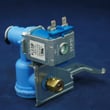
| No ice or slow ice | Water supply or valve issue | Check supply line; consider refrigerator water inlet valve DA62-01477A if valve is not opening |
| Frost/ice buildup | Defrost system problem | Inspect for heavy frost; consider refrigerator defrost heater DA47-00460G if heater is open |
Why it matters
Cooling and defrost problems usually get worse over time: restricted airflow can cause longer run times, warmer food storage, and extra frost that eventually blocks circulation. Fixing the root cause early helps protect the compressor and keeps temperatures stable.
Last updated: February 2026