Installation guide
 Owner’s manual
 Error Codes




Can a Frigidaire Affinity washer and dryer be stacked?
Yes; Frigidaire Affinity front-load laundry can be stacked when you use the correct manufacturer-approved stacking kit for the specific washer and dryer pair. For your Frigidaire washer model LTF6700FS0, confirm stacking requirements, clearances, and any accessory notes in the LTF6700FS0 installation guide before you install.
- A manufacturer-approved stacking kit designed for the Affinity series
- A solid, level floor (no rocking corner-to-corner)
- Correct electrical supply (120V, 60 Hz, properly grounded 3-prong receptacle)
- Properly installed water inlet hoses and drain connection
- Enough space to access the power cord and shutoff valves
Use this as a practical go/no-go check before you buy parts or start the install.
| Check | What “pass” looks like | What to fix if it fails |
|---|---|---|
| Floor and leveling | Washer is level front-to-rear and side-to-side; stable on all 4 legs | Re-level the legs; correct soft/uneven flooring |
| Power | Dedicated, grounded 15-amp branch circuit; 3-prong outlet accessible | Have an electrician correct the receptacle/circuit |
| Shipping hardware | Shipping bolts/spacers removed before operation | Remove shipping bolts/spacers per install steps |
| Connections | Hot/cold lines flushed; hoses seated with rubber washers | Clean screens, reseat hoses, correct leaks |
Stacking changes vibration and load forces. If the washer is not leveled correctly or shipping bolts are left in place, you can get excessive noise, shaking, and premature wear on suspension and tub components.
- For model-specific stacking and setup details, use the LTF6700FS0 installation guide.
- For operating tips (options like Delay Start, Control Lock, and Extra Rinse), check the LTF6700FS0 owner's manual.
Last updated: February 2026
How to fix E3 on a Frigidaire washer?
On the Frigidaire LTF6700FS0 washer, an E3 code is most often caused by a lid or door not fully closed, the lock not engaging, or the washer being out of level. Start by closing the lid or door firmly, then confirm the washer is solid and level on all four legs using the steps in the LTF6700FS0 installation guide.
- Power the washer off, wait 1 minute, then power it back on and restart the cycle.
- Close the lid or door firmly; do not lean on it while starting.
- Make sure the load is not pressing against the lid or door area.
- Verify the washer is stable corner-to-corner; adjust leveling legs as needed.
- Check that hot and cold water supply valves are fully open (some cycles will pause if fill is abnormal).
Proper leveling reduces vibration and helps the lock mechanism engage consistently.
- Place a level on top of the washer.
- Adjust the leveling legs until the cabinet is level front-to-rear and side-to-side.
- Press down on alternate corners; the washer should feel solid with no rocking.
- Keep leg extension as short as possible for best performance.
If E3 returns and the lid or door is definitely closed, the lock circuit is the next most common cause.
| What you notice | Most likely issue | What we recommend |
|---|---|---|
| Lid or door never “clicks” locked | Failed lock mechanism | Replace the door lock switch 131763256 |
| Locks sometimes, fails other times | Loose connection or failing lock | Inspect wiring to the lock; replace lock if symptoms persist |
| Locks but code returns during spin | Excess vibration from leveling or load | Re-level washer; reduce/redistribute load |
E3 is a safety-related stop; the washer will not spin at high speed unless it senses the lid or door is secure. Fixing the root cause prevents repeated cycle interruptions and helps protect the control board and lock components.
Last updated: February 2026
What is the capacity of the Frigidaire LTF6700FS0?
The Frigidaire LTF6700FS0 washer has a 3.5 cu. ft. capacity. That size is designed for everyday family loads, including towels and mixed fabrics, while still fitting a standard 27-inch front-load footprint.
Capacity is typically listed on the model’s feature/spec page in the documentation. We recommend checking the LTF6700FS0 owner's manual for the published capacity and any load-size guidance.
- Look for a “Specifications” or “Features” section
- Check for notes about maximum load size by cycle
- Follow detergent and load recommendations to prevent oversudsing
- Use the correct cycle options for bulky items to reduce out-of-balance conditions
A 3.5 cu. ft. front-load washer is a mid-size capacity that typically handles common household loads efficiently.
| Load type | Typical fit in 3.5 cu. ft. | Best practice |
|---|---|---|
| Everyday mixed load | Yes | Fill loosely; do not pack |
| Bath towels | Yes | Balance items for smooth spin |
| Bulky items (comforter) | Sometimes | Use bulky cycle; avoid overloading |
| Small loads | Yes | Use appropriate cycle to save water/energy |
Using the right load size helps the LTF6700FS0 drain and spin properly, reduces vibration, and can extend the life of key components like the shock absorbers and drain pump.
Last updated: February 2026
What is the life expectancy of a Frigidaire washing machine?
Most Frigidaire washing machines, including the Frigidaire LTF6700FS0 washer, typically last 10 to 12 years with normal household use. Consistent care (proper loading, correct detergent, and routine cleaning) pushes lifespan toward the high end, while chronic overloading and poor draining shorten it; see the LTF6700FS0 owner's manual for model-specific care and operating guidance.
- Load habits: frequent overloading strains the motor, shocks, and tub support
- Detergent choice: using HE detergent helps prevent oversudsing and residue buildup
- Drain performance: slow draining forces longer cycles and extra pump wear
- Vibration control: unbalanced loads increase stress on suspension components
- Moisture management: leaving the door ajar between loads helps reduce odor and gasket wear
- Run a monthly cleaning cycle (or hot wash with an empty drum, if your routine allows)
- Use the recommended amount of HE detergent; avoid “extra for more clean”
- Check pockets to reduce coins, screws, and debris entering the drain path
- Keep the door seal area wiped dry after wash day
- Level the washer and keep loads balanced to reduce shaking during final spin
| Symptom | Likely wear area | Typical next step |
|---|---|---|
| Door will not lock or cycle will not start | Door lock system | Inspect latch alignment; consider door lock switch 131763256 if the lock is failing consistently |
| Won’t drain, drains slowly, or stops mid-cycle | Drain system | Check for clogs first; replace the pump if it’s noisy or not moving water |
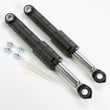
| Excessive banging or walking during spin | Suspension | Inspect shocks and leveling; replace worn shocks as needed |
A washer that drains correctly, spins smoothly, and avoids oversudsing runs shorter, cooler cycles with less strain on the control board, motor, and tub system. That directly translates into fewer breakdowns and a longer service life.
Last updated: February 2026
Where to find model number on a Frigidaire washer?
On the Frigidaire washer model LTF6700FS0, the model and serial number are typically on a sticker in the door opening area; open the washer door and look around the inner door frame and front opening for the rating label. Confirm the exact label location in the LTF6700FS0 owner's manual.
- Open the washer door and inspect the inner door frame.
- Check the front opening lip (the cabinet edge the door closes against).
- Look near the door lock area on the front panel.
- If the label is worn, use a flashlight and view from an angle to read faint print.
- Write down both the model number and serial number; you often need both for parts lookup.
Sometimes the rating label is hard to spot due to detergent residue or wear.
- Wipe the door opening area with a damp cloth and mild soap; dry it.
- Check for a second label on the rear panel.
- For service information, note that a wiring diagram and tech sheet are stored inside the washer (in an envelope attached to the left-hand side panel on the inside); a technician can reference it if needed.
The model number ensures we match the correct Frigidaire washer parts and diagrams for your exact configuration (for example, door lock assemblies, drain pumps, and control boards can vary by revision).
| What to record | Example format | What it’s used for |
|---|---|---|
| Model number | LTF6700FS0 | Correct parts list and diagrams |
| Serial number | Letters + numbers | Production run details and service reference |
Last updated: February 2026
Why is my Frigidaire washer leaking from the bottom?
A bottom leak on your Frigidaire washer model LTF6700FS0 is usually caused by a drain or fill water path problem: a loose hose connection, a drain hose that is not secured, or a failing internal component such as the drain pump or door boot. Use the checks below to pinpoint the source fast.
- Unplug the washer and turn off both water faucets.
- Pull the washer forward and look for the first wet point (rear hoses, pump area, or center under the tub).
- Check the hot and cold inlet hoses for drips at the faucet and at the washer connection.
- Confirm the drain hose is firmly secured so it cannot pull out or spray; the LTF6700FS0 installation guide shows using the drain hose hanger and cable tie.
- Run a short rinse and spin and watch for leaks during fill, tumble, and drain.
| When you see water | Most likely source | What to inspect |
|---|---|---|
| During fill | Inlet hose or inlet valve area | Hose washers, tightness, cracks; valve body for seepage |
| During tumble | Door boot (bellows) leak | Tears at the bottom lip; clamp fit; debris on sealing surface |
| During drain/spin | Drain pump or pump hoses | Pump housing cracks; hose clamps; coin/lint blockage |
If your inspection points to a failed component, these model-matched parts are common solutions:
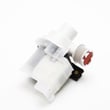
- Washer drain pump 137221600 if leaking occurs mainly during drain/spin or you see water at the pump body.
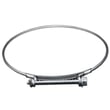
- Bellows 134515300 if water tracks down from the door opening area (often shows up as a “bottom front” leak).
- Washer water inlet valve 134371220 if you see seepage during fill from the valve area.
A small leak can quickly lead to floor damage, moldy odors, and repeated drain errors if water reaches wiring or the control area. Finding the exact leak timing (fill vs. drain) narrows the repair to the right hose or part.
Last updated: February 2026