 Installation guide
 Owner’s manual



What is the average lifespan of a GE dishwasher?
Most GE dishwashers last 10 to 12 years with normal household use and basic maintenance. For your GE ZDT800SSF5SS, keeping the tub seals clean, using the right detergent and rinse aid, and fixing small leaks or door-closing issues early helps you reach the full service life (and often beyond).
Typical lifespan range (what to expect)
In real-world use, most dishwashers fall into a predictable range:
- 8 to 10 years: heavy use, hard water, infrequent cleaning
- 10 to 12 years: typical use and routine care (most common)
- 12 to 15 years: lighter use, good water quality, consistent maintenance
Quick reference table
| Usage and care level | Typical lifespan | What usually ends the run |
|---|---|---|
| Heavy use, minimal upkeep | 8 to 10 years | leaks, pump wear, control issues |
| Average use, routine care | 10 to 12 years | drain or wash performance decline |
| Light use, strong upkeep | 12 to 15 years | age-related seals, motor/pump wear |
Maintenance that extends dishwasher life
We recommend these habits for the ZDT800SSF5SS:
- Clean the filter area and remove debris regularly (prevents drain and wash issues)
- Wipe the door gasket and tub lip to reduce leaks and odors
- Use a quality detergent and a rinse aid to reduce film buildup
- Run hot water at the sink before starting a cycle for better wash performance
- Avoid overloading; follow rack loading guidance in the ZDT800SSF5SS owner’s manual
Why it matters
A dishwasher usually does not “die” all at once; performance drops first (poor cleaning, not draining, leaks, or not starting). Catching those symptoms early often prevents secondary damage to the pump, door system, or wiring.
Last updated: February 2026
What is the most common problem with GE dishwashers?
The most common GE dishwasher problems (including model ZDT800SSF5SS) are “won’t start,” not draining, and poor cleaning, usually tied to a door not latching, a restricted drain path, or loading and detergent issues. We start with simple checks, then test likely parts.
Most common issues we see (and what to check first)
- Won’t start or stops mid-cycle: confirm the door closes firmly and the latch engages.
- Not draining: check the tub for standing water and clear the filter area and drain path.
- Detergent not dispensing or poor cleaning: make sure dishes are not blocking the dispenser and spray jets.
- Suds/foam in the tub: use only automatic dishwasher detergent (hand soap causes sudsing).
- Leaks: inspect the door seal area and look for water tracks at the front corners.
Quick part-to-symptom guide (ZDT800SSF5SS)
| Symptom | Most likely area | Common next step |
|---|---|---|
| Won’t start, beeps, or won’t run with door closed | Door latch system | Inspect/replace the GE dishwasher door latch lock WD21X10490 |
| Overfilling, odd fill behavior, or won’t fill correctly | Float/overfill protection | Test the dishwasher float switch WD21X10519 |
| Detergent left in cup, weak wash | Loading, spray, dispenser | Re-load so items do not block the dispenser; review ZDT800SSF5SS owner’s manual |
| Error code on display | Control sensing | Look up the code in GE electronic dishwasher error codes |
Why it matters
These problems often look “electronic,” but many are caused by basic mechanical or usage issues (door not fully latched, blocked wash jets, or the wrong detergent). Fixing the root cause prevents repeat failures and protects the pump, control, and tub seals.
Best practice checks (fast and effective)
- Load large items so they do not block the detergent dispenser or spray arms.
- Use automatic dishwasher detergent; avoid hand dish soap to prevent suds.
- If you see suds, follow the manual’s reset guidance (often holding START for several seconds).
- Keep the control panel clean and dry; wipe with a lightly damp cloth.
Last updated: February 2026
Can I replace dishwasher parts myself?
Yes. For the GE ZDT800SSF5SS dishwasher, many common repairs are DIY-friendly if you shut off power and water first and follow the safety and grounding guidance in the ZDT800SSF5SS owner’s manual. Installation and service tasks typically require basic mechanical, electrical, and plumbing skills.
What you can usually replace yourself
These repairs are commonly manageable with basic tools and careful reassembly:
- Door hardware such as the GE dishwasher door latch lock WD21X10490 (if the door will not latch or start)
- Drain components such as the dishwasher drain hose WD24X10062 (if you have leaks or poor draining)
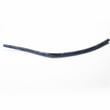
- Leak-prevention and sealing parts such as the dishwasher tub gasket WD08X23477
- Simple sensors and switches (for example, a float switch) after disconnecting power
- Rack and rail items (if the rack binds or falls off track)
Repairs we recommend leaving to a technician
The manual advises not attempting repairs unless specifically recommended; for anything beyond basic part swaps, a qualified technician is the safest route.
- Control and wiring issues (control module, harness diagnostics)
- Hard-wiring or cord kit work, junction box connections, grounding corrections
- Persistent leaks that require pulling the dishwasher and re-leveling
- Repeated error codes that return after a reset
Quick DIY safety checklist (before you start)
- Turn off the breaker; turning the dishwasher off at the controls does not remove power.
- Shut off the water supply under the sink.
- Protect the floor and plan for water in the sump and hoses.
- Take photos of wire and hose routing before disconnecting anything.
- Confirm the dishwasher can be removed for service (clearance and slack in lines).
DIY vs pro: a simple decision guide
| If your symptom is... | DIY is a good fit when... | Pro is a better fit when... |
|---|---|---|
| Won’t start | Door won’t latch, obvious latch issue | You suspect control, wiring, or repeated faults |
| Leaking | Drip is at the door edge or a hose connection | Leak source is unclear or requires full removal |
| Not draining | Kinked hose or clogged connection | Pump or electrical diagnosis is needed |
Why it matters
Dishwashers combine water and electricity; correct grounding, secure connections, and proper installation prevent shock risk, leaks, and repeat failures. Following the ZDT800SSF5SS installation guide helps you keep the unit serviceable and safely installed.
Last updated: February 2026
What are the commonly replaced parts in a dishwasher?
On the GE ZDT800SSF5SS dishwasher, the most commonly replaced parts are the door-latching and sealing parts, water-handling parts, and wash-system components that wear out from heat, detergent, and normal use. We also see frequent replacements when a unit will not start, will not drain, or develops a leak.
Commonly replaced parts (and what they affect)
- Door won’t latch or unit won’t start: door latch/lock and strike components
- Leaks at the door or tub edge: tub gasket and trim pieces
- Won’t drain or drains slowly: drain hose, clamps, and drain path restrictions
- Overfilling or filling problems: float switch and fill components
- Poor cleaning or unusual noise: circulation pump, diverter, spray-path components
- Detergent not dispensing: detergent dispenser
Model-matched examples for ZDT800SSF5SS
These are examples of parts we commonly see replaced on this model:
| Symptom | Likely part to check | Example part for this model |
|---|---|---|
| Door won’t close, won’t start | Door latch/lock | GE dishwasher door latch lock WD21X10490 |
| Water on floor near front | Tub seal | Dishwasher tub gasket WD08X23477 |
| Standing water in bottom | Drain path | Dishwasher drain hose WD24X10062 |
| Overfills or won’t fill correctly | Float safety circuit | Dishwasher float switch WD21X10519 |
| Detergent cup stays closed | Dispenser assembly | Dishwasher detergent dispenser WD12X32799 |
Why these parts fail most often
Dishwashers combine hot water, detergent, and moving water pressure, so the parts that seal, switch, and move water take the most stress. A small clog or a weak latch can stop a cycle completely, even when the control panel lights up.
Before you replace anything (quick checks)
- Disconnect power before maintenance; turning the dishwasher off does not fully disconnect power.
- Confirm the door closes firmly and the tub rim is clean where the gasket seals.
- Check for kinks in the drain hose and verify the drain loop is routed correctly.
- Clean the filter area and inspect for debris that can block draining.
- If the dishwasher has power but will not run, check for an error code and basic start conditions.
Helpful references for this model
- Use the ZDT800SSF5SS owner’s manual for safety steps, operating guidance, and feature details.
- If you are troubleshooting a no-start or fault condition, use GE dishwasher error codes.
Last updated: February 2026





