Owner’s manual
 Error Codes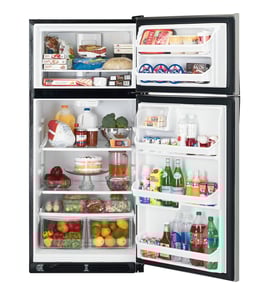




What are the disadvantages of a top mount fridge?
For the GE GTE19JTNBRWW top-mount refrigerator, the main disadvantages are less convenient fresh-food access (you bend more), fewer built-in organization features than many bottom-freezer designs, and fewer dispenser options on many top-mount models. These tradeoffs are common for top-freezer refrigerators.
Common disadvantages (what you will notice day to day)
- More bending for fresh food: the refrigerator section sits lower, so produce drawers and lower shelves take more reaching.
- Freezer is most accessible: great if you use frozen foods often, less ideal if you mainly use fresh foods.
- Typically fewer premium storage features: fewer split shelves, specialty bins, and wide pantry-style drawers compared with many bottom-mount layouts.
- Dispenser features are less common: many top-mount models do not include an external water or ice dispenser.
- Smaller “eye-level” space: tall bottles and frequently used items may end up on lower shelves.
Feature reality check: ice maker and water line
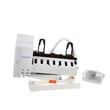
Some top-mount refrigerators can be equipped with an automatic ice maker, but it may be optional and requires a cold water connection. The best model-specific guidance for your configuration is in the GTE19JTNBRWW owner's manual.
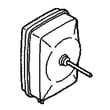
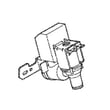
If your refrigerator has an ice maker and you are troubleshooting water supply issues, a common service part is the refrigerator water inlet valve WR57X32213.
Quick comparison: top-mount vs bottom-mount
| Category | Top-mount (top-freezer) | Bottom-mount (bottom-freezer) |
|---|---|---|
| Fresh-food access | Lower, more bending | Higher, easier access |
| Freezer access | Easy, at eye level | Lower drawer, more bending |
| Organization | Often simpler | Often more flexible |
| Dispensers | Less common | More common |
Why it matters
Layout affects how often you open doors, how long doors stay open while you search, and how easily you can keep airflow clear around food. Better day-to-day access and organization can help temperature stability and reduce food waste.
Last updated: January 2026
What is the most common problem with a GE refrigerator?
The most common issue we see with GE refrigerators like model GTE19JTNBRWW is a cooling problem: the fresh food section gets warm, the freezer temperature drifts, or both. In many cases, the root cause is restricted airflow, frost buildup from a defrost issue, or a fan problem rather than a bad compressor.
Quick checks that fix many “not cooling” complaints
- Confirm the temperature settings were not accidentally changed.
- Make sure food packages are not blocking air vents between the freezer and refrigerator.
- Clean dust from the condenser area (poor heat release can cause warm temps).
- Check that doors close fully and the gaskets seal all the way around.
- Listen for fan operation: you should typically hear a fan running when the unit is cooling.
Common causes and what they look like
| Symptom | Most likely area | What you may notice |
|---|---|---|
| Freezer cold, fridge warm | Airflow/damper issue | Weak airflow into fresh food section |
| Frost on freezer back wall | Defrost system issue | Ice buildup, reduced airflow |
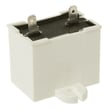
| Warm temps, clicking, no steady run | Start device/compressor circuit | Repeated clicking, short run attempts |
| No airflow sound from freezer | Evaporator fan issue | Quiet freezer, uneven temps |
Parts that are often involved on this model
If your troubleshooting points to a failed component, these are common “cooling system” related parts for GTE19JTNBRWW:
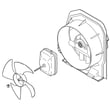
- Evaporator f WR60X31522 (moves cold air through the freezer and into the refrigerator)
- Refrigerator defrost heater assembly WR55X31113 (melts frost off the evaporator during defrost)
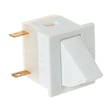
- Refrigerator door switch WR23X31507 (can affect fan and light operation when the door opens/closes)
Why it matters
Cooling issues usually get worse over time. Catching a simple cause early (blocked vents, dirty condenser area, or a door seal problem) helps protect food, reduces run time, and can prevent strain on the sealed system.
Helpful model-specific guidance
- Use the troubleshooting and care sections in the GTE19JTNBRWW owner's manual to confirm normal sounds, temperature behavior, and cleaning steps.
- If the issue is related to alarms or door-open warnings, follow how to reset the door alarm on a GE refrigerator.
Last updated: January 2026
How do I find the model number on my GTE19JTNBRWW?
For your GE GTE19JTNBRWW top-mount refrigerator, the model number is printed on the rating label inside the fresh food (refrigerator) compartment. You will find the label on the left side, near the middle of the compartment; the serial number is on the same label (see the owner's manual).
Where to look (fast checklist)
- Open the refrigerator door (not the freezer door).
- Look inside the fresh food compartment.
- Check the left interior wall.
- Scan near the middle height of the compartment.
- Write down both the model and serial numbers exactly as shown.
What the label information is used for
Having the correct model number helps us match the right diagrams and parts for your exact refrigerator, including items like the door switch, icemaker, and water inlet valve.
| Label item | What it tells us | Why you need it |
|---|---|---|
| Model number | Exact configuration and parts fit | Ensures correct replacement parts |
| Serial number | Production details | Helps confirm version and compatibility |
Why it matters
GE often makes small design changes within the same refrigerator series. Using the exact model number (GTE19JTNBRWW) prevents ordering the wrong shelf, hinge hardware, or ice maker component.
Last updated: March 2026