Error Codes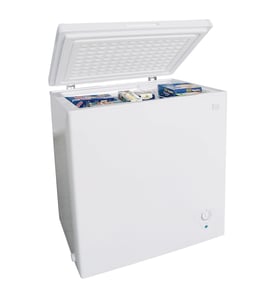



Can you replace the rubber seal on a chest freezer?
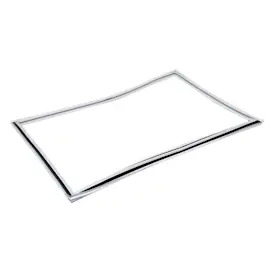
Yes. On the Kenmore 2538195480 chest freezer, the rubber lid seal (gasket) is replaceable; the job is mostly careful removal, cleaning the sealing surface, and pressing the new gasket fully into place so the lid closes evenly and stops warm air leaks.
How to replace the gasket (typical chest freezer method)
- Unplug the freezer for safety.
- Warm the new gasket so it lays flat (leave it at room temperature or use a hair dryer on low, moving constantly).
- Remove the old gasket by pulling it out of its retaining channel or loosening any screws/clips holding the inner liner.
- Clean and dry the rim and channel completely; remove adhesive residue, frost, and debris.
- Install the new gasket starting at the corners; work around the perimeter, pressing it fully into the channel.
- Close the lid and check for gaps; adjust the gasket seating until the lid closes squarely.
Quick seal checks after installation
| Check | What you do | What “good” looks like |
|---|---|---|
| Dollar-bill test | Close lid on a bill and pull | Firm drag all around |
| Visual gap check | Look along the perimeter | No daylight or uneven spacing |
| Frost pattern | Monitor for 24 to 72 hours | No heavy frost at one corner |
Common problems and fixes
- Gasket won’t sit flat: warm it again and re-press it into the channel.
- One corner leaks: reseat that corner first; then work 6 to 12 inches in both directions.
- Lid looks misaligned: inspect hinges and mounting points; a loose hinge can mimic a bad gasket.
- Freezer runs a lot after replacement: confirm the gasket is fully seated and the lid is latching consistently.
Why it matters
A tight gasket keeps humid room air out. That reduces frost buildup, helps the compressor cycle normally, and protects frozen food from temperature swings.
For safe DIY practices and tool basics, we recommend reviewing are diy appliance repairs safe before starting.
Last updated: February 2026
How long does a Kenmore chest freezer last?
A Kenmore chest freezer like model 2538195480 typically lasts 10 to 15 years with normal home use. Keeping the lid seal tight, maintaining steady temperatures, and preventing heavy frost buildup are the biggest factors that help it reach the high end of that range.
Typical lifespan and what to expect
Most chest freezers follow a similar aging pattern: cooling performance stays strong for years, then efficiency drops and run time increases as seals, wiring, or the sealed system wears.
- 10 to 15 years is the normal service life for a chest freezer
- Longer life is common when the freezer stays in a dry, temperature-stable space
- Shorter life is common with frequent lid openings, heavy frost, or poor airflow around the cabinet
What helps your freezer last longer
These habits reduce compressor strain and prevent moisture problems.
- Set the control to hold about 0°F for safe long-term storage
- Leave clearance around the freezer for heat to dissipate
- Defrost when frost buildup reaches about 1/4 inch
- Keep the lid closed as much as possible; organize baskets so you can grab items quickly
- Clean and inspect the lid gasket; replace it if it is torn or won’t seal
- If you notice intermittent power or flickering interior light, inspect wiring connections and consider replacing the harness 3201507
Quick guide: symptoms that suggest end-of-life vs. a fix
| What you notice | Most likely cause | What we recommend |
|---|---|---|
| Runs constantly but won’t reach temp | Air leak, heavy frost, warm room | Defrost, check lid seal, improve ventilation |
| Temperature swings | Control issue, lid openings | Verify setting, reduce openings |
| No power or intermittent operation | Outlet, cord, wiring | Check outlet, inspect wiring, consider harness 3201507 |
| Loud buzzing or alarm | Door ajar or alarm circuit | Confirm lid closes fully; check buzzer 216713600 if alarm won’t stop |
Why it matters
A chest freezer that is nearing the end of its lifespan often costs more to run and is more likely to risk food thawing during warm-room conditions or heavy use. Catching seal, frost, and electrical issues early helps protect food and extend service life.
Last updated: February 2026
How many cubic feet is a Kenmore model 2538195480 freezer?
The Kenmore chest freezer model 2538195480 has a capacity of 14.8 cubic feet. This is the total interior storage volume; your usable space can feel slightly different depending on baskets, frost buildup, and how evenly items are loaded.
Quick specs snapshot
| Model | Freezer type | Capacity |
|---|---|---|
| 2538195480 | Chest freezer | 14.8 cu ft |
How to verify capacity on the appliance label
Use the rating label to confirm you are working with the exact model and capacity:
- Look inside the cabinet near the top rim or on an interior side wall
- Check the back exterior near the power cord area
- Match the full model number 2538195480 exactly (all digits)
- Record the serial number too; it helps ensure correct part compatibility
Why capacity can feel different in real use
Even with a 14.8 cu ft cabinet, storage can seem smaller if the lid does not seal well or frost builds up.
- Frost reduces usable volume and blocks cold-air circulation
- Overpacking prevents even freezing and increases temperature swings
- A misaligned lid can cause moisture intrusion and heavy frost
Parts that affect sealing and day-to-day usability
If you are seeing frost, warm spots, or the lid does not close squarely, these parts are commonly involved:
- Hinge (almond) 297321900 (lid alignment)
- Handle 216180800 (secure closing)
- Key 297147700 (lock engagement on models equipped with a lock)
Why it matters
Knowing the exact 14.8 cu ft capacity helps you plan food load, airflow space, and organization; it also helps you choose correctly sized baskets and avoid overfilling that can lead to poor freezing performance.
Last updated: February 2026
How to clean condenser coils in chest freezer?
For Kenmore chest freezer model 2538195480, we clean the condenser area by unplugging the freezer, accessing the condenser (typically underneath or behind a lower cover), then gently removing dust with a vacuum brush and coil brush so the compressor can shed heat efficiently.
Safety first
- Unplug the freezer before you touch any panels or wiring
- Wear work gloves; sheet metal edges can be sharp
- Avoid bending tubing; refrigerant lines can be damaged
- Never use water or spray cleaners on electrical components
Step-by-step: cleaning the condenser area
- Empty enough space to move the freezer away from the wall.
- Disconnect power (unplug).
- Access the condenser area:
- Look for a lower rear cover or bottom access panel.
- If your unit has a wire harness clamp near the access area, keep it secured so wiring does not rub or pinch.
- Remove dust and lint:
- Vacuum with a soft brush attachment.
- Use a coil cleaning brush to loosen packed lint, then vacuum again.
- Clean the floor under the freezer (dust recirculates quickly).
- Reinstall the panel, plug back in, and confirm the freezer starts and runs normally.
What to use (and what to avoid)
| Use | Why | Avoid |
|---|---|---|
| Vacuum with brush attachment | Lifts dust without damaging fins | Compressed air (blows debris deeper) |
| Coil cleaning brush | Reaches tight spaces | Water, degreasers, foaming cleaners |
| Flashlight | Helps you see buildup | Hard bristle brushes (can bend fins) |
Why it matters
A dusty condenser makes the compressor run hotter and longer, which can cause warmer temperatures, higher energy use, and more wear on the sealed system.
Parts that may come up during access
- Clip 5303212614 (freezer wire harness clamp): helps keep wiring secured near panels
- Condenser 5300300173: the heat-exchange component you are cleaning around (replace only if damaged)
Last updated: February 2026
Is it worth repairing a chest freezer?
Yes, repairing a Kenmore chest freezer model 2538195480 is usually worth it when the problem is a wearable part (hinge, handle, wiring, light) and the cabinet is in good shape; replacement makes more sense when the sealed system or insulation is failing and repair cost approaches the price of a comparable new freezer.
Quick way to decide
Use this checklist to make a clear repair vs. replace call:
- Repair if the freezer still cools but has a lid/door issue, electrical connection issue, or small hardware failure.
- Replace if it has weak cooling, won’t hold temperature, or runs constantly even after basic checks.
- Repair if the fix is straightforward and parts are available (for example a freezer door hinge (almond) 297321900 or handle 216180800).
- Replace if you see oil residue, persistent refrigerant smell, or the unit is hot and noisy with no cooling (sealed system symptoms).
- Repair if the freezer is otherwise reliable and you want to avoid food loss and downtime.
What typically costs the most (and why)
The most expensive repairs on chest freezers are usually sealed-system related (compressor, refrigerant leak, internal restriction). Those repairs require specialized tools and often cost more than common mechanical or electrical fixes.
| Repair type | Typical situation | Usually worth it? |
|---|---|---|
| Lid/hinge/handle hardware | Lid won’t close, misalignment, broken handle | Yes |
| Electrical connection or wiring | Intermittent power, loose/broken wire | Often |
| Sealed system | Not cooling, warm cabinet, long run time | Often no |
“Worth it” signs you can check in 10 minutes
Before pricing parts or service, we recommend these quick checks:
- Confirm the outlet has power and the cord is secure.
- Set the control colder and wait for a clear compressor start.
- Check that the lid closes evenly and the gasket area is clean.
- Listen for steady running vs. repeated clicking (start issue).
- Look for heavy frost patterns that suggest airflow or defrost-related problems.
If you suspect a wiring issue during these checks, our how to repair broken or damaged wires video is a good next step.
Why it matters
A chest freezer that seals properly and runs correctly protects food quality and reduces energy waste. Fixing small issues early (like a loose hinge or damaged handle) prevents warm air leaks that can lead to longer run times and temperature swings.
Last updated: February 2026
What can cause a chest freezer to stop working?
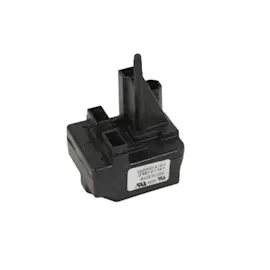
A Kenmore chest freezer model 2538195480 can stop working due to a power or control issue, poor airflow from heavy frost or overpacking, dirty condenser area, or a failed start component in the compressor circuit. Start with simple checks before replacing parts like the run capacitor 5304464438.
Quick checks we recommend first
- Confirm the outlet has power (try a lamp) and the cord is firmly plugged in.
- Check the temperature control knob; make sure it is not set to “off” or warm.
- Listen for the compressor: a steady hum is normal; repeated clicking often points to a start problem.
- Look for heavy frost or an iced-over interior wall; defrosting can restore airflow.
- Make sure the lid closes fully and the gasket is sealing all the way around.
- Verify the freezer is not overpacked; leave space for cold air circulation.
Common causes and what they look like
| What’s wrong | Typical symptom | What to do next |
|---|---|---|
| No power to freezer | No lights, no sound | Check breaker, outlet, cord, and connections |
| Dirty condenser area | Runs a lot, warms up | Vacuum/brush dust from the condenser area and vents |
| Frost buildup blocking airflow | Warmer temps, frost/ice | Unplug and fully defrost; improve loading and lid sealing |
| Compressor start circuit issue | Clicking, won’t start | Test start components; consider the run capacitor 5304464438 if applicable |
| Wiring/connection problem | Intermittent operation | Inspect harness and terminals; see harness 3201507 if damaged |
Why it matters
A freezer that “stops working” is often a simple airflow, frost, or power problem. Catching it early helps prevent food loss and reduces strain on the compressor, which is the most expensive component.
When to stop and call for service
- You smell burning insulation, see melted wiring, or the breaker trips repeatedly.
- The compressor is extremely hot and only clicks.
- The freezer has been off long enough that food safety is a concern.
Last updated: February 2026
Where is the model number on a Kenmore chest freezer?
On a Kenmore chest freezer like model 2538195480, the model number is printed on a rating label that’s usually inside the cabinet near the top rim, or on an exterior panel such as the back or a side wall.
Most common places to check
- Inside the freezer on an inner side wall
- Along the upper rim just under the lid (near the opening)
- On the back of the cabinet near the power cord area
- On an exterior side panel
- Near the hinge area under the lid (less common)
What the label looks like
The label typically includes:
- Model number (for example, 2538195480)
- Serial number
- Electrical rating (volts/amps)
- Refrigerant information
Quick tips to find it faster
- Use a flashlight and look along the top edge inside the opening.
- Wipe frost or moisture off the inner wall so the print is readable.
- If you see multiple numbers, match the full model number exactly before ordering parts.
- Once you find it, take a photo so you can reference it later.
Why it matters
We use the model number to match the correct Kenmore chest freezer parts and diagrams; even small model-number differences can change the lid hardware, wiring, or temperature control components.
Common label locations at a glance
| Location | How likely it is | Why it’s used |
|---|---|---|
| Inside wall | High | Protected from damage and easy to verify |
| Upper rim under lid | High | Easy to spot during normal use |
| Back panel | Medium | Common for electrical and compliance labels |
| Side panel | Medium | Used when interior space is limited |
If you’re ordering a replacement component after you locate the model number, match it to the part listing you need (for example, the harness 3201507 if you’re addressing wiring issues).
Last updated: February 2026