
Is a 150 PSI air compressor good for car tires?
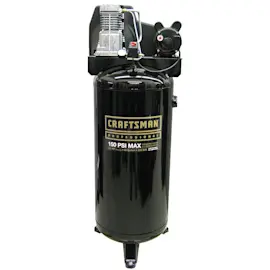
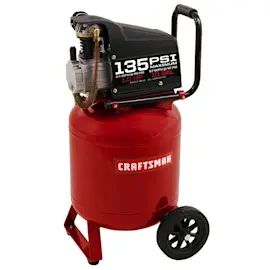
Yes. A 150 PSI air compressor is more than enough for inflating car tires because most passenger vehicles typically run around 30 to 40 PSI (and many light trucks are in the 35 to 55 PSI range). With a Craftsman 283150460 air compressor, the key is using a tire inflator chuck and an accurate gauge so you stop at the tire’s recommended pressure.
The PSI number is the maximum pressure the compressor can produce; tire inflation is usually limited by your regulator, hose, and chuck setup.
- Use the regulator to set a safe working pressure for the hose and inflator
- Check tire pressure at the tire valve with a known-good gauge
- Inflate in short bursts to avoid overshooting
- Let the compressor recover if it starts to slow down (small tanks refill in cycles)
- Drain tank moisture after use to help prevent internal rust
| Tire type | Typical target pressure (cold) | 150 PSI compressor OK? |
|---|---|---|
| Passenger car | 30 to 40 PSI | Yes |
| Crossover/SUV | 32 to 45 PSI | Yes |
| Light truck (P-metric/LT) | 35 to 55 PSI | Yes |
| Trailer tires | 50 to 80 PSI (varies) | Yes (verify tire sidewall) |
- Using the tank gauge as the tire gauge: tank pressure is not tire pressure
- Ignoring the tire placard: use the vehicle door-jamb label, not the tire sidewall, for normal driving
- Running long extension cords: low voltage can make the motor struggle and trip breakers
- Chasing leaks: if a tire won’t hold pressure, fix the leak first
Overinflation reduces traction and ride comfort; underinflation increases heat buildup and tire wear. A 150 PSI compressor gives you plenty of headroom, but accurate regulation and measurement are what protect the tire.
For compressor-specific troubleshooting if it struggles to run or refill, use our DIY guide: air compressor won't start.
Last updated: February 2026
Is a 20 gallon air compressor enough to paint a car?
A 20-gallon air compressor can paint a car, but it is rarely ideal for a full respray because most spray guns need steady airflow (CFM); you will usually paint in smaller sections and pause while the tank refills. For the Craftsman 283150460, match the compressor’s CFM to your spray gun’s CFM requirement.
Tank size mainly affects how long you can spray before pressure drops; CFM determines whether you can spray continuously.
- Check your spray gun label for CFM (or SCFM) at PSI.
- LVLP guns typically use less air than many HVLP guns.
- If the compressor cannot keep up, you will see pressure drop and inconsistent atomization.
- Use a regulator at the gun and keep fittings and couplers full-flow to reduce restriction.
- Plan for the compressor duty cycle; long continuous spraying can overheat smaller units.
A 20-gallon setup works best when you plan around refill cycles.
- Paint one panel or section at a time (hood, fender, door), then pause.
- Expect more waiting during basecoat and clearcoat where steady spraying helps.
- Drain the tank before and after painting to reduce water carryover.
- Use the shortest practical hose restrictions; long, small-diameter hoses can starve the gun.
| Painting goal | Typical spray gun air demand | 20-gallon compressor result |
|---|---|---|
| Small parts, motorcycle, single panel | 4 to 8 CFM | Usually workable |
| Spot repair, blend work | 6 to 10 CFM | Often workable with pauses |
| Whole car (base + clear) | 10 to 15+ CFM | Usually challenging |
When airflow drops mid-pass, the fan pattern changes and paint lays down unevenly; that is when you get dry spray, orange peel, striping, or runs from trying to compensate.
If your pressure seems unstable at the regulator while spraying, use our troubleshooting steps in air compressor can't adjust the output air pressure.
Last updated: February 2026
What are the 4 types of compressors?
The four common compressor types are reciprocating (piston), rotary screw, centrifugal, and axial. For a Craftsman air compressor like model 283150460, you will most often see a reciprocating (piston) design because it is practical for home and light shop air tools.
- Reciprocating (piston): Uses a piston and cylinder to compress air in pulses (positive displacement).
- Rotary screw: Uses two meshing screws to compress air continuously (positive displacement).
- Centrifugal: Uses a high-speed impeller to accelerate air and convert velocity to pressure (dynamic).
- Axial: Uses multiple rotating and stationary blade stages to raise pressure (dynamic).
| Compressor type | Best fit for | Typical strengths |
|---|---|---|
| Reciprocating (piston) | DIY, garages, intermittent tool use | Lower cost, simple design, easy to service |
| Rotary screw | Shops, continuous-duty air demand | Smooth airflow, efficient for long run times |
| Centrifugal | Large facilities, high airflow systems | High volume, reliable at scale |
| Axial | Specialized industrial and aerospace | Very high flow in compact stages |
Knowing the compressor type helps you focus on the right systems:
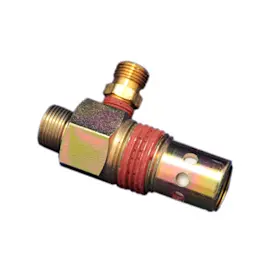
- Piston units commonly involve the pump, reed valves, check valve, pressure switch, and tank fittings.
- Screw and dynamic compressors rely more on air-end assemblies, controls, and high-speed rotating components.
For common air compressor symptoms and repair paths, use our DIY resources like air compressor common questions and air compressor won't start.
Last updated: February 2026
What is the most common cause of air compressor failure?
The most common cause of air compressor failure on a Craftsman air compressor like model 283150460 is poor maintenance that leads to overheating and accelerated wear. Dirty intake filters, restricted cooling airflow, and neglected lubrication (on oil-lubricated units) commonly trigger pump damage, motor strain, and repeated shutdowns.
- Overheating from blocked cooling fins, poor ventilation, or long run times
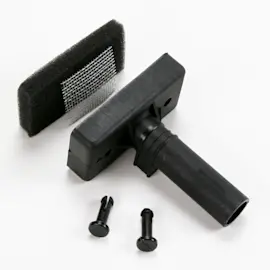
- Dirty or clogged intake filter that makes the pump work harder
- Air leaks at fittings, hose connections, drain valve, or tank check valve
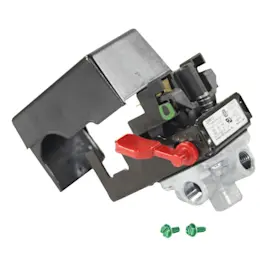
- Pressure switch or unloader issues that cause hard starting and motor overload
- Moisture and corrosion from not draining the tank regularly
- Electrical problems such as weak power supply, bad cord, or failing capacitor
- Unplug the compressor; let it cool fully before touching the pump or motor.
- Verify the outlet and extension cord are correct for the compressor load (undersized cords cause heat and low voltage).
- Listen for constant hissing after shutoff; that points to a leak or check valve issue.
- Drain the tank completely; water buildup shortens tank and valve life.
- If it struggles to restart with pressure in the tank, focus on the unloader and pressure switch.
| What you notice | Most common cause | What to check next |
|---|---|---|
| Won’t start | Power issue or pressure switch | Breaker, cord, switch contacts |
| Starts then trips | Overheating or motor overload | Ventilation, intake filter, voltage |
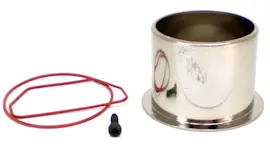
| Runs but won’t build pressure | Leak or pump wear | Fittings, reed valves, head gasket |
| Tank won’t hold air | Leak at drain/fittings | Soapy water test, drain valve |
Most “failures” start as small efficiency problems (restricted airflow, minor leaks, moisture). Fixing those early keeps the pump and motor from running hotter and longer than designed, which is what typically turns a simple service issue into a major repair.
- Use our troubleshooting steps for air compressor won't start when the motor will not run or only hums.
- If pressure is low or slow to build, follow air compressor won't build tank pressure.
- For persistent leaks, use air compressor air leaks to pinpoint the source.
Last updated: February 2026