Error Codes



What is the disadvantage of a side-by-side fridge?
A common disadvantage of a side-by-side refrigerator like the GE GSS23GYPFCFS is reduced usable width in each compartment; wide platters, pizza boxes, and large deli trays can be harder to fit compared with many French door designs.
- Narrower shelves can limit wide items (party trays, sheet cakes, large leftovers)
- More bending for fresh-food items stored lower in the refrigerator section
- Freezer organization can feel “stacked” because it runs top-to-bottom
- Door storage can crowd the main shelves if bins are overfilled
- Ice and water in the door can reduce interior door-bin space
| Feature | Side-by-side (like GSS23GYPFCFS) | French door (typical) |
|---|---|---|
| Shelf width | Narrower | Wider |
| Frozen-food access | Eye-level shelves | Often pull-out drawer |
| Fresh-food visibility | Tall, narrow section | Wide, open shelves |
| Door swing clearance | Often less | Often more |
- Keep everyday items at eye level; reserve lower shelves for bulk items
- Use clear bins to group snacks, deli items, and condiments
- Avoid blocking air vents with tall containers
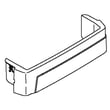
- If the door bins are cracked or sagging, replacing them can restore usable space; see GE refrigerator door bin, upper WR71X38318
Side-by-side refrigerators are great for tight kitchens and easy freezer access, but the narrower compartment layout can affect how you store wide items and how quickly you can find fresh foods.
Last updated: January 2026
What is the most common problem with GE refrigerators ice maker?
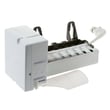
On the GE GSS23GYPFCFS side-by-side refrigerator, the most common ice maker issue is restricted water flow to the ice maker. That usually comes from a clogged filter, a partially closed shutoff valve, a kinked supply line, or a frozen fill tube, which prevents proper filling.
- Make sure the household shutoff valve is fully open.
- Dispense water at the door; weak flow usually points to a supply or filter restriction.
- Replace the filter if flow is slow or the filter is overdue (use GE refrigerator water filter XWFE).
- Check for a frozen or blocked fill tube at the back of the ice maker (see refrigerator ice maker fill tube WR17X11168).
- Empty clumped ice and fully reseat the ice bucket to clear jams.
If water flow and temperature look normal but the ice maker still will not fill, these model-compatible parts are common suspects:
| Symptom | What it often means | Part to consider |
|---|---|---|
| No water entering ice maker | Inlet valve not opening or restricted | Refrigerator water inlet valve WR57X30890 |
| Fill tube repeatedly freezes | Low flow or tube blockage at the inlet | Refrigerator ice maker fill tube WR17X11168 |
| Small or hollow cubes | Water restriction, often filter-related | GE refrigerator water filter XWFE |
Ice makers depend on steady water pressure and correct freezer temperature. When flow is restricted, cubes can be small or hollow, cycles can stall, and the fill tube can freeze, which leads to repeated “no ice” complaints.
For step-by-step troubleshooting and prevention tips, use our common refrigerator ice maker problems and solutions guide.
Last updated: January 2026
How to reset GE side-by-side refrigerator not cooling?
For the GE GSS23GYPFCFS side-by-side refrigerator, the most reliable “reset” for a not-cooling situation is a power reset: unplug the refrigerator for 60 seconds, then restore power and wait a few minutes for the control to reinitialize. If it still will not cool, a reset usually will not solve it.
- Confirm the unit has power (interior lights or display on).
- Unplug the refrigerator (or switch the breaker off) for 1 full minute.
- Restore power and wait 5 minutes.
- Set temperatures to normal targets (freezer 0°F, fresh food 37°F).
- Allow 24 hours to stabilize after a warm start or door-left-open event.
- Make sure doors close fully and nothing holds them open.
- Do not block air vents with food packages.
- Clean dust from the condenser area so heat can dissipate.
- Listen for the evaporator fan in the freezer; no fan airflow often means poor cooling.
- Check the display for any fault codes and interpret them using GE refrigerator error codes.
If your checks point to a failed component, these are examples of model-compatible parts that can affect cooling:
| Symptom clue | What it often points to | Example compatible part |
|---|---|---|
| Fridge warm, freezer cold | Weak or failed freezer airflow | Refrigerator evaporator fan motor WR60X10307 |
| Temps erratic or inaccurate | Temperature sensing problem | GE profile refrigerator temperature sensor WR55X10025 |
| Poor cooling and heavy dust buildup | Restricted condenser airflow | Refrigerator condenser fan WR60X10209 |
A reset can clear a temporary control glitch after a power interruption. Ongoing no-cool problems are more often caused by airflow restrictions, a fan issue, or a temperature-sensing problem, and they need troubleshooting to prevent food loss.
Last updated: January 2026