Owner’s manual




Which is better, .080 or .095 trimmer line?
For the Craftsman 154740980 gas line trimmer, .095-inch line is usually the better choice for tougher weeds and longer runtime between break-offs; .080-inch line is easier on the cutting head and works well for lighter trimming but breaks faster in heavy growth. For line size guidance specific to your trimmer head, use the Craftsman 154740980 manual.
Quick comparison: .080 vs .095 trimmer line
| Line diameter | Best for | Tradeoff | Typical feel |
|---|---|---|---|
| .080 in | Light grass, edging, detail work | Breaks sooner in thick weeds | Smoother, lighter load |
| .095 in | Heavy grass, weeds, fence lines | More drag; can reduce RPM if overloaded | More durable, aggressive |
How to choose the right line for your 154740980
- Match the cutting head spec first: the head has a max line diameter; exceeding it can cause poor feed or stalling.
- Use .095 for durability: fewer line breaks when cutting thicker growth.
- Use .080 for efficiency: less engine load and often better fuel economy in light trimming.
- Consider line shape: round line feeds easiest; twisted or serrated cuts more aggressively but can wear faster.
- Avoid overfilling the spool: too much line can jam the bump-feed.
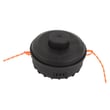
If your trimmer is not feeding line well or the head is worn, replacing the head can restore performance; see the compatible Craftsman line trimmer cutting head 199023000066 (or the alternate Craftsman line trimmer cutting head 199023000065) for this model.
Why it matters
Using the correct diameter helps the engine maintain RPM, reduces vibration, and prevents cutting head issues like line welding, poor bump-feed, and premature wear on the gearbox and drive shaft.
Last updated: January 2026
Who makes the best .095 trimmer line?
For the Craftsman 154740980 gas line trimmer, the “best” .095 trimmer line is the one that matches your cutting head’s feed style and your typical workload; a premium twisted or serrated .095 line from a major brand (such as Oregon) is a strong choice for durability and clean cutting. Confirm the supported line diameter and loading method in the 154740980 owner’s manual.
What to look for in .095 trimmer line
- Line shape: twisted or serrated line typically cuts cleaner and can be quieter than round line
- Durability: thicker .095 line usually lasts longer in heavy weeds and along fences
- Feed performance: some heads feed round line more smoothly than aggressive shapes
- Material quality: premium copolymers resist fraying and snapping better
- Spool size: larger spools reduce reloading time if you trim often
Match the line to your cutting head
Your results depend heavily on the cutting head installed on your Craftsman 154740980. If you are troubleshooting poor feed, frequent breakage, or uneven cutting, verify you have the correct head and that it is loaded correctly.
Helpful parts to reference for this model:
Quick comparison: common .095 line types
| Line type | Best for | Tradeoffs |
|---|---|---|
| Round | general trimming, smooth feeding | wears faster in thick weeds |
| Twisted | heavier weeds, cleaner cut | can reduce feed smoothness on some heads |
| Serrated or multi-sided | thick brushy growth | can be noisier, may break sooner on hard impacts |
Why it matters
Using the right .095 line helps your trimmer cut efficiently without overloading the engine, reduces bump-feed frustration, and can extend cutting head life by preventing jams and heat buildup.
Last updated: January 2026
What is the difference between a whipper, snipper, and a line trimmer?
A line trimmer is the general tool type for the Craftsman 154740980; it cuts grass and light weeds using a fast-spinning nylon line. Whipper snipper and snipper are common regional nicknames for the same kind of tool, although some people use “whipper snipper” to mean a trimmer that can also accept a blade-style head.
What each term usually means
- Line trimmer (string trimmer): Nylon line does the cutting; best for edging and routine trimming.
- Whipper snipper: Often used as a synonym for line trimmer; in some regions it implies heavier-duty trimming.
- Snipper: Another nickname for a line trimmer; typically refers to light trimming work.
How this affects parts and attachments on model 154740980
On the Craftsman 154740980, the practical difference comes down to what cutting attachment your unit is set up to use and what you are trying to cut. For routine trimming, a line-based head is the normal setup.
- If you are replacing a worn head, match the exact cutting head style used on your trimmer.
- If you are troubleshooting poor cutting, check for line feed issues, tangled line, or a worn head.
- If the engine runs rough while trimming, basic tune-up items (like the spark plug and air filter) can matter.
Common related parts for this model
| What you are working on | Part you may need | What it does |
|---|---|---|
| Line feeding and cutting | Craftsman line trimmer cutting head 199023000066 | Holds and feeds trimmer line for cutting |
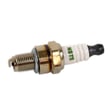
| Hard starting or misfire | Craftsman line trimmer spark plug 199999001291 | Ignites the fuel mixture in the engine |
| Poor power, dirty intake | Craftsman line trimmer air filter 202999001663 | Filters air going into the carburetor |
Where to confirm what your trimmer supports
We recommend checking the cutting attachment and safety guidance for the Craftsman 154740980 in the 154740980 owner’s manual. That is the best way to confirm whether your unit is intended for line-only use or if it supports alternate cutting attachments.
Why it matters
Using the right term helps you buy the right parts. “Line trimmer” points you toward nylon-line components (like a cutting head), while “whipper snipper” can sometimes be used to describe heavier-duty setups that may use different guards, heads, or hardware.
Last updated: January 2026
Do trimmer plus attachments work with Craftsman?
Yes, TrimmerPlus-style attachments can work with a Craftsman trimmer only if your specific Craftsman power head is a “split-shaft” attachment-capable design that accepts TrimmerPlus couplers. For Craftsman model 154740980, attachment compatibility depends on the shaft/coupler style shown in the Craftsman 154740980 owner’s manual.
How to confirm compatibility on model 154740980
Check these fit points before buying an edger, cultivator, or blower attachment:
- Coupler present: look for a clamp-style coupler between the engine and the lower shaft.
- Split shaft: the shaft separates into two sections (power head and attachment).
- Drive type: most systems use a flex cable/drive shaft inside the tube.
- Attachment interface: the attachment must match the coupler’s connection style.
- Shaft diameter and length: must match the attachment system requirements.
If your trimmer is a fixed (non-split) shaft design, TrimmerPlus attachments typically will not fit.
Parts that relate to attachment-style trimmers
If you are diagnosing whether your unit is an attachment-capable split shaft, these model-specific parts can be clues:
- Line trimmer drive shaft, lower 199999001284 (common on split-shaft designs)
- Craftsman line trimmer drive shaft, upper 199999001314 (upper section that mates to the power head)
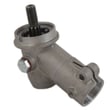
- Craftsman line trimmer gearbox 199999001283 (lower-end drive component on some configurations)
Quick compatibility checklist
| What you have | What it means | Likely result |
|---|---|---|
| Split shaft with coupler | Built for attachments | Often compatible |
| One-piece shaft, no coupler | Not built for attachments | Usually not compatible |
| Attachment brand says “universal” | Still requires correct coupler | Verify before purchase |
Why it matters
Using an attachment that does not match the coupler/drive interface can cause poor performance, premature wear to the drive shaft or gearbox, or an attachment that simply will not lock in place.
Last updated: January 2026