Owner’s manual
 Error Codes



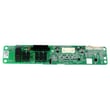

How do you put the bottom grill on a GE refrigerator?
On the GE GYE22GYNGFS bottom-mount refrigerator, the bottom grille (base grille/toe grille) typically installs by aligning its tabs and guides with the slots along the lower front frame, then pressing or sliding it into place until it seats evenly; reinstall any retaining screws if your grille uses them.
Steps to reinstall the bottom grille
- Unplug the refrigerator or switch off power at the breaker for safety.
- If needed, pull the refrigerator straight out a few inches so you can see the lower front edge clearly.
- Line up the grille’s tabs/clips with the matching slots along the bottom front frame.
- Slide the grille into position or press along the length of the grille until it snaps in evenly.
- Reinstall any screws (often Phillips-head) if your model’s grille is screw-retained.
- Confirm the grille is flush and not rubbing the doors or the freezer drawer.
Quick checks if it will not snap in
| What you see | Most likely cause | What to do |
|---|---|---|
| One side sits out | Tabs not aligned | Remove and re-seat, starting at one end |
| Grille bows in the middle | Clips not engaged | Press firmly at each clip location |
| Grille will not fit at all | Installed upside down or shifted | Flip orientation; re-align to slots |
| Doors/drawer rub after install | Grille not fully seated | Push in until fully flush; recheck alignment |
Why it matters
The bottom grille helps protect components at the base of the refrigerator and supports proper airflow around the lower front area. If it is loose or misaligned, it can rattle, catch the freezer drawer, or leave gaps that collect dust.
Helpful references
- Use the GYE22GYNGFS owner's manual to confirm the exact grille retention style (tabs, clips, or screws) and any model-specific removal and reinstallation notes.
Last updated: February 2026
What are the disadvantages of a bottom freezer refrigerator?
Bottom-freezer refrigerators like the GE GYE22GYNGFS put fresh food at eye level, but the tradeoffs are higher purchase cost, more bending to reach frozen items, and deep freezer drawers that can be harder to organize. Some owners also see more drain and defrost-related maintenance over time.
Common disadvantages to expect
- More bending and lifting: You reach down for frozen food, and heavy items (bulk meat, bags of ice) often sit low in the drawer.
- Harder freezer organization: Deep pull-out bins can hide smaller items underneath.
- Higher upfront cost: Bottom-freezer designs typically cost more than comparable top-freezer models.
- Potentially higher energy use: Many bottom-freezer units include features (dual evaporators, dispensers, fans) that can increase power use versus simpler designs.
- More places for ice and water issues: If your model has a dispenser or ice maker, water lines, filters, and valves add complexity.
- Drain and defrost upkeep: Clogged defrost drains can lead to water puddles or ice buildup in some bottom-freezer layouts.
Quick comparison: bottom freezer vs. top freezer
| Feature | Bottom freezer refrigerator | Top freezer refrigerator |
|---|---|---|
| Fresh food access | Easier (eye level) | Requires more bending |
| Freezer access | More bending | Easier (waist to chest level) |
| Freezer storage | Deep drawers, can bury items | Shelves/bins, often easier to see |
| Typical cost | Higher | Lower |
What we recommend for day-to-day convenience
- Store heavy frozen items in the upper basket (if equipped) to reduce lifting strain.
- Use small bins inside the freezer drawer to separate snacks, vegetables, and breakfast items.
- Keep a freezer inventory list on the door to avoid digging.
- If you have water/ice features, replace filters on schedule and purge air after filter changes.
Why it matters
Most “disadvantages” come down to ergonomics and organization. If your household uses the freezer frequently, the bending and deep-drawer layout can feel less convenient than a top-freezer design. For model-specific features and care guidance, use the GYE22GYNGFS owner’s manual.
Last updated: February 2026
What is the most common problem with a GE refrigerator?
The most common GE refrigerator complaint is not cooling well (fresh food warm, freezer soft ice). For your GE GYE22GYNGFS bottom-mount refrigerator, the usual causes are restricted airflow, dirty condenser coils, or an evaporator fan or defrost problem; use the GYE22GYNGFS owner's manual to confirm temperature settings and the recommended basic checks.
Most common causes (what we check first)
- Dirty condenser coils: reduces heat removal; the compressor runs longer and cooling drops.
- Blocked interior vents: overpacked shelves stop air circulation between compartments.
- Evaporator fan issue: weak or no airflow from the freezer into the fresh food section.
- Defrost system problem: frost on the evaporator blocks airflow and warms the refrigerator.
- Door sealing problem: warm, humid air leaks in and causes temperature swings.
Quick troubleshooting steps for weak cooling
- Set target temperatures: fresh food about 37°F, freezer about 0°F.
- Clear airflow paths: keep vents open; avoid pushing food against vent openings.
- Check for frost patterns: heavy frost on the freezer back panel points to a defrost or airflow restriction.
- Clean the condenser area: remove dust from coils and the condenser fan area (if equipped).
- Verify door closure: confirm drawers, bins, and packages are not holding the doors open.
Symptoms and likely causes
| Symptom | Most likely cause | What we do next |
|---|---|---|
| Fresh food warm, freezer OK | Blocked vents or weak evaporator fan | Clear vents; check for fan noise and airflow |
| Both sections warm | Dirty coils, condenser fan issue, control/sensor issue | Clean coils; check for displayed error codes |
| Frost buildup, weak airflow | Defrost system problem | Defrost and inspect for recurring frost buildup |
| Runs constantly | Dirty coils, door leak, warm room, frequent openings | Clean coils; check gasket contact and door alignment |
Why it matters
Poor cooling risks food spoilage and forces longer run times, which increases energy use and accelerates wear on the compressor, fans, and defrost components.
Helpful DIY resources
- Use GE refrigerator error codes when the display shows a fault code or you suspect a sensor/control issue.
- For airflow-related symptoms, follow how to fix your evaporator cooling fan.
- For warm-air leaks, use how to fix a fridge door seal.
Last updated: February 2026