Error Codes




How much does it cost to replace a gas oven igniter?
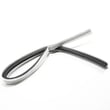
For a Magic Chef gas range model 6498VVV, replacing a gas oven igniter typically runs about $150 to $325 total when you hire service (part plus labor). If you do the repair yourself, the cost is usually the igniter price only, and this model’s compatible igniter is the oven igniter 12400035.
Costs vary most by labor rates and whether the igniter is a direct-fit match for your range.
- DIY parts-only: commonly $30 to $90
- Service call and labor: commonly $100 to $250
- Total professional repair: commonly $150 to $325
| Scenario | What you pay for | Typical total |
|---|---|---|
| DIY replacement | Igniter (and possibly a connector) | $30 to $90 |
| Pro replacement | Igniter + labor + service call | $150 to $325 |
These factors usually explain why two igniter replacements can cost very different amounts:
- Service call minimums in your area
- Access time (some ranges require more disassembly)
- Wiring condition (brittle or heat-damaged connectors add time)
- Extra parts found during diagnosis (for example, a weak spark system or control issue)
- After-hours or emergency scheduling
A weak igniter is one of the most common reasons a gas oven will not heat.
- Oven takes a long time to ignite, then finally lights
- Burner lights sometimes, but not consistently
- You smell gas briefly before ignition (stop and ventilate if this happens)
- Broil works but bake does not (or the reverse)
If the igniter glows but the burner never lights, the igniter can still be bad because it may not be drawing enough current to open the gas valve.
A failing igniter can cause no-heat, slow preheat, and inconsistent baking temperatures. Replacing it promptly helps restore normal ignition timing and reduces stress on other gas-range components.
Last updated: February 2026
How do you find the year of the Magic Chef serial number?
For a Magic Chef range like model 6498VVV, the manufacture date is typically encoded in the serial number as a 2-character date code: the first letter indicates the year and the second letter indicates the month. Once you identify those two letters, you can translate them to a specific month and year.
You will usually find the model and serial tag in one of these spots:
- On the oven frame behind the storage drawer (pull the drawer out)
- Along the oven door frame (visible when the door is open)
- Behind the control panel area (less common)
Many Magic Chef serial numbers end with two letters that act as the date code.
- 1st letter = year code (a letter that maps to a specific year)
- 2nd letter = month code (A through L is commonly used for Jan through Dec)
- The date code is often at the end of the serial number
Example pattern:
| Serial number ending | Meaning | What you get |
|---|---|---|
...LA |
L = year, A = month |
A specific year + January |
...CF |
C = year, F = month |
A specific year + June |
This is the most common month mapping used in appliance date codes:
- A = January
- B = February
- C = March
- D = April
- E = May
- F = June
- G = July
- H = August
- I = September
- J = October
- K = November
- L = December
Knowing the exact month and year helps us match the right replacement parts for your Magic Chef 6498VVV gas range, especially for components that change by production run (for example an igniter, spark module, or door hinge). If you are troubleshooting ignition or baking issues, checking parts like the oven igniter 12400035 is often a practical next step.
Last updated: February 2026
Are all stove igniters universal?
No. Stove (range) igniters are not universal; the correct igniter must match your range’s mounting style, electrical connector, and ignition type. For a Magic Chef gas range model 6498VVV, we recommend matching by model first, then replacing with the exact igniter style used on your range.
Many “universal” oven igniters are designed to fit many ranges, but they still require the right fit and safe wiring connections.
Common differences that prevent a true universal fit:
- Mounting bracket shape and hole spacing
- Connector type (plug-in vs. bare leads)
- Igniter style (hot surface vs. spark)
- Wire length and heat shielding
- Current draw and heat-up performance (affects ignition reliability)
Start by identifying whether you’re fixing the oven burner (bake) ignition or the surface burner spark ignition.
- If the oven won’t heat or takes a long time to light, the oven igniter is a top suspect: oven igniter 12400035
- If the surface burners won’t click or won’t spark, ignition components in the spark system are more likely:
- Spark module 12001596
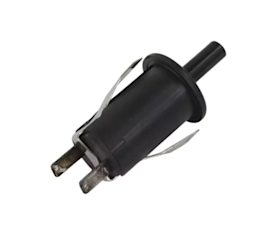
- (Some models also use an igniter switch; match by model and symptom.)
| Symptom | Most likely system | Part to check first |
|---|---|---|
| Oven won’t ignite, no flame | Oven ignition | Oven igniter 12400035 |
| Surface burners do not click | Spark ignition | Spark module 12001596 |
| Clicking continues after lighting | Spark ignition or switch issue | Spark module 12001596 |
Using the wrong igniter can cause delayed ignition, weak ignition, nuisance clicking, or wiring damage from improper connections. Matching the correct part for your Magic Chef 6498VVV helps restore safe, consistent burner lighting.
Last updated: February 2026
How do I know if my igniter is bad on my gas oven?
A bad oven igniter on your Magic Chef 6498VVV gas range usually shows up as very slow preheating, a burner that will not light, or a delayed ignition that causes a small “whoosh.” If the igniter is weak, it may glow but still not pull enough current to open the oven gas valve.
- Oven takes much longer than normal to reach temperature.
- You see the igniter glow, but the bake burner never lights.
- Burner lights after a long delay and you hear a brief “whoosh.”
- Flame is weak, uneven, or cycles off too soon.
- You smell gas briefly with no ignition (turn the oven off and ventilate).
- Watch the igniter during a bake cycle: it should glow bright and the burner should light shortly after.
- Inspect for damage: cracks, white spots, or a burned area on the igniter often indicate failure.
- Check the burner area for blockage: grease or debris around the burner ports can delay ignition.
If you are comfortable using a multimeter and clamp meter, the most reliable confirmation is electrical testing.
| Test | What you’re looking for | What it suggests if it’s off |
|---|---|---|
| Igniter current draw (amps) | Typically around 3.0 to 3.4 amps for many hot-surface igniters | Low amps often means the igniter is too weak to open the gas valve |
| Igniter resistance (ohms) | Commonly about 80 to 175 ohms (varies by style) | Open circuit or abnormal reading points to a failed igniter |
A weak igniter is the most common reason a gas oven will not heat even though it appears to be “trying.” Replacing the igniter restores normal ignition timing, helps prevent delayed ignition, and gets baking temperatures back to normal.
If your oven will not heat, these model-matched parts are often involved:
- Oven igniter 12400035 (most common fix for no-heat or slow-heat)
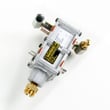
- Oven valve WP74006427 (if the igniter tests good but gas is not opening)
- Spark module 12001596 (more related to surface ignition issues than bake heat)
Last updated: February 2026