Installation guide
 Owner’s manual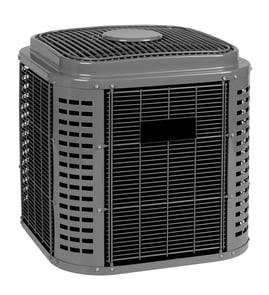




How many tons is a 48000 BTU AC unit?
A 48,000 BTU air conditioner is 4 tons of cooling capacity (because 1 ton equals 12,000 BTU per hour). For your Carrier 38TKB060 condensing unit, “tons” is a sizing term; always match capacity to your home’s load calculation and the indoor coil.
- 1 ton = 12,000 BTU/hr
- 48,000 BTU/hr ÷ 12,000 = 4 tons
- “Tonnage” describes cooling output, not the physical weight of the unit
| Cooling capacity | BTU per hour | Common label |
|---|---|---|
| 3 tons | 36,000 | 3T |
| 4 tons | 48,000 | 4T |
| 5 tons | 60,000 | 5T |
Correct sizing helps your central air conditioner:
- Control humidity (especially in humid climates)
- Maintain steady temperatures without short cycling
- Reduce wear on the compressor and contactor
- Keep energy use in check
This 38TKB series installation information calls out setup details that affect performance, including:
- Clearance requirements for airflow and service access
- Operating ambient limits (cooling operation has a minimum outdoor ambient listed)
- Refrigerant line connection sizing by unit size
For the exact installation requirements and connection details for your unit size, use the installation guide.
Even if 4 tons sounds correct, we size systems based on the home and the full system match:
- Home square footage, insulation, windows, and sun exposure
- Duct sizing and airflow
- Indoor coil and metering device match
- Refrigerant line length and diameter
Last updated: February 2026
Is Carrier a good AC brand?
Yes. Carrier is a strong, well-established HVAC brand, and Carrier central air conditioner systems like model 38TKB060 are built for dependable cooling when they are correctly sized, installed, and maintained. In real-world performance, installation quality and proper electrical setup matter as much as the brand; use the owner's manual as your baseline for safe operation and care.
A “good” brand is one that delivers consistent comfort, reasonable operating noise, and long service life with normal maintenance. For a split-system outdoor unit (condensing unit) like the Carrier 38TKB060, the biggest drivers of satisfaction are:
- Correct system sizing for your home
- Proper refrigerant charge and airflow across the indoor coil
- Solid electrical connections that follow code requirements
- Routine cleaning and seasonal inspection
- Timely replacement of worn components (fan motor, contactor, etc.)
Carrier’s installation guidance emphasizes that wiring must conform to NEC or local codes, and some systems include protective controls such as pressure switches, temperature switches, or compressor cycle protection. Those details directly affect reliability and compressor life.
- Keep the outdoor coil clear of leaves, grass, and lint
- Maintain clearance around the condensing unit for airflow
- Replace/clean the indoor air filter on schedule
- Verify the thermostat is correctly wired and configured
- Address buzzing, hard starts, or fan noise early
If cooling is weak, the outdoor fan is not running, or the unit is noisy, these model-related parts are often involved:
| Symptom | Common area to inspect | Example part on this model page |
|---|---|---|
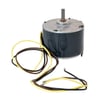
| Outdoor fan not spinning or loud | Condenser fan motor and capacitor circuit | Central air conditioner condenser fan motor HC39GE237 |
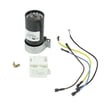
| Clicking but no compressor start | Start components and electrical controls | Central air conditioner compressor hard start kit KSAHS1501AAA |
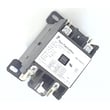
| Outdoor unit will not pull in | Low-voltage control and switching | Contacter HN52KD020 |
Even a premium Carrier condensing unit can underperform if airflow, wiring, or controls are off. When the system is installed to code and maintained, Carrier equipment typically delivers stable comfort and long-term value.
Last updated: February 2026
Is it hard to get Carrier parts?
For the Carrier 38TKB060 condensing unit, getting the right replacement part is usually straightforward when you match the exact model and the failed component; the main delays happen when a part is model-specific, discontinued, or requires a licensed HVAC tech to install (common with electrical and sealed-system repairs). Use the parts list for 38TKB060 and confirm model and serial details in the owner's manual.
- Model and series matching: Carrier often has similar-looking units with different electrical and refrigerant components.
- OEM vs. universal substitutions: Some items (like capacitors) can be substituted, but many Carrier components should be OEM-matched.
- HVAC safety and licensing: Sealed-system parts (refrigerant circuit) and some electrical repairs are typically handled by a technician.
- Availability swings: Stock can vary by part type; motors and controls are more likely to be special-order than hardware.
If your outdoor unit is running poorly, these are common suspects for 38TKB060:
- Central air conditioner condenser fan motor HC39GE237
- Contacter HN52KD020
- Central air conditioner compressor hard start kit KSAHS1501AAA
| Symptom at outdoor unit | Common cause | Part to check first |
|---|---|---|
| Fan not spinning, compressor may run | Failed fan motor | Condenser fan motor |
| Clicking or buzzing, no start | Weak start components | Compressor hard start kit |
| Unit will not pull in (no “clunk”) | Failed contactor or control issue | Contacter |
- Verify the outdoor unit model is 38TKB060 and note the serial number.
- Identify the failed component (fan motor, contactor, start kit, etc.).
- Compare the part description and identifiers to the parts list for this model.
- For wiring and control-circuit questions, reference the installation guide so connections match NEC and local codes.
Carrier systems are sensitive to correct electrical ratings and control wiring. Ordering the exact match reduces repeat failures, nuisance trips, and installation delays, especially on components like a condenser fan motor or contactor.
Last updated: February 2026
What AC parts are most commonly replaced?
For the Carrier 38TKB060 condensing unit, the most commonly replaced AC parts are the electrical start components and moving parts that wear over time, plus refrigerant-circuit service parts used during sealed-system repairs. Routine maintenance in the owner's manual helps reduce failures.
- Condenser fan motor: moves air across the outdoor coil; failure can cause overheating and shutdown.
- Contactor: switches high voltage to the compressor and fan; pitted contacts can cause no-cool or intermittent operation.
- Compressor start components (hard start kit, capacitors): help the compressor start and run; weak components can cause hard starting or humming.
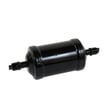
- Filter drier: protects the sealed system by trapping moisture and debris; commonly replaced when the system is opened.
- Accumulator: helps prevent liquid refrigerant from returning to the compressor; replaced during certain sealed-system repairs.
These are examples of replacement parts listed for this model:
| Part type | Example part on this model | When it is commonly replaced |
|---|---|---|
| Condenser fan motor | Central air conditioner condenser fan motor HC39GE237 | Fan not running, noisy bearings, overheating trips |
| Compressor start aid | Central air conditioner compressor hard start kit KSAHS1501AAA | Hard start, clicking, compressor struggles to start |
| Contactor | Contacter HN52KD020 | Outdoor unit will not start, chattering, burnt contacts |
| Sealed-system service part | Filter drier (part number P502-8163S) | After refrigerant repair or compressor replacement |
| Sealed-system service part | Accumulator (part number KH71KN161) | After compressor damage or contamination cleanup |
The manual calls out routine steps that directly protect major components:
- Check indoor air filter(s) every 3 to 4 weeks; replace or clean as needed.
- Keep filters completely dry before reinstalling (for reusable types).
- Schedule a regular system inspection (preferably yearly, at least every other year) that includes coil cleaning and electrical checks.
- Disconnect power to both indoor and outdoor units before any maintenance (there may be more than one disconnect).
A dirty indoor air filter can strain the compressor and blower motor, leading to overheating, shutdowns, and premature part replacement. Staying on top of filter and coil maintenance is the simplest way to reduce expensive repairs.
Last updated: February 2026