Installation guide
 Owner’s manual



What are the common problems with Whirlpool dryers?
Common Whirlpool dryer problems (including the Whirlpool WED8200YW2 27-inch electric dryer) are no-start, no-heat, long dry times from poor airflow, and drum not tumbling due to worn drive parts. Many “dryer issues” trace back to power supply, door/controls, or a restricted vent system; check those first using the WED8200YW2 installation guide.
Most common symptoms and what they usually mean
- Dryer will not start: door not fully closed, Start not pressed firmly, controls not set to run, or a power supply issue.
- Drum turns but no heat: one side of the 240V supply is missing (often a tripped breaker or blown fuse).
- Long dry times or “Check Vent”: crushed/blocked vent, too many elbows, or lint buildup.
- Squealing, thumping, or rumbling: worn rollers or idler pulley.
- Drum not spinning: broken belt or failed idler pulley.
Quick checks we recommend (fastest wins)
- Confirm both dryer breakers are ON (electric dryers commonly use two).
- Make sure the door fully latches; a weak latch can prevent starting.
- Clean the lint screen and verify the outside hood flap opens freely.
- Inspect the vent run for kinks; use clamps to seal joints (no duct tape).
- Use heavy metal venting only; avoid plastic or foil vent.
Parts that commonly fix these problems on WED8200YW2
| Symptom | Common wear item | Example part for this model |
|---|---|---|
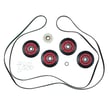
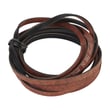
| Drum not turning | Drum belt | Dryer drum belt WP8547157 |
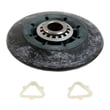
| Squeal/thump | Support rollers | Dryer drum support roller WPW10314173 |
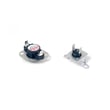
| No start after overheating | Thermal fuse | Dryer thermal fuse WP3390719 |
Why it matters
Restricted airflow is more than an inconvenience; it drives longer cycles, overheating, and repeated fuse or thermostat failures. Following the venting rules in the WED8200YW2 installation guide helps the dryer heat correctly and dry efficiently.
Last updated: February 2026
What is the life expectancy of a Whirlpool Cabrio dryer?
A Whirlpool Cabrio electric dryer like model WED8200YW2 typically lasts about 10 years with normal household use. With good airflow (proper venting), routine lint cleaning, and timely replacement of wear parts, many dryers reach 12 to 15 years.
Typical lifespan (what we see most often)
Dryer life depends mainly on heat stress, airflow restriction, and how hard the drive system works.
- Average: ~10 years
- Common range: 8 to 12 years
- Well-maintained units: 12 to 15 years
- Heavy use (large family, daily loads): often shorter
| Usage pattern | What it usually means for lifespan | Biggest factor |
|---|---|---|
| Light (1 to 3 loads/week) | Longer life | Less heat and motor run time |
| Average (4 to 7 loads/week) | Around average | Normal wear on belt and rollers |
| Heavy (multiple loads/day) | Shorter life | Faster wear, more heat cycles |
What extends the life of a Cabrio dryer
We focus on the items that prevent overheating and reduce strain on the drum drive.
- Clean the lint screen every load; replace a damaged screen such as screen W10120998
- Keep the vent path short and direct; avoid crushed or kinked venting (see installation guide)
- Use rigid metal venting when possible and limit 90° elbows
- Do not overload; overloading accelerates belt, roller, and idler wear
- Address squealing or thumping early (rollers, idler pulley, belt)
- If drying times increase, correct airflow issues before they overheat safety fuses
Signs your dryer is nearing end-of-life (or needs key parts)
These symptoms often point to serviceable wear parts, not necessarily a full replacement.
- Loud squeal or rumble (rollers or idler pulley)
- Drum not turning or slipping (belt)
- Long dry times (venting restriction, heating issue)
- Dryer stops mid-cycle (overheat condition, thermal fuse)
Common wear items for WED8200YW2 include the dryer drum belt WP8547157 and dryer drum support roller WPW10314173.
Why it matters
A dryer that runs hot or takes too long to dry wears out faster and can repeatedly blow safety devices like thermal fuses. Following the venting limits and airflow guidance in the WED8200YW2 owner’s manual helps protect the heater, motor, and controls.
Last updated: February 2026
How to tell if a Whirlpool dryer motor is bad?
A bad drive motor on a Whirlpool WED8200YW2 often shows up as a drum that will not tumble, a motor that only hums, or a dryer that stops mid-cycle. If the motor’s internal thermal protector will not reset and the motor windings test open, replacing the motor is the fix (not a fuse or belt).
Quick checks first (rule out common look-alikes)
Before condemning the motor, we check the basics that can mimic a “bad motor” symptom:
- Confirm the dryer is getting full power; electric dryers use two fuses or breakers
- Make sure the door is fully closed and the controls are set to run
- If the display shows L2, the drum can still turn but the heater may not heat due to low line voltage
- If the dryer will not start at all, verify the Start button is pressed firmly
- If airflow is restricted ("Check Vent"), overheating can trip safety devices and cause shutdowns
For model-specific startup and diagnostic notes, use the WED8200YW2 installation guide.
How we test the motor (safe, practical approach)
Unplug the dryer before accessing internal parts.
- Try turning the drum by hand; if it is hard to turn, check for a seized roller or idler first
- Listen for a hum with no drum movement; that often points to a stuck drum, failed start winding, or a jammed blower
- If the dryer runs briefly then stops and restarts only after cooling, the motor thermal protector may be tripping
- Use a multimeter to check motor windings and the thermal protector for continuity (open readings indicate failure)
If the drum does not move but the motor runs, inspect the belt; the correct belt for this model is the dryer drum belt WP8547157.
Symptom-to-cause guide
| What you notice | Most likely cause | What to check next |
|---|---|---|
| Motor hums, drum does not move | Jammed drum or weak motor start circuit | Drum rollers, idler, blower wheel, motor tests |
| Runs 5 to 30 minutes then stops | Motor overheating or airflow restriction | Venting, lint screen, motor thermal protector |
| No tumble, no sound | Power/door/control issue | Breakers, door switch, control settings |
| Drum turns but no heat, L2 code | Low/no line voltage to heater | House fuses/breakers, cord/terminal block |
Why it matters
A failing motor can overheat and repeatedly trip protection devices, and a tight drum support system can make a good motor look bad. Checking airflow and drum support parts first prevents unnecessary motor replacement.
Last updated: February 2026