Owner’s manual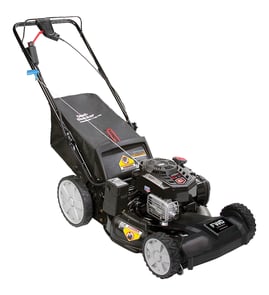




Can you still buy 2 stroke lawn mowers?
Yes. You can still buy 2-stroke lawn mowers, but they are far less common than 4-stroke walk-behind mowers today; most new push mowers are 4-stroke, while 2-stroke engines show up more often in specialty or older designs. For your Ryobi 96116000202 gas walk-behind mower, use the maintenance and safety guidance in the owner's manual to identify the engine type and service it correctly.
We recommend confirming by checking the engine labeling and the fuel instructions.
- Check the fuel cap, tank label, or engine shroud for “mix oil with gas” (2-stroke) or “gasoline only” (4-stroke)
- Look for an engine oil fill/dipstick; a dipstick typically indicates a 4-stroke engine
- Review the fuel and maintenance sections in the manual for oil and storage steps
- If the pull cord is hard to pull or the engine won’t start, follow the manual’s safety steps before troubleshooting
2-stroke engines are lightweight and simple, but they require mixing oil with gasoline and typically run louder and smokier than 4-stroke engines.
| Feature | 2-stroke mower | 4-stroke mower |
|---|---|---|
| Fueling | Gas mixed with oil | Gas in tank; oil in crankcase |
| Routine upkeep | Mix ratio accuracy is critical | Oil changes are routine |
| Typical use today | Specialty, older models | Most current walk-behind mowers |
Keeping the cutting system in good shape improves performance regardless of engine type.
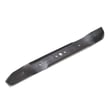
- Replace a worn or damaged blade with the correct lawn mower blade 532406713
- If the blade slips or won’t seat correctly, inspect the blade adapter 532418373
- Always disconnect the spark plug wire before servicing the blade (the manual calls this out)
- Tip the mower on its side with the air filter and carburetor facing up when removing the blade
Using the wrong fuel type (straight gas vs. mixed fuel) can cause hard starting, poor performance, and engine damage. Following the correct storage steps also helps prevent fuel problems during the off-season.
Last updated: February 2026
How much does a 48 inch walk behind mower weigh?
A true 48-inch walk-behind mower is a commercial-size machine and typically weighs 300 to 550 lb. Your Ryobi lawn mower model 96116000202 uses a much smaller deck (the parts list shows a 22-inch blade), so 48-inch weight specs do not apply; use the 96116000202 owner's manual for your mower’s exact specifications.
These ranges help when you are shopping ramps, tie-downs, or a trailer for a commercial 48-inch unit:
- Belt-drive commercial walk-behind: 300 to 450 lb
- Hydro-drive commercial walk-behind: 400 to 550 lb
- Add-ons (sulky, bagger, guards): add 20 to 80 lb
The replacement parts for model 96116000202 include a 22-inch cutting blade, which is standard for a residential walk-behind mower.
- The listed blade is lawn mower blade 532406713
- A 48-inch mower uses a much larger deck and different blade system than a single 22-inch blade
- Transport and storage needs are completely different between 22-inch and 48-inch machines
| Mower size/type | Typical weight | Common use |
|---|---|---|
| 22-inch walk-behind (like 96116000202) | 60 to 90 lb | Residential mowing |
| 48-inch commercial walk-behind | 300 to 550 lb | Large lawns, pro use |
Weight affects ramp rating, trailer capacity, and safe handling on slopes. For operating and safety guidance specific to Ryobi model 96116000202, follow the safety and operation sections in the 96116000202 owner's manual.
Last updated: February 2026
What are the common problems with Ryobi lawn mowers?
Common problems on the Ryobi 96116000202 gas walk-behind mower are no-start, loss of power, poor or uneven cutting, excessive vibration, and a starter rope that’s hard to pull. Most issues trace back to fuel/air/spark basics, grass buildup under the deck, or a loose, worn, or damaged blade and blade adapter (see the owner's manual).
- Won’t start: stale fuel, dirty air filter, spark plug wire off, bad spark plug, control bar not held to the handle
- Loses power or bogs down: cutting too low, heavy grass, dirty air filter, debris packed under the deck
- Poor or uneven cut: dull/bent blade, uneven wheel height settings, deck packed with clippings
- Excessive vibration: loose blade hardware, bent blade, damaged blade adapter
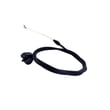
- Starter rope hard to pull: blade dragging in grass, blade adapter damage, brake engaged when control bar is released
- Shut the engine off and wait for the blade to stop completely before inspecting or clearing clogs.
- Confirm the control bar is held firmly to the handle during starting.
- Check fuel condition; drain and refill with fresh gasoline if it’s old.
- Inspect the underside of the mower deck for packed grass and debris.
- Inspect the blade area for looseness or damage.
If the mower shakes, cuts poorly, or the blade seems loose, these model-compatible parts are common fixes:
| Symptom | Likely wear item | Example part for this model |
|---|---|---|
| Uneven cut, ragged grass tips | Blade | Lawn mower blade 532406713 |
| Vibration, blade won’t stay tight | Blade adapter | Blade adapter 532418373 |
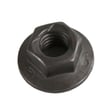
| Blade hardware won’t hold torque | Lock nut | Hex flange lock nut 532409149 |
A dull or loose blade can cause poor cut quality and vibration; vibration is a warning sign that can quickly damage the blade adapter, fasteners, and even the engine crankshaft if you keep mowing.
Last updated: February 2026
Where can I buy replacement parts for Ryobi?
You can buy replacement parts for your Ryobi lawn mower model 96116000202 directly from the parts list for this model. We list model-matched parts such as blades, blade adapters, wheels, handle hardware, and fasteners so you can repair and maintain the mower with the correct fit.
Start with the exploded parts diagrams and part list, then confirm the part by location and description in the owner's manual.
- Match the part to the diagram section (deck, handle, wheels, blade area)
- Confirm the part name and ID before ordering
- Replace worn blade hardware when you replace the blade
- Keep fasteners tightened securely after any assembly or repair (per the manual)
- If you struck an object, inspect the blade and blade adapter before mowing again
These are examples of model-listed parts that are commonly replaced during routine service:
- Lawn mower blade 532406713
- Blade adapter 532418373
- Lawn mower wheel, front 532442640
- Upper handle 532194179
| Repair or maintenance need | Parts to check first | Why |
|---|---|---|
| Poor cut quality or vibration | Blade, blade adapter, blade hardware | A bent/dull blade or worn adapter can cause vibration and uneven cutting |
| Blade replacement | Blade, lock nut/washer as needed | Worn hardware can loosen and damage the crankshaft area |
| Handle feels loose | Handle bolt, handle parts | Loose handles can pinch or damage control cables |
| Wheel wobble | Front wheel, hairpin/fasteners | Worn wheels or retainers affect tracking and cut consistency |
Ordering by the exact model number 96116000202 helps ensure the part fits your deck and handle configuration, and it supports safe operation. The manual also emphasizes keeping the mower free of debris, tightening hardware securely, and using extra caution around sharp blades.
Last updated: February 2026