 Owner’s manual


What is the average lifespan of an LG washer?
Most LG washers, including model WT4970CW, typically last 10 to 15 years with normal household use. You can push lifespan toward the high end by keeping the tub clean, avoiding chronic overloading, and fixing small issues (like draining or filling problems) before they strain the motor and drive system.
- Load size and balance: frequent overloading and unbalanced loads increase wear on the suspension and drive components.
- Monthly tub cleaning: LG recommends using the TUB CLEAN cycle monthly to reduce buildup that can cause odors and performance issues (see the WT4970CW owner's manual).
- Water quality: hard water can leave mineral scale that affects valves, sensors, and wash performance.
- Drain health: slow draining makes cycles run longer and can stress the pump.
- Fast response to symptoms: unusual noise, poor agitation, or water left in the tub should be addressed early.
| Task | How often | Why it matters |
|---|---|---|
| Run TUB CLEAN with washer cleaner or descaler | Monthly | Helps prevent mold, odor, and residue buildup |
| Check hoses for bulges/leaks and verify strong fill flow | Every 6 months | Protects against fill problems and water damage |
| Level the washer and re-check after moving | As needed | Reduces vibration and out-of-balance wear |
| Use the right detergent amount (especially HE) | Every load | Too much soap can cause residue and poor rinsing |
If your WT4970CW starts acting up, these model-matched parts are often involved:
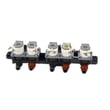
- Won’t fill or fills slowly: LG washer water inlet valve assembly AJU73213301
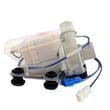
- Won’t drain or leaves water in the tub: washer drain pump assembly 5859EA1004P
- Won’t start or won’t spin because the lid won’t lock: washer lid lock EBF61674802
A washer that is kept clean and running balanced usually reaches its full service life because the motor, shifter, and pump spend less time fighting extra friction, residue, and vibration. That means fewer breakdowns and better cleaning performance over the years.
Last updated: February 2026
What is the warranty on the LG WT4970CW?
For the LG WT4970CW washer, LG provides a limited warranty that covers defects in materials or workmanship under normal household use. Warranty terms vary by component and by country; we recommend confirming the exact coverage and exclusions in the WT4970CW owner's manual.
From the warranty section, LG’s limited warranty is designed around component-based coverage and requires proof of original retail purchase.
- Coverage applies to defects in materials or workmanship under normal household use
- Valid for the original retail purchaser (not transferable)
- Applies when purchased through an LG authorized dealer and used in the U.S. (including U.S. territories)
- Replacement parts/products are covered for the remaining original warranty or 90 days (whichever is longer)
- In-home service depends on service availability and access to the washer
The warranty section also lists common non-covered situations. These are the items that most often affect whether a repair is covered.
- Delivery, pickup, installation, or product-use instruction visits
- House electrical issues (fuses, breakers, wiring) or plumbing corrections
- Problems caused by restricted drain lines or inadequate water supply
- Damage from accidents, pests, weather events, fire, or flooding
- Misuse, abuse, improper installation, or improper maintenance
- Repairs using parts not approved or specified by LG
| Warranty topic | What to check | Where to confirm |
|---|---|---|
| Coverage length | Parts vs. labor and any extended component coverage | WT4970CW owner's manual |
| Eligibility | Original purchaser, proof of purchase, authorized dealer | WT4970CW owner's manual |
| Service details | In-home service availability and access requirements | WT4970CW owner's manual |
| Exclusions | Installation, plumbing, electrical, misuse, non-approved parts | WT4970CW owner's manual |
Warranty terms affect whether you should troubleshoot first, schedule service, or replace a part. For example, if a fill problem is traced to a failed inlet valve, you may be looking at a repair involving the LG washer water inlet valve assembly AJU73213301, and warranty eligibility can change the total cost.
Last updated: February 2026
How do I tell what model LG washer I have?
Your LG washer’s model number is printed on the rating label; on the LG WT4970CW, you’ll use that exact model number to match the correct parts, specifications, and troubleshooting steps. Check inside the lid opening first, then the back panel or cabinet side for the sticker.
- Inside the lid opening along the top rim of the cabinet (most common on top-load washers)
- On the back of the washer near the power cord and water connections
- On the side of the cabinet (left or right side panel)
- In the paperwork that came with the washer (manual packet)
Record the model number and serial number exactly as shown on the label.
| Item on label | What it’s used for | Example |
|---|---|---|
| Model number | Matching parts diagrams and specifications | WT4970CW |
| Serial number | Service history and manufacturing info | (varies) |
| Electrical rating | Confirming power requirements | 120 VAC @ 60 Hz |
For model-specific specs and identification details, use the WT4970CW owner's manual.
LG often makes small design changes across similar-looking washers. Using the exact model number (like WT4970CW) helps us point you to the right components such as the washer lid lock EBF61674802 or the LG washer water inlet valve assembly AJU73213301, and it prevents ordering a part that will not fit.
Last updated: February 2026
What is the capacity of the WT4970CW?
The LG WT4970CW washer has an oversized 4.5 cu. ft. tub capacity, which is designed to handle larger loads like towels, bedding, and mixed-family laundry. For cycle-by-cycle loading guidance, we recommend checking the WT4970CW owner's manual.
Capacity is the tub volume, not a guaranteed weight limit. In practice, performance depends on fabric type, water level, and how freely items can move during wash and spin.
Good fits for a 4.5 cu. ft. top-load washer:
- Large towel loads (bath towels and hand towels)
- Mixed loads of jeans, shirts, and activewear
- Bulky items (comforters) when they can circulate freely
- Heavier items washed in smaller batches to reduce imbalance
Overloading is a common cause of poor cleaning, out-of-balance spinning, and vibration.
- Load items loosely; avoid packing clothes down
- Keep the load balanced (mix large and small items)
- Wash bulky items by themselves or with a few similar pieces
- If the washer struggles to spin, reduce the load size and redistribute
- If you see frequent imbalance symptoms, use the guidance in LG top load washer ue and ue error codes
| What you do | What you may notice | What to change |
|---|---|---|
| Pack the tub tightly | Poor agitation and rinsing | Load loosely, do not compress |
| Wash one heavy item alone | Thumping, spin stops | Add a few similar items |
| Mix one blanket with many small items | Off-balance spin | Separate bulky loads |
Using the right load size helps the WT4970CW clean better, spin out more water, and reduce wear on key components like the suspension and drive system.
Last updated: February 2026
What is the most common problem with LG washers?
The most common LG washer problems are drain and spin complaints: the washer will not drain, stops mid-cycle, or shows out-of-balance behavior during spin. On the LG WT4970CW, these symptoms are often tied to load balance, water supply restrictions, or normal drain-pump operation sounds described in the WT4970CW owner's manual.
- Out-of-balance during spin (uE/UE behavior): shaking, thumping, stopping to redistribute.
- Water fill problems: slow fill, no fill, or fill errors when inlet screens clog.
- Drain concerns: humming or gurgling near the end of the cycle (often normal), or failure to drain when a pump or blockage issue exists.
- Leaks at the back connections: loose hoses or missing/clogged inlet filters.
- Noise complaints: coins or small items in the tub or pump area.
- Rebalance the load: mix similar items, avoid one heavy item (blanket, rug) by itself.
- Confirm water taps are fully open and hoses are not kinked or pinched.
- Clean the inlet screens: the manual instructs removing inlet filters and soaking them in white vinegar or lime scale remover, then rinsing and reinstalling; do not run the washer without the inlet filters.
- Listen for normal drain sounds: humming or gurgling at the end of the cycle is commonly the drain pump moving water.
- If the washer repeatedly will not drain: inspect for obstructions and consider the washer drain pump assembly 5859EA1004P if diagnosis points to a failed pump.
| Symptom | Most likely cause | What to do first |
|---|---|---|
| Stops and refills during spin | Load sensed as unbalanced | Redistribute load; reduce load size |
| Slow/no fill | Clogged inlet filters or restricted hoses | Clean inlet screens; open taps fully |
| Humming/gurgling at end | Drain pump operating | Verify it drains; check for standing water |
| Lid-related stop | Lid lock issue | Follow troubleshooting steps in the manual |
Most “LG washer problems” are preventable: balanced loads reduce uE/UE spin interruptions, and clean inlet filters protect the water inlet valve and help prevent leaks and fill errors. For model-specific error behavior and checks, use the LG top load washer error codes reference.
Last updated: February 2026
Are LG washing machines repairable?
Yes. LG washing machines, including the LG WT4970CW top-load washer, are designed to be repairable because key wear items and control components are replaceable, and the manual includes troubleshooting steps and error-message checks to pinpoint the failed system before you order parts.
Most repairs come down to diagnosing a symptom (no fill, no drain, won’t spin, error code, leaking, loud noise) and then replacing the failed component.
Common repairable areas include:
- Water fill problems (clogged inlet screens, valve issues)
- Draining problems (pump or drain path restrictions)
- Spin and balance issues (load distribution, basket components)
- Lid/lock problems (won’t start or stops mid-cycle)
- Electrical/control issues (user interface or main control)
For model-specific troubleshooting steps and error-message guidance, use the WT4970CW owner’s manual.
If troubleshooting points to a failed component, these are examples of replaceable parts available for LG WT4970CW:
- LG washer water inlet valve assembly AJU73213301 (fill issues)
- Washer drain pump assembly 5859EA1004P (won’t drain, draining noise)
- Washer lid lock EBF61674802 (lid won’t lock, cycle won’t start)
- LG washer electronic control board EBR75639503 (dead unit, erratic operation)
| Symptom | Most likely system | First checks |
|---|---|---|
| Won’t fill or fills slowly | Water supply/inlet | Faucets fully open, inlet screens clean |
| Won’t drain | Drain pump/drain path | Listen for pump, check for blockage |
| Won’t spin or shakes | Balance/spin system | Redistribute load, verify level washer |
| Won’t start | Lid lock/control | Confirm lid locks, check for error code |
A targeted diagnosis prevents buying the wrong part. The WT4970CW manual specifically calls out maintenance and troubleshooting items like checking error messages and cleaning water inlet filters, which often resolves “no fill” complaints without major repairs.
Last updated: February 2026
Is there a lint filter on an LG top load washer?
LG top-load washers like model WT4970CW typically do not use a removable, user-cleanable lint filter like many older washers. Instead, lint is carried away with the wash water and pumped out during drain and spin; good loading, detergent choice, and routine cleaning help keep lint and residue under control.
Most lint management happens through water flow and draining rather than a screen you pull out.
- Lint is suspended in water and exits through the drain system during pump-out.
- Over-sudsing can trap lint and redeposit it on fabrics.
- Hard water and detergent residue can create buildup that holds lint.
- Small items (tissues, pet hair) can still cling to clothes and the tub.
Use these quick checks first; they solve most “lint filter” complaints on top-load LG washers.
- Use HE detergent only and measure carefully (too much causes excess suds and residue).
- Sort loads by fabric type (lint producers like towels vs lint collectors like knits).
- Avoid overloading; tightly packed loads rinse poorly.
- Run a regular tub-clean routine and wipe the tub ring and underside of the lid.
- If filling is slow or inconsistent, clean the inlet screens and make sure water pressure is normal.
If the washer is not filling, agitating, or draining correctly, lint and soil can stay in the load.
| Symptom | What it can mean | Related part for WT4970CW |
|---|---|---|
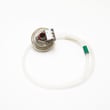
| Poor rinse, residue on clothes | Water level sensing issue | LG washer water-level pressure switch 6501EA1001R |
| Slow fill, weak spray rinse | Restricted or failing valve | LG washer water inlet valve assembly AJU73213301 |
| Water left in tub, lint redeposits | Drain problem | Washer drain pump assembly 5859EA1004P |
When lint is not rinsed away, it can redeposit as gray streaks, cling to dark fabrics, and combine with soap scum or hard-water scale. Keeping suds low and water flow strong is the most effective “lint control” on a top-load design.
For model-specific use and care steps (including detergent guidance and cleaning notes), follow the WT4970CW owner's manual.
Last updated: February 2026


