 Installation guide
 Owner’s manual




What is the average lifespan of a Speed Queen washing machine?
Speed Queen washers typically last about 25 years in normal home use (often described as roughly 10,000+ wash cycles). For your Speed Queen AWN632SP116TW01, actual lifespan depends most on load size, installation, and routine maintenance; our AWN632SP116TW01 owner's manual covers operating and care basics.
Typical lifespan expectations
Most Speed Queen top-load washers are built with commercial-style components, so the average lifespan is longer than many residential washers.
- Typical home lifespan: about 25 years
- Typical cycle life: about 10,000+ cycles
- Biggest lifespan reducers: chronic overloading, repeated off-balance spinning, poor drainage, and neglected hoses/clamps
- Biggest lifespan extenders: correct loading, correct cycle selection, and keeping the drain path clear
What affects lifespan the most (and what to do)
Use these habits to get the longest service life from the AWN632SP116TW01:
- Do not overload; overloading can overheat the motor and accelerates wear
- Balance bulky loads (towels, sheets) to reduce vibration and suspension stress
- Use the right cycle (Delicate, Bulky/Sheet, Perm Press) for the fabric and load type
- Keep water flow and draining unrestricted (screens, standpipe, drain hose routing)
- Address early symptoms (new noises, slow drain, burning smell) before they become major repairs
Quick reference: lifespan vs. usage level
| Household usage pattern | What it usually means | Expected outcome |
|---|---|---|
| Light (few loads/week) | Lower cycle count per year | Often reaches or exceeds typical lifespan |
| Average (most households) | Steady weekly use | Around the typical 25-year range |
| Heavy (many loads/week) | High cycle count, more wear | Shorter lifespan unless maintenance is excellent |
Why it matters
Lifespan is mostly about wear per cycle. When we reduce strain (overloading, imbalance, restricted draining), we reduce stress on high-wear systems like the drive components, pump, and controls. If you ever need repair parts for the AWN632SP116TW01, you can order from the parts list for this model or search by model number on Sears PartsDirect.
Last updated: February 2026
How many cubic feet is my Speed Queen washer?
Your Speed Queen AWN632SP116TW01 is a top-load washer; most Speed Queen top-load washers of this design are about 3.2 cu. ft. usable capacity. For the exact capacity rating for your specific unit, check the specifications section in the AWN632SP116TW01 owner's manual.
How to confirm capacity for AWN632SP116TW01
Capacity is usually listed as “capacity,” “tub capacity,” or “volume” in the specs pages of the manual.
- Look for a Specifications or Features and specifications section
- If the manual lists dimensions but not capacity, check for a separate model/spec table
- Use the full model number AWN632SP116TW01 when comparing specs
- If you have the serial plate info, keep it handy for parts matching and service records
Why “usable” capacity matters
Washer capacity is most helpful when it reflects what you can actually wash without overloading. Overloading can reduce cleaning performance and can contribute to issues like poor spin, longer cycle times, and motor overheating.
Quick guide: typical Speed Queen capacities
| Washer type | Typical capacity range | What it means for loads |
|---|---|---|
| Top-load (like AWN632SP116TW01) | ~3.2 cu. ft. | Strong turnover; best results with moderate fill |
| Front-load | ~3.5 cu. ft. | Efficient tumbling; avoid packing tightly |
Related troubleshooting if loads feel “small”
If the washer seems to hold less than expected, we focus on loading technique and cycle selection first.
- Load items loosely so water and detergent can circulate
- Avoid filling above the top row of holes in the tub (common top-load guideline)
- Use the correct water level and cycle for bulky items
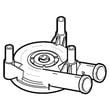
- If the washer will not fill correctly, a water level sensing issue can be involved; see Speed queen pressure sensor 203843
Last updated: February 2026
What are the common problems with Speed Queen washers?
Common problems on the Speed Queen AWN632SP116TW01 washer are no drain, no spin, poor fill, and unusual vibration or noise. Many of these issues trace back to restricted drain paths, clogged inlet screens, an overloaded motor condition, or a control-related fault shown by flashing status lights (see the AWN632SP116TW01 owner's manual).
Most common symptoms and what they usually mean
- Won’t drain: restricted standpipe/drain hose, clogged pump path, or a belt/pump issue
- Won’t spin or agitate: overloaded basket, drive system problem, or control not sending power
- Won’t fill or fills slowly: restricted water filters or fill valve screens
- All status lights flashing: control fault that often clears with a power reset
- Excessive vibration/noise: unbalanced load, leveling issue, or worn drive components
Quick checks we recommend first (safe, no tools)
- Reduce the load size and retry a cycle; the manual notes the motor can overheat if the washer is overloaded.
- Reset the control: unplug for 15 seconds, plug back in, then retry. If all status lights still flash, service is needed.
- Check draining basics: confirm the drain hose is not kinked and the home drain is not restricted.
- Check filling basics: verify both water supply valves are fully open; clean inlet screens if flow is weak.
Parts that commonly relate to these problems
If troubleshooting points to a failed component, these are common matches for the symptoms above:
| Symptom | Common part involved | Example part for this model |
|---|---|---|
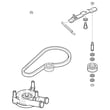
| Won’t drain / weak drain | Belt and pump components | Belt and pump kit RB150003 |
| Overfills, underfills, or fill errors | Water level sensing | Pressure sensor 203843 |
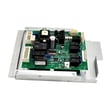
| Random stopping, flashing lights, no response | Control electronics | Control assembly 205214P |
Why it matters
Drain restrictions and fill restrictions are frequently treated as installation or maintenance issues, not a washer failure. Fixing those basics first prevents repeat problems, protects the motor from overheating, and helps the washer reach the correct water level for good cleaning.
Last updated: February 2026
Are speed queens worth the money?
Yes. For a Speed Queen washer like model AWN632SP116TW01, the higher upfront price is worth it when you prioritize long service life, strong wash performance, and straightforward controls over extra smart features. These machines are built for heavy use, and they are designed to be serviced with replaceable parts.
What you are paying for
Speed Queen top-load washers are known for durable mechanical design and serviceability. When something does wear out, you can typically repair it instead of replacing the whole washer.
- Heavy-duty build intended for frequent loads
- Strong, traditional agitation and spin performance
- Repair-friendly design with replaceable components
- Clear operating guidance and cycle options in the AWN632SP116TW01 owner's manual
- Access to model-specific replacement parts on the parts list, or broader model search on Sears PartsDirect
Typical lifespan and ownership value
A well-maintained top-load washer of this type typically lasts 20 to 25 years in normal home use. The value comes from fewer major failures over time and the ability to fix common wear items.
| Factor | Speed Queen-style value | What it means for you |
|---|---|---|
| Durability | High | Fewer breakdowns over the long term |
| Repairability | High | More fixes are “part replacement” instead of “new washer” |
| Features | Basic to moderate | Less emphasis on Wi-Fi, app controls, and complex UI |
| Cost | Higher upfront | Lower cost per year when kept long-term |
Parts that commonly support long-term repairs
If you keep a washer for decades, parts availability matters. For AWN632SP116TW01, examples of service parts include:
- Speed queen control assembly 205214P (controls and cycle selection)
- Speed queen pressure sensor 203843 (water level sensing and fill behavior)
- Speed queen belt and pump kit - includes items 16 and 18 (38174 belt) RB150003 (drain and drive wear items)
Why it matters
If you plan to stay in your home, do frequent laundry, or want a washer you can maintain instead of replace, paying more for a durable, repairable platform usually delivers the best long-term value.
Last updated: February 2026


