Installation guide
 Owner’s manual

How to find model number on a Frigidaire washer?
On the Frigidaire FTF530FS1 washer, the model number is on the serial plate at the top, inside the door opening. Open the washer door and look along the upper inside edge of the door frame to find the model and serial information; then record it for parts and service.
Where to look on the washer
- Open the washer door fully.
- Look inside the door opening, near the top of the front panel.
- Find the serial plate (a label or metal tag).
- Record both the model number and serial number.
- Keep the information with your paperwork or in your phone.
What the label typically shows
| Label item | What it’s used for | Why you need it |
|---|---|---|
| Model number | Identifies the exact washer design | Ensures diagrams and parts match your unit |
| Serial number | Identifies production run details | Helps confirm compatible revisions |
| Electrical ratings | Voltage/amps info | Useful for safe troubleshooting |
Why it matters
We use the model number to match the correct Frigidaire parts and repair information for your exact washer. Even small model variations can change which door lock, drain pump, or hose fits.
Tips for using the model number
- Use the full model number exactly as printed (for this washer: FTF530FS1).
- If the label is hard to read, take a clear photo with the door open and good lighting.
- For model-specific identification and record-keeping guidance, check the FTF530FS1 owner’s manual.
Last updated: February 2026
How to fix a Frigidaire washer that won't spin?
If your Frigidaire FTF530FS1 washer will not spin, we start with the basics: make sure the door is fully closed and latched, the load is balanced (not too small or overloaded), and the cycle is set correctly. These issues stop spinning by design to protect the washer.
Quick checks that fix most “won’t spin” problems
- Close the door firmly; do not force it if the Door Lock light is on.
- If the washer is tumbling and you need to stop it, push in the cycle selector knob.
- If you are trying to open the door during spin, push in the knob and wait 1 to 2 minutes for the lock to release.
- Add 1 to 2 similar items if the load is too small to balance.
- Reduce the load if the tub is packed; overloading can leave clothes too wet after spin.
Reset and restart (safe, simple)
- Push in the cycle selector knob to stop the washer.
- Unplug the power cord for 5 to 10 minutes.
- Plug back in, select a spin setting, and pull out the knob to start.
For cycle and door-lock behavior specific to this model, follow the steps in the FTF530FS1 owner's manual.
When a part is likely involved
If the door is closed but the washer still will not spin, the door lock system is a common cause on front-load washers. A failed lock can prevent the control from allowing high-speed spin.
- If the Door Lock light does not behave normally, inspect the latch area for debris.
- If the lock will not engage or release correctly, replacement is often the fix.
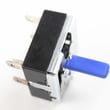
Helpful part to check: Door lock switch 131763256
Symptoms and what they usually point to
| Symptom | Most common cause | What to do next |
|---|---|---|
| Won’t spin and door won’t lock | Door lock issue | Check/replace door lock switch |
| Won’t spin with a very small load | Out-of-balance protection | Add 1 to 2 similar items |
| Clothes very wet after spin | Overload or imbalance | Reduce load, redistribute items |
| Stops mid-cycle, then runs later | Motor overheated | Let it cool up to 30 minutes, then retry |
Why it matters
A no-spin condition is usually a safety or protection response (door not locked, load imbalance, or overload). Fixing the root cause prevents repeated shutdowns and reduces strain on the motor, tub, and suspension.
Last updated: February 2026
How long do Frigidaire front load washers last?
Most Frigidaire front load washers, including model FTF530FS1, last about 11 years with normal household use and routine care. Consistent cleaning around the door gasket and proper loading habits help you reach that lifespan and reduce odor, mold, and premature wear.
Typical lifespan and what affects it
A washer’s service life depends more on usage and maintenance than the brand name on the console.
- Loads per week: more cycles equals faster wear on bearings, shocks, and the drain system
- Moisture control: leaving the door area wet encourages odor and mildew
- Detergent habits: too much detergent can leave residue and stress rinsing/drain performance
- Installation quality: poor drain-hose setup can cause siphoning and repeat drain issues
- Vibration control: chronic out-of-balance spinning shortens the life of suspension parts
Quick care routine that helps it last longer
We recommend these simple habits for the FTF530FS1.
- Wipe and dry the door opening and flexible gasket after laundry day
- Remove items promptly when the cycle ends to reduce odors and wrinkling
- Rinse the dispenser drawer and inserts with hot water to prevent buildup
- Avoid overloading; use the correct cycle and water temperature for the fabric
- Use the right amount of detergent to prevent residue on clothing and inside the drum
What “normal” looks like (lifespan guide)
| Usage pattern | What we typically see | Practical expectation |
|---|---|---|
| Light (few loads/week) | Less mechanical wear | Often reaches or exceeds 11 years |
| Average (most households) | Normal wear on pump, shocks, door lock | Around 11 years |
| Heavy (many loads/week) | Faster wear, more vibration/drain stress | Often less than 11 years |
Parts that commonly show wear first
If performance changes, these are common wear areas on front-load washers.
- Door locking issues (won’t start, door won’t unlock): door lock switch 131763256
- Excessive vibration or banging during spin: shocks and suspension components
- Slow drain or standing water: pump, drain hose, or a restriction in the drain path
Why it matters
Planning around an 11-year lifespan helps you decide when to maintain versus repair. Routine cleaning and correct use reduce moisture-related problems at the door seal and help protect high-wear systems like the drain pump and suspension.
For model-specific operating and cleaning steps, follow the FTF530FS1 owner's manual.
Last updated: February 2026