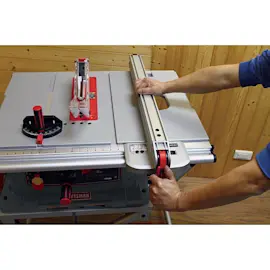
Owner’s manual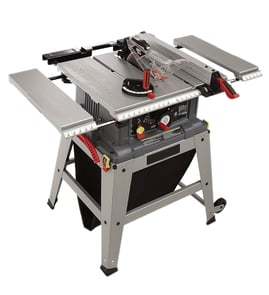

What size blade is a Craftsman 137218240 table saw?
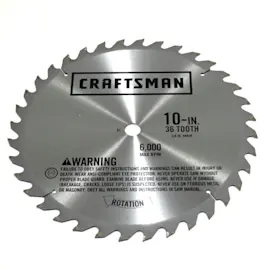
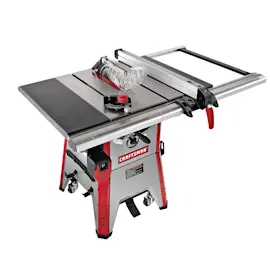
The Craftsman table saw model 137218240 uses a 10-inch blade. This is the standard blade diameter specified for this jobsite saw, and it determines which replacement blades and accessories (like inserts and guards) will fit correctly. See the 137218240 owner's manual for the exact blade requirements.
A “10-inch blade” refers to the blade’s diameter. When choosing a blade for your Craftsman 137218240, match these basics:
- Diameter: 10 inches
- Arbor hole: Match the saw’s arbor size listed in the manual
- Blade type: Rip, crosscut, combination, or specialty (based on your material)
- Kerf thickness: Use a kerf that works with your splitter/riving knife setup
- RPM rating: Use a blade rated at or above the saw’s no-load speed
Use this checklist before installing a new blade:
- Unplug the table saw and remove the switch key (if equipped)
- Confirm the blade is 10-inch diameter
- Confirm the arbor hole matches the saw’s arbor
- Verify the blade’s RPM rating meets or exceeds the saw’s rating
- Reinstall the blade washer and arbor nut securely
- Spin the blade by hand to confirm it clears the throat plate/insert
| Cut type | Typical tooth count (10-inch) | Best for |
|---|---|---|
| Rip cuts | 24T to 30T | Fast cuts along the grain |
| Crosscuts | 60T to 80T | Cleaner cuts across the grain |
| Combination | 40T to 50T | General-purpose cutting |
| Plywood/finish | 80T to 100T | Reduced tear-out |
Using the correct 10-inch table saw blade helps your Craftsman 137218240 cut accurately and safely. A wrong diameter or mismatched arbor hole can cause wobble, poor cut quality, binding, or interference with the insert and guarding components.
For step-by-step blade removal and installation, follow how to replace a table saw blade.
Last updated: February 2026
How much is a Craftsman professional table saw 137218240?
A Craftsman table saw model 137218240 is typically priced based on condition, included accessories (stand, rip fence, miter gauge), and whether it runs smoothly at full speed. For a used, working jobsite saw of this type, a common resale range is about $200 to $500.
- Condition and completeness: rip fence, blade guard/splitter, throat insert, wrenches, and stand hardware
- Motor performance: smooth start-up, steady speed under load, no burning smell
- Accuracy: fence locks parallel, blade aligns to miter slot, bevel and height adjusters move freely
- Wear items: blade condition, arbor bearings noise, switch reliability
- Local market: demand for jobsite saws and pickup-only sales
| Condition of your 137218240 | What it usually includes | Typical price range |
|---|---|---|
| Needs repair / missing key parts | May not start, missing fence/guard | $50 to $150 |
| Working, average wear | Fence and stand included, basic blade | $200 to $350 |
| Clean, tuned, complete | Guard/splitter, insert, smooth adjustments | $350 to $500 |
- Confirm it matches model 137.218240 and note major specs (10-inch blade, up to 5000 RPM). See the owner's manual.
- Test the blade height and bevel adjustments for binding.
- Check the rip fence for solid lock and repeatable measurements.
- Listen for bearing noise (growling or squealing) and check for vibration.
- Verify safety parts are present and usable (guard/splitter system, insert).
A table saw that is complete, aligned, and safe to operate is worth more because it cuts accurately and reduces kickback risk. Missing safety hardware or a weak motor quickly pushes the value toward “project saw” pricing.
Last updated: February 2026
Where can I buy Craftsman replacement parts?
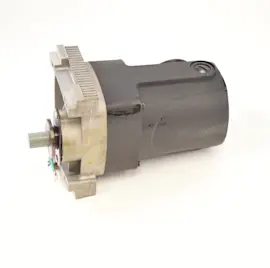
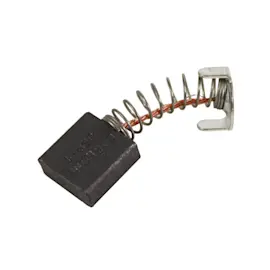
You can buy replacement parts for your Craftsman table saw model 137218240 by using the model number to match the correct diagrams and parts list in the 137218240 owner's manual. This helps you identify the exact component name and reference number before ordering.
Use the manual parts list and schematic first, then shop by the exact part description.
- Find the model tag and confirm it reads 137218240
- Use the parts list and schematic in the 137218240 owner's manual
- Write down the part description and any ID shown (for example, labels, washers, insert, extension wing)
- Compare your part to the diagram so you do not order a similar looking item
- Order using the exact model number and part description through Sears PartsDirect
Having these details ready prevents wrong-part returns and delays.
| What to collect | Where to find it | Why it matters |
|---|---|---|
| Model number: 137218240 | Model plate on the saw | Ensures correct parts list |
| Part description | Manual parts list | Matches the correct component |
| Quantity needed | Manual and your saw | Avoids ordering too few |
| Electrical vs. mechanical part | Visual inspection | Helps you choose safe repair path |
Some repairs change what you should order and whether you should DIY.
- Unplug the saw and remove the switch key before any inspection or maintenance
- Replace damaged power cords immediately (cord condition affects safe operation)
- Use only properly grounded 3-prong cords and receptacles for operation
- For electrical or internal mechanical repairs, use a trained repair technician
Table saw parts are highly model-specific; even small differences in the rip fence, insert, blade height mechanism, or switch assembly can affect fit and safe operation. Using the manual first helps you buy the correct Craftsman replacement part the first time.
Last updated: February 2026
How to reset overload on table saw?
On the Craftsman table saw model 137218240, reset the overload by turning the saw OFF, unplugging it, letting the motor cool, then pressing the overload reset button and restarting the saw. This restores power after an overload or low-voltage shutdown.
- Turn the ON/OFF switch to OFF.
- Remove the safety key from the switch.
- Unplug the saw from the power source.
- Wait for the motor to cool down (typically 15 to 30 minutes).
- Press the overload reset button (the manual shows an overload reset switch on the saw).
- Plug the saw back in, insert the safety key, then switch ON.
On model 137218240, the overload reset control is identified in the control layout as an overload reset switch. Use the diagrams in the owner's manual to locate it on your saw.
Overload protection is doing its job; the motor is being forced to work too hard or is not getting proper voltage.
Common causes to check:
- Dull blade or dirty blade (pitch buildup increases load)
- Blade height or bevel mechanism binding (sawdust-packed gears, misalignment)
- Workpiece pinching the blade (fence not parallel, warped lumber)
- Extension table not parallel with the main table (can affect feed and cut)
- Low voltage or long/light-duty extension cord
Helpful troubleshooting guides:
Resetting the overload without fixing the cause can overheat the motor again and lead to repeated shutdowns. A quick inspection for alignment issues and blade condition usually prevents repeat trips.
| What happened | What to do |
|---|---|
| Saw shuts off mid-cut | Switch OFF, unplug, cool down, press reset |
| Trips repeatedly | Check blade sharpness, alignment, binding, and power supply |
| Won’t restart | Confirm safety key is inserted and reset button was pressed |
Last updated: February 2026
Can you use an 8 inch blade on a 10 inch table saw?
Yes, you can mount an 8-inch blade on the Craftsman 137218240 table saw as long as the blade bore matches the arbor and the blade clamps securely; your cut depth will be reduced. For this model, the saw is designed around a 10-inch blade, and the manual limits dado use to a 6-inch diameter and 1/2-inch width; see the 137218240 owner's manual.
The operator’s manual lists these key specs for this saw:
- Designed blade size: 10-inch
- Maximum cut depth at 90°: 3-1/8 inch
- Maximum cut depth at 45°: 2-5/8 inch
- Dado limit: Do not use a dado blade larger than 6 inches in diameter and 1/2 inch in width
An 8-inch blade is typically used for shallow cuts and specialty blades; it is not a performance upgrade.
| Item | 10-inch blade (normal for this saw) | 8-inch blade (smaller) |
|---|---|---|
| Maximum cut depth | Full rated capacity | Reduced cut depth |
| Guard and throat plate fit | Intended fit | May need extra attention for clearance and support |
| Best use | General ripping and crosscuts | Thin stock, shallow cuts |
Before you power on after swapping blades:
- Unplug the saw; lock out the switch if possible.
- Confirm the arbor hole (bore) matches the saw’s arbor and the blade seats flat.
- Tighten the arbor nut securely; verify the blade does not wobble.
- Hand-spin the blade to confirm it clears the insert and guard area.
- Use the correct insert; the manual notes a dedicated insert for dado cutting.
- Set blade height about 1/8 inch above the workpiece for most cuts.
A smaller blade mainly reduces cutting capacity, but the bigger concern is safe support at the throat plate and proper guarding. Poor fit or clearance can increase binding, kickback, and thrown material.
Last updated: February 2026