Owner’s manual
 Error Codes


Are GE side by side refrigerators good?
Yes. GE side-by-side refrigerators like model DSD26DHWABG are a strong everyday choice because they deliver consistent cooling, easy access to both compartments, and serviceable components. For the best real-world results, follow the setup, loading, and care steps in the DSD26DHWABG owner's manual.
What “good” means for this style
A side-by-side is a good fit when you want freezer access at eye level and organized door storage.
Common strengths:
- Convenient access to fresh food and freezer sections
- Adjustable shelves and bins for flexible organization
- Strong temperature stability when doors seal correctly
- Straightforward maintenance with replaceable parts
Normal sounds vs. signs of trouble
The DSD26DHWABG manual describes several normal operating noises.
Typical, normal sounds:
- Sizzling, popping, or buzzing during the defrost cycle
- Water dripping into the drain pan during defrost
- Gurgling when closing the door (pressure equalization)
Fix-first checks if performance seems off:
- Doors not sealing or not closing fully
- Frost buildup that points to a defrost problem
- Warm temperatures caused by blocked vents or poor airflow
Parts that commonly affect cooling and ice
If troubleshooting points to a failed component, these parts are commonly involved:
| Symptom | Common cause | Example part |
|---|---|---|
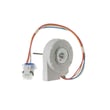
| Warm temps, weak airflow | Evaporator fan not moving air | Rca refrigerator evaporator fan motor WR60X10185 |
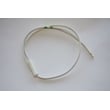
| Heavy frost, warming | Defrost system issue | Refrigerator defrost heater WR51X10055 |
| Temps swing or read wrong | Sensor problem | GE profile refrigerator temperature sensor WR55X10025 |
Why it matters
A “good” refrigerator holds safe temperatures, seals consistently, and can be repaired when wear items fail. On side-by-sides, door sealing, airflow, and defrost performance drive long-term satisfaction.
Last updated: February 2026
Do all GE refrigerators have a drip pan?
Most GE refrigerators that use an automatic defrost system have a drain tube that routes defrost water into a drip pan underneath the cabinet, where it evaporates. On the GE DSD26DHWABG side-by-side, the defrost drain and drip pan setup is the normal design to manage defrost water (not a user-service “empty the pan” item).
How the drip pan system works
During defrost, frost on the evaporator melts and flows through a drain opening into a drain tube. That water lands in a pan near the compressor and condenser area; heat and airflow evaporate it.
Common characteristics:
- The pan is underneath the refrigerator, not inside the food compartments
- It is designed to evaporate water automatically
- You typically do not remove it for routine cleaning
- A small amount of water in the pan is normal after defrost
When a GE refrigerator might not have a typical drip pan
A drip pan is strongly associated with self-defrosting designs. Some older, manual-defrost refrigerators can be different.
Here is a quick comparison:
| Refrigerator type | Defrost water handling | Drip pan typical? |
|---|---|---|
| Automatic/self-defrost | Meltwater drains through a tube | Yes |
| Manual defrost (older designs) | Water is often manually managed during defrost | Not always |
Signs the drain or pan system needs attention
If you see water where it should not be, the issue is usually a clogged drain or an airflow/evaporation problem, not a “missing” drip pan.
Check these common symptoms:
- Water pooling under crisper drawers or on the freezer floor
- Water leaking onto the kitchen floor
- Musty odors near the base of the refrigerator
- Ice buildup around the drain area in the freezer
Why it matters
The drip pan and drain system prevents defrost water from leaking into the refrigerator compartments or onto your floor. Keeping the drain path clear helps avoid leaks, ice buildup, and odor problems.
For model-specific diagrams and access points, use the owner's manual.
Last updated: February 2026
How to force defrost GE side-by-side refrigerator?
On the GE DSD26DHWABG side-by-side refrigerator, defrost is normally automatic (adaptive defrost), so there is not a routine “force defrost” button for everyday use. If you suspect the unit is currently defrosting, we recommend waiting about 30 minutes and then rechecking cooling and airflow; see the owner's manual for model-specific control details.
Quick checks before you try anything else
- Confirm the refrigerator is plugged in and the controls are not set to OFF.
- Listen for normal defrost sounds (sizzling, popping, buzzing) and water dripping into the drain pan.
- Keep doors closed for 2 hours to let temperatures stabilize after frequent openings.
- Check for heavy frost on the freezer back wall (a sign of a defrost system problem).
- If the unit seems “off,” wait about 30 minutes; it may be in a defrost cycle.
What “defrost mode” looks like on this model
GE’s adaptive defrost can make the refrigerator appear to pause cooling while it melts frost off the evaporator. During this time, you may notice:
| What you notice | What it usually means | What to do |
|---|---|---|
| Compressor and fans seem quiet | Unit is in defrost | Wait ~30 minutes |
| Sizzling/popping/buzzing | Heater warming the evaporator | Normal during defrost |
| Water dripping sound | Meltwater draining to pan | Normal during defrost |
If you have frost buildup (common “force defrost” reason)
If the freezer is frosting up and airflow is weak, the issue is usually a failed defrost component rather than needing a manual defrost command.
Common parts to check/replace for DSD26DHWABG:
- Refrigerator defrost heater WR51X10055
- Refrigerator defrost bi-metal thermostat WR50X10069
- GE profile refrigerator temperature sensor WR55X10025
Why it matters
A working defrost system keeps the evaporator from icing over. When frost blocks airflow, the freezer may warm up, the fresh food section may get too warm, and the compressor can run longer than normal.
Last updated: February 2026
Which are the best side-by-side refrigerators?
The “best” side-by-side refrigerator is the one that fits your kitchen, keeps stable temperatures, and has the features you will actually use (ice and water, adjustable bins, and easy-to-clean surfaces). For your GE DSD26DHWABG, we recommend using the same criteria to compare any new model you are considering. See the owner's manual for feature and care details that help you judge what matters most.
What to look for in a great side-by-side
- Temperature stability: Consistent fridge and freezer temps reduce food spoilage and freezer burn.
- Ice and water performance: Strong dispenser flow, reliable icemaker output, and easy filter changes.
- Storage flexibility: Adjustable door bins, shelves, and freezer baskets for tall items and bulk storage.
- Noise level: Quieter evaporator and condenser fan operation matters in open kitchens.
- Serviceability: Common wear parts (filters, fans, defrost components) should be straightforward to access and replace.
Quick comparison checklist (use this when shopping)
| Category | What “best” looks like | What to verify before buying |
|---|---|---|
| Fit | Matches your cutout and door-swing clearance | Width, depth, height, hinge side, door clearance |
| Cooling | Even temps in both compartments | Multi-shelf temp readings, airflow design |
| Ice/water | Fast fill, minimal dripping, good-tasting water | Filter type, dispenser design, ice chute sealing |
| Organization | Bins and baskets that match your habits | Door bin adjustability, freezer basket layout |
| Ownership | Easy maintenance and reasonable part costs | Filter schedule, cleaning access, common parts |
Why it matters (especially for side-by-side designs)
Side-by-side refrigerators rely heavily on airflow to keep both compartments even. When airflow is restricted or components wear, you can see warm spots, frost buildup, or weak ice production. Choosing a model with strong airflow design and easy maintenance helps prevent those issues.
How your current GE DSD26DHWABG helps set the baseline
If you like how your current unit is laid out, use it as your benchmark:
- Door bin and shelf adjustability (covered in the owner's manual)
- Ice and water system upkeep (filter changes and dispenser performance)
- Typical maintenance items you may already recognize, such as the refrigerator water filter MSWF
Last updated: February 2026