Owner’s manual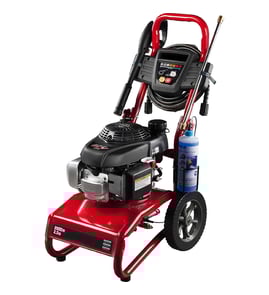



Are gas pressure washers 2 stroke or 4 stroke?
Most gas pressure washers, including the Craftsman 580768322, use a 4-stroke engine, so you fill the crankcase with engine oil separately and use straight gasoline (no gas and oil mix). The correct oil type, service intervals, and engine specs are listed in the owner's manual.
Use these quick checks:
- Oil fill cap and dipstick present: that indicates a 4-stroke engine
- Oil change schedule listed (for example, after first 5 hours, then every 50 hours): 4-stroke
- Separate fuel tank and crankcase oil: 4-stroke
- No instruction to mix oil into gasoline: 4-stroke
- Spark plug and air filter maintenance schedule: typical 4-stroke setup
| Item | 4-stroke (typical gas pressure washer) | 2-stroke |
|---|---|---|
| Fuel | Straight gasoline | Gas and oil mixture |
| Oil | Separate crankcase oil | Oil mixed into fuel |
| Maintenance | Regular oil changes | No oil changes (mix ratio is critical) |
Using a 2-stroke fuel mix in a 4-stroke pressure washer can cause heavy smoke, fouled spark plugs, and poor performance. Using straight gas in a 2-stroke engine can seize the engine quickly. Following the correct fuel and oil routine protects the pump, engine, and unloader system.
For the Craftsman 580768322, our manual-based routine includes:
- Change engine oil after the first 5 operating hours, then every 50 hours
- Keep the air filter clean; replace if torn
- Use the correct spark plug gap and replace the plug periodically
Last updated: February 2026
How to prime a gas pressure washer?
To prime the pump on your Craftsman 580768322 gas pressure washer, connect and turn on the water supply first, then hold the spray gun trigger open until water flows in a steady stream with no air. This purges air from the pump so it can build pressure correctly.
- Put the unit on level ground near a water source that can supply more than 2.4 GPM.
- Connect the garden hose to the pump water inlet and turn on the water.
- Confirm the high-pressure hose is tight at the pump and spray gun.
- Remove the nozzle extension from the spray gun (this helps purge air faster).
- Squeeze and hold the trigger until the stream is steady and air stops sputtering.
- Reinstall the nozzle extension and tighten by hand.
For the exact starting and purge steps for this model, follow the owner's manual.
- Do run water through the pump before starting the engine.
- Do keep the trigger held open until the flow is steady.
- Do check hose connections for leaks that can pull air into the pump.
- Do not run the pump without the water supply connected and turned on.
- Do not start troubleshooting the pump until you confirm the nozzle is not restricted.
| What you notice | Most common cause | What to do first |
|---|---|---|
| Sputtering, spitting, or surging | Air trapped in pump or inlet leak | Re-prime with trigger held open; tighten fittings |
| Low pressure after priming | Clogged nozzle or inlet screen | Clean nozzle; check inlet filter screen |
| Pulsing pressure | Partially restricted nozzle | Clean nozzle and retest |
Priming removes air and contaminants from the pump so the pump can draw water consistently. If air stays in the system, you can get pulsing pressure, poor cleaning performance, and unnecessary pump wear.
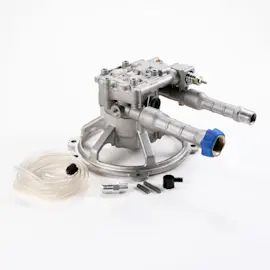
If you suspect a worn seal or internal pump issue after priming, a pump replacement is a common fix; see the pump B5685B.
Last updated: February 2026
What type of gas does my pressure washer use?
Your Craftsman 580768322 gas pressure washer uses regular unleaded gasoline. Fill the tank with clean, fresh fuel, and always refuel outdoors with the engine off and cooled down; the fuel vapors are flammable. For model-specific safety and operating details, follow the 580768322 owner's manual.
Use fuel that keeps the engine running cleanly and helps prevent hard-starting.
- Use regular unleaded gasoline
- Use fresh fuel (stale gas causes starting and surging problems)
- Avoid spilling fuel on a hot engine; let the unit cool before refueling
- Do not smoke or allow sparks/open flame near fuel
- Store gasoline only in approved containers
Before starting the engine, we recommend this routine:
- Confirm the unit has the correct oil level
- Add gasoline to the fuel tank (do not overfill)
- Check hose connections for tight fit and no kinks
- Connect a proper water supply (water temperature not to exceed 140°F)
- Operate only outdoors with good ventilation (engine exhaust contains carbon monoxide)
If the washer will not start or runs poorly, fuel is often the cause.
| Symptom | Most common fuel-related cause | What to do first |
|---|---|---|
| Won’t start | Old fuel or contaminated fuel | Drain and refill with fresh unleaded gas |
| Surges or loses power | Stale fuel, restricted airflow | Replace/clean air filter; refresh fuel |
| Runs then dies | Fuel valve off or fuel delivery issue | Verify fuel valve position; check fuel level |
Using fresh, regular unleaded gasoline helps your 580768322 start easier, run smoother, and reduces deposits that can affect the carburetor and overall engine performance.
Last updated: February 2026
Is a 4000psi pressure washer too much?
Yes for most home cleaning; 4000 PSI can easily etch concrete, shred wood fibers, and damage paint or siding if you get too close or use a narrow spray. Your Craftsman pressure washer model 580768322 is rated at 2000 PSI, and we recommend staying at or below the rated pressure and testing a small area first (see the owner's manual).
For typical residential jobs, lower pressure plus the right nozzle and distance cleans better and prevents damage.
- Start with the widest spray pattern you have and increase only if needed
- Keep the spray moving; do not “park” the stream in one spot
- Increase distance first before increasing pressure
- Test a small, hidden area and inspect for surface damage
- Never aim the spray at people, pets, or fragile items (glass, lights, seals)
| Task | Typical PSI range | Notes |
|---|---|---|
| Cars, patio furniture, screens | 1200 to 1900 | Use wide fan spray; keep distance |
| Decks, fences (wood) | 1500 to 2500 | Too much PSI raises grain and gouges |
| Driveways, sidewalks | 2500 to 3200 | Use a consistent pattern; avoid striping |
| Heavy-duty stripping and commercial work | 3500 to 4000+ | High risk of damage without experience |
Pressure washer damage usually comes from a tight spray pattern, close distance, and lingering in one spot. The manual for model 580768322 also warns not to operate above rated pressure and to apply high pressure to a small area first, then check for damage before continuing.
- Wear eye protection
- Do not use water hotter than 140°F
- Inspect the high-pressure hose for cuts, kinks, or leaks before starting
For more technique tips, use our guide on choosing the correct spray tip for a pressure washer.
Last updated: February 2026
Is it worth replacing the pump on a pressure washer?
Yes, it’s usually worth replacing the pump on your Craftsman 580768322 gas pressure washer when the engine runs well and the rest of the unit is in good shape. Pump replacement restores pressure and flow faster than rebuilding, and it avoids repeat damage from running the pump without water.
We recommend replacing the pump when you see performance problems that point to internal wear or damage, especially after the basics are confirmed (good water supply, clean nozzle, no air in the system).
- Engine starts and runs smoothly, but pressure is low or pulses
- Pump leaks from the body or won’t build pressure after priming
- You already cleaned the nozzle and purged air from the pump
- The unit has not been run dry repeatedly (or you are correcting that issue now)
- You want a predictable fix instead of a rebuild project
The owner’s manual stresses that running the pump without water will damage it; confirm setup first so a new pump does not fail the same way. See the setup and purge steps in the owner's manual.
- Verify the water source can supply strong, steady flow
- Confirm the high-pressure hose connections are tight
- Purge air: hold the trigger until water flows in a steady stream
- Clean a clogged nozzle (a clog can mimic pump failure)
- Never run the pump with the water supply off
| Option | Best for | Typical outcome |
|---|---|---|
| Replace pump | Cracked/leaking pump, worn internals, persistent low pressure | Restores performance with fewer repeat issues |
| Rebuild pump | Minor seal wear and you have time/tools | Can work, but often takes more labor and troubleshooting |
| Replace pressure washer | Engine issues plus pump issues, or multiple major failures | Best when overall condition is poor |
If you’re ready to replace, the model-specific pump listed for this unit is the pump B5685B.
A weak or damaged pump can cause pulsing, poor cleaning results, and overheating. Just as important, correcting the root cause (no water to the pump, air in the system, clogged nozzle) protects your replacement pump and extends the life of the pressure washer.
Last updated: February 2026