Error Codes



Is 4.8 cubic feet a large capacity washer?
Yes. In general, 4.8 cubic feet is considered a large-capacity washer because it’s above the common 4.5 cu. ft. cutoff. For Whirlpool model WTW4855HW3 specifically, we can’t confirm that it is a 4.8 cu. ft. washer based on the model-specific information available, so treat 4.8 cu. ft. as a general capacity reference, not a verified spec for this model.
Most brands and retailers group washer tub sizes into broad ranges.
- Compact: under about 3.5 cu. ft.
- Standard: about 3.5 to 4.4 cu. ft.
- Large capacity: 4.5 cu. ft. and up
- Extra-large: often 5.0 cu. ft. and up
If you’re comparing washers by capacity, 4.8 cu. ft. is commonly sized for bulky household loads.
| Load type | Typical fit in a large tub | Best practice |
|---|---|---|
| Towels | Large towel loads | Mix sizes to balance weight |
| Bedding | Many comforters/blankets | Load loosely, don’t pack down |
| Mixed laundry | Family-size loads | Keep items below the rim for turnover |
Capacity affects cleaning and spin performance. Overloading any top-load washer can cause poor turnover, out-of-balance spinning, and extra strain on drive components like the drive belt W11239857.
Even without a confirmed tub-size spec, these habits help on most Whirlpool top-load washers:
- Load items loosely so they can circulate
- Distribute heavy items evenly around the basket
- Use HE detergent and measure carefully
- If the washer shakes, reduce load size and rebalance
For more on how water levels and sensing can affect perceived capacity, see how auto-load sensing washers work (and when they don't).
Last updated: January 2026
What is a common problem for a Whirlpool washer?
For the Whirlpool WTW4855HW3 washer, the most common problems we see are no spin or no drain, out-of-balance shaking, and lid not locking. Many issues start with load size, oversudsing, or a drain restriction, but worn drive and suspension parts can also be the cause.
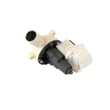
- Won’t drain or drains slowly: clogged pump path, kinked drain hose, or a failing washer drain pump W10919003
- Won’t spin or stops mid-cycle: unbalanced load, lid lock not engaging, or a shifting/drive issue
- Lid won’t lock or washer won’t start: failed washer lid lock W11307244 or a misaligned lid strike
- Loud squeal, burning rubber smell, or weak agitation/spin: worn belt or pulley (common on belt-drive designs)
- Excessive vibration or “walking”: weak suspension/dampers such as damper asm - W11217817
- Redistribute the load: mix large and small items; avoid washing one bulky item alone.
- Reduce detergent: too much HE detergent can cause oversudsing and poor draining/spinning.
- Check the drain setup: make sure the standpipe is not blocked and the hose is not shoved too far down.
- Verify the lid closes firmly: listen for the lock click; remove anything preventing full closure.
- Power reset: unplug for 2 minutes, then retry a normal cycle.
| Symptom | Most likely area to inspect | Example compatible part from this model’s list |
|---|---|---|
| Hums but won’t drain | Pump or blockage | Washer drain pump W10919003 |
| Won’t start, lid error behavior | Lid lock/strike | Washer lid lock W11307244 |
| Bangs hard in spin | Suspension | Damper asm - W11217817 |
| Won’t shift between agitate/spin | Shifter/actuator | Actuator, Shift (W11481722) |
Catching a drain, lid-lock, or vibration problem early helps prevent repeat cycle failures, water leaks, and extra wear on the drive system. It also helps you avoid replacing the wrong part by matching the symptom to the correct system.
For code-based troubleshooting, we recommend using Whirlpool belt drive top load washer error codes as a starting point.
Last updated: January 2026
What is the life expectancy of a Whirlpool washing machine?
Whirlpool washing machines, including model WTW4855HW3, typically last 10 to 14 years with normal household use and basic care. Consistent maintenance and avoiding chronic overloads are the biggest factors in reaching the high end of that range.
- Load size and balance (frequent overloading shortens drive and suspension life)
- Detergent use (too much can cause residue, odors, and extra wear)
- Water quality (hard water can increase buildup)
- Installation and leveling (out-of-level washers vibrate and wear faster)
- Small issues fixed early (leaks, noises, slow drain) prevent bigger failures
- Keep loads at a reasonable size; bulky items should be washed in smaller batches
- Use HE detergent and measure carefully
- Leave the lid open between loads to reduce moisture and odor
- Inspect hoses for bulges or seepage; replace as needed
- If draining slows or you hear grinding, check the pump area and related hoses
If performance drops, these are common wear items we see on top-load Whirlpool washers like WTW4855HW3:
| Symptom | Often-related part | Example compatible part for this model |
|---|---|---|
| Won’t drain or drains slowly | Drain pump or restriction | Washer drain pump W10919003 |
| Won’t spin, clicks, or shifts oddly | Shifter/actuator | Actuator, shift W11481722 |
| Loud squeal or slipping during spin | Belt or pulley wear | Drive belt W11239857 |
A washer that is cleaned, not overloaded, and repaired promptly usually costs less to own over time. Catching early symptoms can turn a major breakdown into a straightforward part replacement.
For troubleshooting help when the washer shows a code or won’t complete a cycle, use Whirlpool belt drive top load washer error codes.
Last updated: January 2026