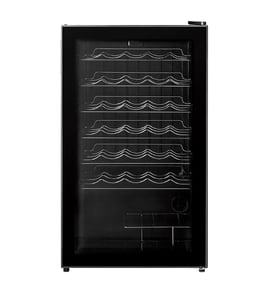

Is the Magic Chef wine fridge any good?
Yes. The Magic Chef MCWC45A wine and beverage cooler is a solid choice when you want a compact, stylish unit that holds drinks at steady temperatures; most owners are happiest with cooling performance and appearance, while the most common complaints are fan/compressor noise and shelf usability.
A wine and beverage cooler like the MCWC45A is considered “good” when it reliably cools, runs without excessive vibration, and fits your bottle and can mix.
- Cooling consistency: Holds a set temperature without big swings.
- Noise level: Low hum is normal; rattling or buzzing is not.
- Shelf function: Shelves should slide smoothly and support your typical bottle shapes.
- Door seal quality: A tight gasket prevents warm air leaks and condensation.
- Real-world capacity: Bottle counts vary based on bottle shape and shelf layout.
| Category | What’s typically good | What can be frustrating |
|---|---|---|
| Temperature control | Stable cooling for everyday storage | Warm spots if airflow is blocked |
| Design | Clean look, good for kitchens and bars | Fingerprints on stainless finishes |
| Storage | Works well for cans and standard bottles | Tight spacing for wider bottles |
| Sound | Normal compressor cycling | Buzzing if not level or if items vibrate |
Most “not good” experiences come from setup issues, not a defective cooler.
- Place it on a solid, level surface; adjust leveling feet until it does not rock.
- Leave air space around vents; blocked airflow makes it run longer and louder.
- Avoid overpacking; allow air circulation between bottles/cans.
- Keep it away from heat sources (oven, direct sun) to reduce run time.
- If you hear rattling, remove items and re-load so bottles are not touching.
Wine and beverage coolers are sensitive to airflow and leveling. When the MCWC45A is level and ventilated, it cools more efficiently, cycles less often, and typically sounds quieter.
For general DIY ownership tips that help with setup and expectations, see easy diy appliance repairs that anyone can do.
Last updated: February 2026
Is there a difference between a wine fridge and a wine cooler?
Yes. In everyday use, “wine fridge” and “wine cooler” are often the same thing, but “wine fridge” usually implies tighter temperature stability and features aimed at longer-term wine storage, while “wine cooler” often describes simpler units meant mainly for chilling and serving. For the Magic Chef MCWC45A, think “serve-ready cooling” first.
When you’re deciding what you need (or troubleshooting performance), these are the real-world differences:
- Temperature precision: Wine fridges typically hold a setpoint more steadily.
- Temperature range: Many wine coolers focus on common serving ranges rather than very cold beverage temps.
- Humidity control: Higher-end wine fridges may manage humidity better for cork health.
- Vibration and noise: Wine fridges often prioritize low vibration to protect sediment in wine.
- Door and UV protection: Some units use tinted glass or better seals to reduce light and air exchange.
Here’s a quick way to match the term to your goal.
| Your goal | “Wine cooler” is usually enough | “Wine fridge” is usually better |
|---|---|---|
| Chill bottles for tonight or this week | Yes | Optional |
| Store wine for months to years | Sometimes | Yes |
| Mixed drinks and cans plus a few bottles | Yes | Optional |
| Very stable temps for aging | No | Yes |
These steps help the MCWC45A style of cooler perform more consistently:
- Keep it out of direct sunlight and away from ovens or heat vents.
- Leave air space around the cabinet so the condenser can shed heat.
- Avoid frequent door openings; temperature swings are normal after openings.
- Load bottles so air can circulate; do not pack shelves tightly.
- Clean dust from vents and grills periodically to maintain cooling efficiency.
If you’re storing wine long-term, small temperature swings, low humidity, and vibration can affect cork condition and flavor development. If you’re mainly serving wine and beverages, a “wine cooler” style unit like the MCWC45A is typically designed to keep drinks at enjoyable serving temperatures with straightforward controls.
For more DIY help and tool prep before troubleshooting electrical or cooling issues, use our guide: must have tools for appliance repair.
Last updated: February 2026
What is the most common problem with wine coolers?
The most common problem we see with the Magic Chef MCWC45A wine and beverage cooler is inconsistent cooling (the cabinet runs too warm, too cold, or swings in temperature). In most cases, the root cause is restricted airflow, a control/thermostat issue, a weak door seal, or a fan or compressor problem.
- Dirty condenser coils or blocked vents: Dust buildup makes the compressor run longer and temperatures drift.
- Door not sealing: A warped gasket, misaligned door, or overpacked shelves lets warm air leak in.
- Thermostat/control setting or sensor issue: The unit may short-cycle or run too long.
- Fan problems: A stalled evaporator fan reduces cold-air circulation; a condenser fan issue reduces heat removal.
- Room conditions: Hot rooms, tight cabinetry, or direct sunlight can overwhelm a compact cooler.
- Confirm the door closes squarely and nothing is preventing a full seal.
- Clean dust from the condenser area and make sure airflow around the cabinet is open.
- Set the temperature to a mid-range setting and allow 24 hours for stabilization.
- Listen for the fan and compressor: steady running with no cooling points to airflow or sealed-system trouble.
- Check for frost buildup on the back wall; heavy frost often points to airflow or defrost-related issues.
| What you notice | Most likely cause | What to do next |
|---|---|---|
| Runs constantly, still warm | Dirty coils, poor ventilation, weak compressor | Clean coils, improve clearance, then recheck temps |
| Temperature swings | Door leak, control/sensor issue, frequent openings | Check seal and loading; stabilize settings |
| Loud buzzing/rattling | Fan blade hitting ice/wire, unit not level | Level unit; inspect for ice or obstructions |
| Water inside | Drain path blocked, door left ajar | Clear drain area; confirm seal |
Wine and beverages store best when temperatures stay steady. Temperature swings force longer run times, increase condensation, and can shorten the life of the compressor and fans.
When you are ready to diagnose deeper (fans, wiring, electrical checks), start with safe DIY basics and the right tools; our guide on must have tools for appliance repair helps you prep before opening panels.
Last updated: February 2026