Installation guide
 Owner’s manual
 Error Codes




How to reset LG electric stove?
To reset an LG electric range like model LRE30755SW, turn the range off, then cycle power at the breaker for 1 minute and restore power. If the display shows PF after an outage, reset the clock and reprogram any timed cooking settings using the LRE30755SW owner's manual.
- Press CLEAR/OFF to stop any active cooking mode.
- If an F- error code is showing, press CLEAR/OFF, let the oven cool for 1 hour, then try baking again.
- If the error returns, switch the range OFF at the circuit breaker for 60 seconds, then turn it back on.
- After a power interruption, set the clock; PF indicates the range lost power and timed functions must be reset.
- If a surface element is not heating, confirm the correct knob is being used and the pan is flat and sized to the element.
The control uses messages to tell you what kind of reset is needed.
| Display message | What it indicates | What to do |
|---|---|---|
| PF | Power failure/outage occurred | Set the clock; re-enter any timed settings |
| F- + number | Function error code | Clear it, cool 1 hour, retry; then power-cycle at breaker if it repeats |
If the oven still will not heat after a reset, the issue is usually in the heating circuit (power supply, wiring, or a failed component). For this LG range, common suspects include:
- Loose or burned wire connections at the terminal block or element leads
- Failed bake heating circuit (element or wiring)
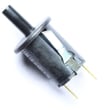
- Over-temperature protection opening (for example, a range safety thermostat 6930W1A003X)
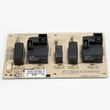
- Control or relay problem on the electronic oven control
A proper reset clears a stuck control state after a power outage or error code, but it will not restore heat if a component has failed. Doing the correct reset steps first helps you avoid unnecessary part replacement and narrows the troubleshooting.
Last updated: February 2026
Why is my LG electric oven not heating up?
If your LG LRE30755SW electric range oven is not heating, the most common causes are a bake heating failure, a control setting issue, or a safety condition such as a self-clean lockout. Start by confirming the oven mode and temperature settings, then check for symptoms that point to a failed heating circuit.
- Make sure you selected BAKE (not Delay Start, Warm, or Self-Clean) and set a temperature.
- If the display shows a self-clean condition and the door is locked, press CLEAR/OFF and let the oven cool until it unlocks.
- Verify the range has power (a tripped breaker can leave the cooktop working oddly or the oven dead).
- Look for uneven baking symptoms (often points to a weak bake element).
- If the oven was just installed or moved, confirm the power cord and terminal block connections match the wiring instructions in the installation guide.
| What you notice | Most likely cause | What to do next |
|---|---|---|
| No heat in Bake or Broil | Power supply issue or control not sending power | Check breaker, then proceed to heating circuit checks |
| Broil works but Bake does not | Failed bake element | Inspect and test the bake element; replace if open |
| Bake works but takes much longer than normal | Weak bake element or heavy heat loss | Check element condition and door seal; preheat with minimal door openings |
| Oven won’t start after Self-Clean | Door still locked until temp drops | Press CLEAR/OFF; wait for cool-down and unlock |
On the LRE30755SW, a no-heat condition is often tied to a failed heating component or a heat-safety device opening the circuit.
- If you suspect an overheat or safety cutout issue, check the range safety thermostat 6930W1A003X.
- If the oven heat is weak or absent in Bake, the bake element is a common failure point; use the wiring and access steps in the LRE30755SW owner’s manual to guide safe disassembly and testing.
An electric oven that will not heat is usually a power delivery or heating-circuit problem. Confirming settings and self-clean lock status prevents unnecessary parts replacement, and checking the safety thermostat and bake circuit targets the most common repair path.
Last updated: February 2026
What is the average lifespan of LRE30755SW?
The average lifespan of the LG LRE30755SW electric range is 13 years with normal household use and basic maintenance (keeping vents clear, using the right cookware, and addressing heating issues early). For care and operating guidance specific to this model, use the LRE30755SW owner's manual.
Most electric ranges reach their full service life when the heating system and controls stay within normal operating temperatures and electrical connections remain tight.
Common factors that shorten lifespan:
- Frequent self-clean cycles (high heat stresses wiring and electronics)
- Loose or overheated terminal connections at the power cord block
- Repeated boil-overs that seep under the cooktop and damage switches
- Slamming or misalignment of the oven door that strains hinges and seals
- Running surface elements on high for long periods with warped cookware
These are the most common wear items and heat-related failures we see on ranges like the LRE30755SW:
- Radiant surface elements
- Oven temperature sensing and safety devices
- Control switches and wiring connections
- Door hinges and glass components
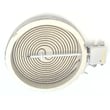
If a surface burner stops heating or heats unevenly, a common fix is replacing the element, such as the range radiant surface element, 10-in 5300W1R009A (or the 6-inch version if that is the burner size).
| Situation | What we recommend | Why it matters |
|---|---|---|
| Under 8 years old | Repair is usually worthwhile | You are still early in the normal life cycle |
| 8 to 13 years old | Repair if the issue is a single part | Keeps a solid unit running without major cost |
| Over 13 years old | Repair only for simple, low-cost fixes | Multiple failures become more likely |
Knowing the 13-year average helps you decide whether to troubleshoot a heating problem (like a failed radiant element or thermostat) or plan for replacement, especially if you are seeing repeated electrical or temperature-control issues.
Last updated: March 2026