
Are gas lawn mowers being phased out?
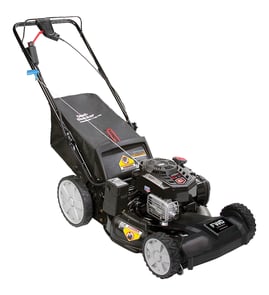
Gas lawn mowers are not being phased out nationwide, but some states and cities are restricting or planning to restrict the sale or use of certain new gasoline-powered outdoor power equipment. For a Craftsman walk-behind mower like model 917380560, the practical impact depends on your local rules and whether you are buying new equipment.
Most policy changes focus on new sales of gas-powered equipment and on commercial use in certain areas, not on forcing homeowners to stop using an existing mower.
- Existing gas mowers are typically still allowed to operate where you live.
- Restrictions vary by state, county, and city; rules can differ even within the same state.
- Some programs target specific equipment types (leaf blowers, trimmers) before mowers.
- Battery mowers are growing in popularity because they reduce noise and routine maintenance.
- If you keep your mower maintained, it can remain a reliable option for years.
| Feature | Gas mower | Battery mower |
|---|---|---|
| Runtime | Refill and keep mowing | Limited by battery capacity |
| Maintenance | Fuel system, oil, spark plug | Mostly blade and deck cleaning |
| Storage | Fuel stabilization matters | Battery storage and charging habits matter |
| Noise | Typically louder | Typically quieter |
If you plan to keep your Craftsman 917380560, routine upkeep matters more than policy changes.
- Keep the blade sharp and balanced; replace it if bent (see lawn mower 22-in deck mulching blade 532406713).
- Clean grass buildup under the deck to prevent corrosion and poor cutting.
- Use fresh fuel and store fuel properly to reduce carburetor issues.
- Inspect the blade mounting hardware; replace worn fasteners (example: lawn mower blade adapter 581547901).
- Winterize before long storage (drain or stabilize fuel, clean deck, check fasteners).
Local restrictions can affect what you can buy next, but maintenance affects how well your current mower cuts today. A sharp blade, clean deck, and solid blade adapter reduce vibration, improve cut quality, and help protect the crankshaft.
Last updated: January 2026
Should I use 87 or 93 for lawn mower?
For the Craftsman 917380560 gas walk-behind mower, we recommend using fresh regular unleaded gasoline with a minimum of 87 octane (AKI). Using 93 octane does not improve power or reliability in a typical small mower engine; it mainly adds cost.
- Use regular unleaded 87 octane (AKI) from a busy station.
- Use fresh fuel; small-engine gas can start causing hard-start and rough-run issues after about 30 days.
- Avoid old fuel stored in an open or vented container.
- Avoid over-fueling; stop at the bottom of the filler neck to reduce spills.
- If your mower will sit, treat fuel and plan for seasonal storage.
| Fuel choice | Works in most mowers | Typical benefit | When it makes sense |
|---|---|---|---|
| 87 octane | Yes | Correct baseline fuel | Normal mowing, normal temps |
| 93 octane | Yes | No meaningful gain | Only if required by a specific engine label |
Using the right fuel helps prevent common small-engine problems like hard starting, surging, and stalling. Most issues we see trace back to stale fuel and fuel-system varnish, not octane that is too low.
- If the mower is hard to start after sitting, follow how to keep lawn mower gas from going bad.
- If the pull cord will not move, use lawn mower pull cord stuck before forcing the recoil starter.
- If you are doing blade service while you are at it, use lawn mower blade removal tool for safer removal.
Last updated: January 2026
What is the average lifespan of a gas lawn mower?
Most gas walk-behind mowers, including the Craftsman 917380560, typically last 8 to 10 years with normal residential use and basic maintenance. Many run longer when the blade is kept sharp, the deck is kept clean, and worn hardware is replaced before it causes bigger damage.
- Light use (small yard, weekly mowing): often 10+ years
- Average use (typical suburban lawn): about 8 to 10 years
- Heavy use (large yard, rough terrain, long seasons): often 5 to 8 years
- Poor storage (left outside, old fuel): lifespan drops quickly
| What drives lifespan most | What to do | What it prevents |
|---|---|---|
| Blade condition | Follow how to sharpen a lawn mower blade | Excess vibration, poor cut, engine strain |
| Deck cleanliness | Follow how to keep grass clippings from sticking to a mower deck | Rust, clogging, uneven airflow and cut |
| Fuel quality and storage | Drain or stabilize fuel before storage | Hard starting, carburetor varnish |
| Fasteners staying tight | Replace worn nuts/bolts as needed | Blade wobble, adapter wear, safety issues |
- It starts and runs, but vibrates heavily or the cut is consistently uneven.
- The deck has significant rust-through or cracking.
- You repeatedly fight starting problems even after tune-up basics.
- The blade hardware will not stay tight, or the blade keeps loosening.
On the Craftsman 917380560, these are common wear items that help keep the cutting system tight and running smoothly:
- Lawn mower 22-in deck mulching blade 532406713 (replace if bent, cracked, or badly worn)
- Lawn mower blade adapter 581547901 (replace if the blade mount is rounded or slipping)
- Washer blade 532401630 and lock nut 532409149 (replace if threads are damaged or hardware will not hold torque)
A mower that is maintained for safe blade mounting, clean airflow under the deck, and good fuel storage usually costs less to own and delivers a cleaner cut for more years.
Last updated: January 2026