Error Codes


How to remove bottom grille on GE refrigerator?
On the GE GFE28GYNKFS bottom-mount refrigerator, the bottom grille (base grille or toe grille) typically comes off by releasing its retaining clips or removing a few screws, then pulling the grille straight out and down from the cabinet base.
Before you start
- Unplug the refrigerator or switch off power at the breaker (safer around wiring and fans)
- If the grille is near the floor, protect the finish with a towel or cardboard
- Use a flashlight to spot screws, tabs, and clip locations
- Have a Phillips screwdriver and a small flat-blade screwdriver ready
Step-by-step: removing the bottom grille
- Look for screws first. Check the left and right ends of the grille for Phillips screws.
- Remove any screws and set them aside.
- Release the clips/tabs. If there are no screws, gently pry at the top edge of the grille near the corners to pop the retaining clips.
- Pull the grille forward evenly from both sides. Avoid twisting so you do not crack the plastic.
- Lift away from the bottom edge (some designs hook in at the bottom and unclip at the top).
What you should see after it’s off (and why it matters)
Removing the base grille gives access to airflow and service areas that affect cooling performance and noise.
Common items behind the grille:
- Condenser coil area (dust buildup can reduce cooling)
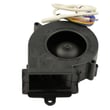
- Condenser fan area (a common source of rattling)
- Water line routing (on models with ice maker and dispenser)
Quick troubleshooting if it won’t come off
| What you notice | Most likely cause | What to do |
|---|---|---|
| Grille flexes but won’t release | Clips still engaged | Pry near corners, then work toward center |
| One side releases, other won’t | Hidden screw or stuck clip | Recheck ends for screws; pull evenly |
| Grille feels “hooked” at bottom | Bottom tabs seated in slots | Unclip top first, then lift up and out |
Related GE help
If you are working around the front doors while servicing the lower area, use how to reset the door alarm on a GE refrigerator to silence the alarm during longer service.
Last updated: February 2026
Is it worth repairing a GE refrigerator?
For a GE GFE28GYNKFS bottom-mount refrigerator, repair is worth it when the problem is a common service item (door seal, fan, ice maker, dispenser, defrost drain) and the total repair cost stays under about 50% of replacement cost; replacement makes more sense for sealed-system or compressor failures.
Quick decision checklist
- Repair if the unit is under 10 years old and cooling is mostly normal
- Repair if the issue is isolated (noise, leaks, door not closing, ice maker not working)
- Repair if you can confirm a simple cause (dirty condenser area, clogged defrost drain, bad door gasket)
- Replace if you have repeated warm-temperature events after repairs
- Replace if the diagnosis points to compressor, refrigerant leak, or sealed-system work
- Replace if the repair quote is more than half the cost of a comparable new refrigerator
What usually costs less to fix (and is worth it)
These are the most common “good repair” scenarios on GE French door and bottom-mount designs:
| Symptom | Common cause | Typical effort |
|---|---|---|
| Door alarm, door not sealing | Door not aligned, gasket not sealing, door left ajar | Low to medium |
| Puddles or water under fridge | Defrost drain clog, water line seep | Low to medium |
| Ice maker or dispenser issues | Air in line, filter restriction, inlet valve problem | Medium |
| Warm fresh food section but freezer ok | Evaporator fan or airflow issue | Medium |
What usually pushes you toward replacement
Sealed-system problems cost more and tend to be less predictable long-term:
- Compressor not running or locked up
- Refrigerant leak
- Poor cooling with no airflow issues found
- Frost pattern problems that point to sealed-system restriction
Why it matters
A targeted repair on the GE GFE28GYNKFS can restore performance quickly and extend the refrigerator’s life, but high-cost sealed-system work often approaches the price of a new unit and can lead to repeat service.
Helpful GE troubleshooting resources
- GE refrigerator error codes
- How to replace the water filter in a GE refrigerator
- How to get rid of refrigerator puddles
Last updated: February 2026
What are the features of the GFE28GYNKFS refrigerator?
GE model GFE28GYNKFS is a bottom-mount refrigerator; it uses a French door fresh-food section with a bottom freezer drawer. Common configurations on this style include an in-door ice maker, ice and water dispensing, filtration, door alarms, and quick-cool style settings.
Common features on GE French door bottom-mount refrigerators
These are the features most customers use day to day on this product type:
- French door refrigerator compartment with a pull-out bottom freezer drawer
- In-door ice maker (often paired with an external ice and water dispenser)
- Water filtration for drinking water and ice
- Temperature alarms and a door alarm
- LED interior lighting
- Quick-cool and quick-freeze style modes (names vary by control panel)
Feature checklist (what it does and why it matters)
| Feature area | What to look for on the refrigerator | Why it matters |
|---|---|---|
| Dispenser | Water, cubed, crushed options on the door | Convenience; fewer door openings |
| Filtration | Filter housing and a “replace filter” indicator | Better taste; helps protect dispenser flow |
| Alarms | Door alarm and temp alarm indicators | Helps prevent warm temps and food spoilage |
| Quick cooling | “Turbo” or “Quick” cooling/freezing labels | Faster recovery after loading groceries |
How we confirm the exact feature set on GFE28GYNKFS
Model-number suffixes can indicate finish or configuration differences, so we recommend verifying features by what’s physically on your unit:
- Read the control panel labels (for example, “Turbo Cool” or “Turbo Freeze”)
- Check whether the left door has a flipper mullion and that it seals correctly
- Test dispenser selections (water, cubed, crushed) if a dispenser is present
- Locate the water filter housing and confirm the filter type used
Why it matters
Knowing the exact dispenser, filtration, and alarm features on GFE28GYNKFS helps you troubleshoot faster and buy the right maintenance items, especially for water flow, ice production, and door-closure issues.
Related DIY help
- How to reset the door alarm on a GE refrigerator
- How to replace the water filter in a GE refrigerator
- GE refrigerator error codes
Last updated: February 2026
What is the life expectancy of a GE refrigerator?
Most GE refrigerators, including the GE GFE28GYNKFS bottom-mount refrigerator, have a typical life expectancy of 10 to 15 years. With consistent maintenance (clean airflow, good door sealing, and clean water filtration), many units reach the upper end of that range.
Typical lifespan ranges (what to expect)
Refrigerator longevity depends most on compressor run time, airflow, and door seal condition.
| Refrigerator type | Typical life expectancy | What shortens life fastest |
|---|---|---|
| Standard GE refrigerator | 10 to 15 years | Dirty condenser coils, poor ventilation |
| Heavy-use household (frequent door openings) | 8 to 12 years | Warm air infiltration, overstuffing |
| Well-maintained unit | 12 to 15 years | Skipped cleaning, ignored small leaks |
Maintenance that adds years
We recommend these habits for the GFE28GYNKFS to reduce wear on the sealed system and fans:
- Clean condenser coils and the grille area regularly to keep heat moving out efficiently.
- Keep doors closing tightly; fix gaps, tears, or warping in the door gasket.
- Maintain proper airflow inside; avoid blocking vents with food containers.
- Replace the water filter on schedule to protect the dispenser and ice maker.
- Level the refrigerator so doors self-close and seals seat evenly.
- Keep freezer drawers fully shut to prevent frost buildup and long run times.
Quick “is it near end of life?” checklist
These symptoms often show up as a refrigerator approaches the end of its service life:
- Compressor runs almost constantly but temperatures still drift warm
- Repeated frost buildup or warm spots from poor airflow
- Water puddles under the unit or inside compartments
- Ice maker or dispenser performance keeps declining after basic maintenance
- Unusual fan noise that returns soon after cleaning
Why it matters
A refrigerator that is running hot or leaking air uses more electricity and puts extra strain on the compressor, evaporator fan, and defrost system. Small maintenance steps can prevent expensive failures and help your GE refrigerator reach its full expected lifespan.
Helpful GE DIY guides
Last updated: February 2026
What is the most common problem with a GE refrigerator?
The most common GE refrigerator issue (including the GE GFE28GYNKFS bottom-mount style) is a cooling complaint: the fresh food section gets warm or temperatures swing. The next most common is ice maker and water dispenser trouble, often tied to airflow, frost buildup, or water supply and filtration.
Most common symptoms we see
- Refrigerator section warm but freezer still cold
- Unit runs constantly or cycles too often
- Frost buildup on the back wall or in the freezer
- Ice maker slow, no ice, or small/hollow cubes
- Water dispenser flow weak or sputtering
Quick checks that fix many “not cooling” calls
- Condenser coils: Clean dust and pet hair from the coils and the area around the condenser fan.
- Airflow: Make sure vents inside the refrigerator and freezer are not blocked by food packages.
- Door seal: Check for gaps, tears, or a door that does not close squarely.
- Evaporator fan: If you do not hear a fan running when the doors are closed, the evaporator fan or its wiring can be the cause.
- Defrost system: Heavy frost usually points to a defrost heater, defrost thermostat, or control issue.
Cooling problem: common causes at a glance
| Symptom | Most likely area | What to look for |
|---|---|---|
| Fresh food warm, freezer OK | Airflow/evaporator fan | Weak or no air from vents, fan noise changes |
| Frost on freezer back panel | Defrost system | Thick frost, reduced airflow |
| Both sections warm | Condenser/compressor/control | Dirty coils, no condenser fan, clicking, error code |
If the issue is ice maker or water related
- Confirm the household shutoff valve is fully open.
- Replace the water filter on schedule; a clogged filter reduces flow and ice production.
- Purge air after filter changes or water outages.
- If water flow is still weak, the water inlet valve can be restricted or failing.
Use these guides when the symptoms match:
- How to replace the water filter in a GE refrigerator
- How to prevent water dispenser and ice maker problems
Why it matters
Cooling and ice maker problems often share the same root causes: restricted airflow, frost buildup, or restricted water flow. Fixing the basic maintenance items first prevents food spoilage, reduces compressor run time, and helps the ice maker keep up.
Last updated: February 2026