 Owner’s manual
 Error Codes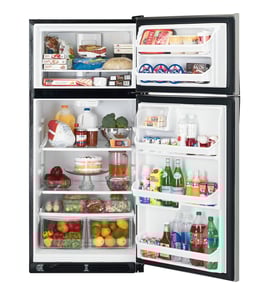



What are the disadvantages of a top mount fridge?
Top-mount refrigerators like the LG LTN16385PL typically cost less and are simple to own, but the main disadvantages are less convenient access to fresh food (you bend more), fewer premium organization features, and fewer dispenser options compared with many bottom-freezer or side-by-side designs.
Common disadvantages (what you will notice day to day)
- More bending for fresh food: the refrigerator section is lower, so you reach down more often.
- Less “eye-level” organization: many top-mount designs have fewer specialty drawers and door-bin layouts than higher-end styles.
- Fewer built-in dispenser features: many top-mount models do not include external water or ice dispensing.
- Odors can transfer between sections: because air circulates between freezer and fresh food, smells can move if food is not wrapped well.
- Airflow is easier to block: overpacking can block vents and cause temperature and moisture issues.
Quick comparison: top-mount vs. bottom-freezer
| Feature | Top-mount refrigerator | Bottom-freezer refrigerator |
|---|---|---|
| Fresh food access | Lower, more bending | Higher, less bending |
| Freezer access | Eye-level | Lower drawer |
| Organization | Often simpler | Often more flexible |
| Dispenser options | Less common | More common |
How to reduce the downsides on your LTN16385PL
Use these habits to improve temperature stability and reduce odor and moisture problems:
- Keep packages from blocking the air vents between sections.
- Cover or wrap foods tightly to limit odor transfer.
- Leave space around items so cold air can circulate.
- Level the refrigerator so doors close properly (this helps temperature consistency).
Why it matters
When airflow is restricted or doors do not seal and close consistently, a top-mount refrigerator can develop warm spots, excess moisture, and faster odor transfer. Following the airflow and leveling guidance in the LTN16385PL owner's manual helps the refrigerator cool evenly and run efficiently.
Last updated: January 2026
What is the most common problem with an LG refrigerator?
For the LG LTN16385PL top-mount refrigerator, the most common customer-reported issue is “not cooling” or “not cold enough,” which is usually tied to power, airflow, door sealing, or the normal defrost cycle rather than a single part failure. Use the troubleshooting steps in the LTN16385PL owner’s manual to narrow it down fast.
Most common symptoms we see
- Refrigerator section is warm but freezer seems closer to normal
- Both sections are warm (no cooling)
- Compressor runs a lot, but temperatures do not recover
- Strange noises (popping, sizzling, fan airflow sounds) that may be normal
- Moisture buildup or condensation inside
Quick checks before replacing parts
- Confirm power: Make sure the cord is firmly plugged into a properly grounded outlet; reset the breaker if needed.
- Allow for defrost: If cooling seems to pause, wait about 30 minutes to see if it resumes after a defrost cycle.
- Check airflow: Keep air vents clear; blocked vents can cause warm temperatures and moisture.
- Check doors and gaskets: Doors not closing completely can cause long run times and warm temps.
- Give it time after plugging in: After a restart, cooling can take up to 24 hours to stabilize.
What “normal” can sound like
| Sound | What it often means | When to worry |
|---|---|---|
| Popping | Wall expansion and contraction | If it’s constant with poor cooling |
| Sizzling | Water hitting the defrost heater | If you also see leaking water |
| Fan/air whoosh | Condenser fan moving air | If the fan is loud or stops intermittently |
When a part is a likely suspect
If the refrigerator is warm and you confirm power, doors, and airflow are good, a failed fan or a defrost drain issue can contribute to temperature problems or water where it should not be.
- For puddles or water under/inside the unit, check the drain system; the tube assy,dr 5251JA3003D is a common drain-related replacement part for this model.
- For overheating or poor heat removal at the back, condenser airflow matters; a failing condenser fan motor can reduce cooling efficiency.
Why it matters
Cooling complaints often come from simple causes (blocked vents, frequent door openings, incomplete door closure). Fixing those first prevents unnecessary part replacement and helps the compressor run less.
Last updated: January 2026
How long to let a refrigerator sit after laying it down?
For the LG LTN16385PL, we recommend setting the refrigerator upright and letting it sit unplugged for at least 24 hours before turning it back on. This gives compressor oil time to drain back where it belongs, helping prevent hard starts, poor cooling, or compressor damage.
Recommended wait time (based on how it was transported)
- On its side (most common when “laid down”): wait 24 hours
- On its back: wait 24 to 48 hours
- Only briefly tilted (not fully laid down): wait 4 to 12 hours
- Unsure how long it was down: wait 24 hours
For normal startup and cooling expectations after you plug it in, follow the guidance in the LTN16385PL owner's manual.
What to do before plugging it back in
- Set the refrigerator upright on a level surface.
- Leave doors closed so the cabinet stabilizes.
- Clean up any water from a defrost drain spill (if it occurred during transport).
- Plug in and set controls to the recommended mid settings.
- Allow time for temperatures to stabilize before loading food.
Quick checklist
- Keep the unit in a 50 °F to 109.4 °F area during setup.
- Expect airflow in the freezer within a few hours.
- Plan on up to 24 hours for full cooling and stable temperatures.
- Avoid repeated temperature changes; wait 24 hours between adjustments.
Why it matters
When a refrigerator is laid down, compressor oil can migrate into the refrigerant lines. Letting the unit sit upright gives that oil time to return to the compressor so it can lubricate properly when the compressor starts.
Timing guide at a glance
| How it was moved | Minimum upright wait | When to add food |
|---|---|---|
| Brief tilt only | 4 to 12 hours | After cooling begins |
| On its side | 24 hours | Best after 24 hours |
| On its back | 24 to 48 hours | Best after 24 hours |
Last updated: January 2026
Is it okay to put something heavy on top of the fridge?
It’s best not to store heavy items on top of your LG LTN16385PL top-mount refrigerator. Extra weight can dent the cabinet, block airflow, and make the unit harder to move safely, which increases the risk of injury or damage during cleaning or service.
What we recommend instead
Use the top of the refrigerator only for light, non-breakable items (if anything) and keep the area clear for ventilation and safe handling.
- Keep the top clear of heavy appliances (microwaves, air fryers, large bins)
- Avoid anything that can vibrate or “walk” (it can scratch the finish and shift)
- Do not block rear or top airflow paths (cooling efficiency can drop)
- Store heavy items in a cabinet or pantry shelf instead
- Follow handling and placement guidance in the LTN16385PL owner's manual
Why heavy items are a problem
Your refrigerator cabinet is not designed as a load-bearing shelf. Heavy weight can also make it more difficult to pull the refrigerator straight out for cleaning or servicing, which matters because this model is extremely heavy and should be moved carefully.
Common risks and what they look like
| What you put on top | What can happen | Better option |
|---|---|---|
| Small countertop appliance | Dents, vibration noise | Counter or cart |
| Large storage bin | Scratches, trapped heat | Closet shelf |
| Heavy boxes | Cabinet damage, tipping risk when moving | Lower cabinet |
If you already stored something heavy up there
- Remove the item and wipe the top clean
- Check for dents or bowed metal near the front edge
- Confirm doors still close and align normally
- Listen for new rattling noises from the back or sides
- Make sure nothing is blocking ventilation space around the refrigerator
Why it matters
Keeping weight off the top helps protect the refrigerator’s finish, supports proper cooling airflow, and makes routine maintenance safer.
Last updated: January 2026





