
Is it worth upgrading from 14 seer to 16 seer?
Upgrading from 14 SEER to 16 SEER is usually worth it when your Icp PGF336100K00A1 is due for replacement or you run cooling many hours per season; the efficiency gain is about 14% (16 is roughly 13% more efficient than 14), which can lower electric bills over time.
What the efficiency difference really means
SEER is a seasonal efficiency rating; higher SEER means less electricity used for the same cooling output.
- 16 SEER uses less power than 14 SEER for the same comfort level
- Savings are biggest in hot climates and long cooling seasons
- If your current system is older, real-world savings can be larger than the SEER jump alone
- If you rarely run AC, payback takes longer
Quick comparison
| Rating | Relative efficiency | Typical best fit |
|---|---|---|
| 14 SEER | Baseline | Mild climates, lower run time |
| 16 SEER | About 13% higher than 14 | Hot climates, higher run time |
When we recommend the upgrade
The upgrade makes the most sense when at least one of these is true:
- Your current unit is near end-of-life or needs major repairs
- You expect to stay in the home long enough to benefit from lower operating costs
- Your summer electric bills are high due to long run times
- You are also improving duct sealing, airflow, or insulation (these amplify savings)
Why it matters
A package gas/electric unit like the Icp PGF336100K00A1 depends heavily on correct airflow and heat transfer. Better efficiency can reduce operating cost, but comfort and reliability still come from proper airflow, clean coils, and safe electrical operation.
If you are deciding based on repair cost
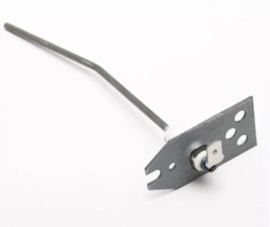
If you are weighing an upgrade because of a repair, compare the repair total to the age and condition of the unit. Common repair-related parts for this model include safety and airflow components like the furnace temperature limit switch 1013102 and the blower motor 1177606.
Last updated: February 2026
What is a combination heating and air conditioning unit called?
A combination heating and air conditioning unit is commonly called an HVAC package unit (also called a packaged gas/electric unit when it uses gas heat and electric cooling). Your Icp model PGF336100K00A1 is a packaged unit that combines the furnace and air conditioner in one outdoor cabinet.
Common names you may hear
- Package unit (packaged unit)
- Packaged gas/electric unit
- Rooftop unit (RTU) when installed on a roof
- Heating and cooling combined unit
- All-in-one HVAC unit
How a package unit is different from a split system
A package unit puts major components in one cabinet; a split system separates them between an outdoor condenser and an indoor furnace or air handler.
| System type | Main components location | Typical setup |
|---|---|---|
| Package unit | All-in-one outdoor cabinet | One unit connected to ductwork |
| Split system | Outdoor condenser plus indoor furnace/air handler | Two main sections (indoor + outdoor) |
Why the name matters (parts and troubleshooting)
Knowing you have a packaged gas/electric unit helps you match the right replacement parts and symptoms to the right section of the unit (gas heat vs. electric cooling). For example, heating issues often involve safety and temperature controls like a limit switch, while cooling issues often involve fan and capacitor circuits.
Parts that commonly relate to “heat” vs. “cool” symptoms
- Heat shuts off quickly or cycles: furnace temperature limit switch 1013102
- Heat runs but airflow is weak: blower 1085571 or blower motor 1177606
- Outdoor fan problems or physical damage: central air conditioner condenser fan grille 1173832
- Cooling electrical start/run issues: capacitor CAP050550440RTP
Last updated: February 2026
How much is a combined heating and cooling system?
A combined heating and cooling system typically costs $10,000 to $20,000 installed, with many homeowners landing near the middle of that range. For an Icp package gas/electric unit like model PGF336100K00A1, your final price depends most on capacity, ductwork condition, and installation complexity.
What drives the installed price
These factors usually move the total cost up or down:
- System size (tonnage and BTU output) matched to your home
- Efficiency level (higher efficiency usually costs more up front)
- Ductwork repairs, sealing, or replacement
- Electrical and gas line work (disconnects, shutoffs, code updates)
- Labor and access (roof curb, tight clearances, crane lift)
- Thermostat and controls upgrades
Typical cost ranges (installed)
These are common planning ranges for U.S. residential installs.
| Scenario | Typical installed range | Best fit |
|---|---|---|
| Like-for-like replacement (existing ductwork and utilities in good shape) | $10,000 to $14,000 | Most straightforward swaps |
| Replacement plus moderate ductwork or electrical/gas updates | $14,000 to $18,000 | Many real-world installs |
| Complex install (major ductwork, difficult access, significant code work) | $18,000 to $20,000+ | High labor and materials |
Why it matters
A package unit combines the furnace and air conditioner in one cabinet, so sizing and installation quality directly affect comfort, energy use, and component life. Planning for the right scope (especially ductwork and access) prevents surprise costs.
Parts vs. full replacement
If your PGF336100K00A1 is not heating or cooling correctly, a repair can sometimes restore operation at a much lower cost than replacement. Common service items include safety and airflow-related components such as a furnace temperature limit switch 1013102 or a blower motor 1177606.
- If the unit overheats and shuts off, check airflow and limit-switch operation.
- If airflow is weak, the blower motor or blower assembly may be involved.
- If you are troubleshooting electrical issues, use safe testing practices and reference how to use a multimeter to test electrical parts video.
Last updated: February 2026
What is a good HSPF rating for a heat pump?
A good HSPF (Heating Seasonal Performance Factor) for a heat pump is 8.5 or higher; if you want stronger cold-weather efficiency, look for 10+ on cold-climate rated equipment. For an Icp PGF336100K00A1 package gas/electric unit, HSPF typically applies only if the system is configured as a heat pump.
Quick HSPF targets (what to aim for)
- 8.2 to 8.5: solid baseline efficiency for many homes
- 8.6 to 9.5: better seasonal efficiency and lower heating cost
- 10+: cold-climate focused performance (best for long heating seasons)
- Higher HSPF matters most when you use the heat pump for a large share of your heating hours
Why HSPF matters
HSPF is a seasonal efficiency score for heat pump heating. A higher number means the system delivers more heat per unit of electricity over a typical heating season, which usually reduces operating cost and improves comfort during mild to moderately cold weather.
HSPF vs. what you may actually have
Because the PGF336100K00A1 is a package gas/electric unit, many installations heat primarily with a gas furnace section (not a heat pump). Use this quick check:
- If you have an outdoor condenser and a reversing valve (heat/cool from the same refrigeration circuit), HSPF is relevant.
- If heating is gas-only, HSPF is not the efficiency rating you will use; you will focus on furnace efficiency instead.
- If you are unsure, match the exact model and configuration on the rating label and parts list.
Related parts that protect heating performance
If your system is overheating or short-cycling in heat mode, a failed limit or safety switch can reduce comfort and efficiency. These model-matched parts are commonly involved:
| Symptom | Commonly involved part | What it does |
|---|---|---|
| Burner shuts off, blower keeps running | Furnace temperature limit switch 1013102 | Opens on high temperature to prevent overheating |
| Intermittent heat, nuisance trips | Furnace temperature limit switch 1095242 | Alternate limit used in some configurations |
| Unit will not run or cuts out | Switch 1173822 | Safety/control switching in the unit circuit |
What to do if you are shopping by efficiency
- Confirm whether you are buying a heat pump or gas/electric package unit.
- Compare HSPF (heating) and SEER2 (cooling) together.
- Make sure the system is properly sized; oversizing can reduce real-world efficiency.
- Keep airflow correct; dirty filters and weak blower performance can hurt comfort.
Last updated: February 2026
Is it cheaper to repair or replace HVAC parts?
For an Icp PGF336100K00A1 package gas/electric unit, it’s usually cheaper to repair when the problem is isolated (one failed switch, capacitor, or motor) and the rest of the system is in good shape. Replacement makes more sense when repair costs stack up, reliability drops, or major components are involved.
A practical way to decide
Use these checkpoints to choose repair vs. replace for your heating and cooling combined unit:
- System age: Most HVAC systems last 15 to 20 years; past that, replacement typically wins on value.
- Repair size: If a single repair is approaching half the cost of a new unit installed, replacement is usually the better long-term move.
- Repeat failures: Multiple breakdowns in a season point to broader wear, not a one-off part failure.
- Major component failure: Heat exchanger, compressor, or repeated control issues often shift the math toward replacement.
- Efficiency and comfort: Newer equipment can reduce run time and improve temperature control.
Common “repair-first” parts for this model
If your PGF336100K00A1 is otherwise running well, these are the kinds of parts that often make sense to replace rather than replacing the whole unit:
| Symptom | Likely repair area | Example part on this model page |
|---|---|---|
| Furnace shuts off, overheats, or short-cycles | High-limit safety circuit | Furnace temperature limit switch 1013102 or furnace temperature limit switch 1095242 |
| Outdoor fan struggles to start or hums | Run capacitor | Capacitor CAP050550440RTP |
| Weak airflow or no airflow in heating/cooling | Indoor blower assembly | Blower motor 1177606 or blower 1085571 |
Why it matters
Repairing the right part restores safe operation and protects expensive components. For example, a failing limit switch can indicate overheating from restricted airflow; fixing the root cause prevents repeated shutdowns and additional damage.
Before you spend money
- Turn off power at the disconnect and breaker before inspecting.
- Check the air filter, supply registers, and return grilles for restrictions.
- Look for loose or burned wiring at the blower, capacitor, and safety switches.
- If you’re testing electrical parts, use a meter correctly: how to use a multimeter to test electrical parts video.
Last updated: February 2026