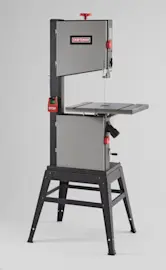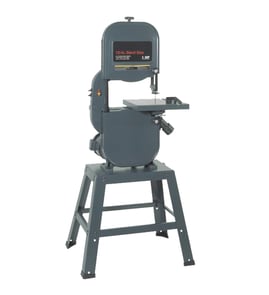

What is the 3-tooth rule for bandsaws?
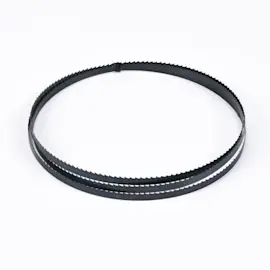
The 3-tooth rule for a band saw blade means you should keep at least three blade teeth in contact with the workpiece at all times. On a Porter Cable 728 band saw, this rule helps prevent tooth snagging, rough cuts, and stripped teeth by matching blade TPI (teeth per inch) to material thickness.
How to apply the 3-tooth rule (quick method)
- Measure the material thickness (the direction the blade teeth travel through).
- Choose a blade TPI that gives you 3 to 6 teeth engaged in wood and 6 to 24 teeth engaged in metal.
- If you are between sizes, choose the coarser blade for thick stock and the finer blade for thin stock.
Simple TPI selection guide
- Thin material (sheet metal, thin-wall tubing, thin wood): higher TPI to keep enough teeth engaged.
- Thick material (thick hardwood, solid bar stock): lower TPI for better chip clearance.
- Soft, gummy metals (aluminum, mild steel): avoid overly fine TPI to reduce heat and loading.
- Hard metals: use appropriate blade type and slower feed; keep enough teeth engaged to avoid tooth breakage.
Why it matters
Keeping at least three teeth engaged stabilizes the cut. Too few teeth in the cut increases grabbing and vibration; too many teeth can pack chips, build heat, and dull the blade faster.
Quick reference table
| Material thickness | What to do | Typical result |
|---|---|---|
| Very thin | Use finer TPI | Smoother cut, less snagging |
| Medium | Mid-range TPI | Balanced speed and finish |
| Thick | Use coarser TPI | Faster cutting, better chip clearing |
Related DIY help
- If you are troubleshooting poor cutting performance caused by electrical issues (intermittent power, weak motor under load), use how to use a multimeter to test electrical parts video.
Last updated: February 2026
What size blade is a Porter Cable 728?
Porter-Cable model 728 is a portable band saw; it uses a portable band saw blade, not a stationary 44-7/8 inch woodworking band saw blade. For the exact blade length and width for your 728, match the blade to the size printed on your current blade or measure the blade you remove.
How to get the correct blade size (fast and accurate)
Unplug the saw first, then use one of these methods:
- Read the blade stamp: most portable blades have the length and width printed on the blade body.
- Measure the blade length: lay the removed blade flat and measure end-to-end, or measure the full loop with a flexible tape.
- Measure blade width: measure across the blade from tooth tip to back edge.
- Confirm thickness (gauge): match the old blade so it tracks correctly in the guides.
- Match the mounting style: portable band saw blades are welded loops; do not buy a “roll” blade.
Blade choice guide (once size is confirmed)
After you confirm the correct length and width, choose teeth per inch (TPI) for the material.
| What you’re cutting | Typical TPI to choose | Why it matters |
|---|---|---|
| Thin wall metal, conduit | 18 to 24 TPI | Cleaner cut, less tooth snagging |
| General steel, angle iron | 14 to 18 TPI | Balanced speed and finish |
| Thick stock | 10 to 14 TPI | Better chip clearance |
| Mixed materials | 14/18 variable | Smoother across thickness changes |
Why it matters
Using a stationary-saw blade length on a portable band saw prevents proper tensioning and tracking. The correct portable blade size keeps the blade aligned in the wheels and guides, improves cut quality, and reduces motor strain.
Helpful DIY reference
If you’re troubleshooting a no-start condition after changing the blade, use how to use a multimeter to test electrical parts video.
Last updated: February 2026
Why are band saws so expensive?
Band saws cost more because they combine a rigid frame, accurate wheel and bearing alignment, and a motor and drive system built to hold blade tension and track straight under load. With the Porter Cable 728, you are paying for cut quality, durability, and safer, more controlled cutting than lighter-duty tools.
What drives the price up
- Heavy, rigid construction: thicker steel or cast components reduce vibration and keep the blade tracking true.
- Precision parts: balanced wheels, quality bearings, and accurate guides improve straight cuts and resaw results.
- Motor and drivetrain: stronger motors, pulleys, and belts handle hardwoods and thicker stock without stalling.
- Adjustability and capacity: features like better blade guides, larger throat depth, and higher resaw height add cost.
- Quality control and support: tighter tolerances and better parts availability typically come with higher-end models.
What you get for the money (and what to check before buying)
A higher-priced band saw usually saves time and frustration because it stays aligned longer and needs fewer tweaks.
| Feature area | Budget band saw | Higher-end band saw |
|---|---|---|
| Frame stiffness | More flex, more vibration | Stiffer, smoother cuts |
| Blade tracking | Drifts more easily | Tracks consistently |
| Guides/bearings | Basic, wears faster | More precise, longer life |
| Power under load | Stalls easier | Maintains blade speed |
Why it matters for real-world cutting
Price shows up in the cut: a stable saw holds blade tension, reduces drift, and produces cleaner edges. That matters for resawing, curve cuts, and repeatable joinery where accuracy and safety depend on predictable blade behavior.
Ways to control total cost of ownership
- Choose the right blade for the job (tooth count and width matter as much as horsepower).
- Keep wheels and guides aligned; misalignment ruins blades quickly.
- Inspect the power cord and switch; electrical issues can mimic “weak motor” symptoms.
- Plan for consumables: blades, tires, guide blocks/bearings.
- Use a multimeter for electrical troubleshooting when needed (with power disconnected).
For electrical checks and wire condition basics, we recommend how to repair broken or damaged wires video.
Last updated: February 2026