Installation guide
 Owner’s manual
 Error Codes



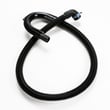
How to unclog drain hose on Kenmore washer?
To unclog the drain hose on a Kenmore washer model 11029133410, we disconnect the hose from the drain system, clear the blockage, then reinstall it using the correct standpipe depth and hose form so the washer can drain and spin normally. Use the steps in the installation guide for proper drain-hose setup.
Safe, effective unclog steps
- Unplug the washer.
- Pull the washer forward so you can reach the drain hose.
- Disconnect the drain hose from the home drain (standpipe or laundry tub).
- Check the hose end for lint, coins, socks, or sludge; remove debris by hand.
- Flush the hose with hot water; for buildup, soak the hose end in hot water plus vinegar for 20 to 30 minutes, then flush again.
- Reconnect the hose and secure it so it cannot pop loose during draining.
Reinstall it correctly (prevents repeat clogs and siphoning)
The installation specs matter as much as the cleaning.
| Item to verify | What we recommend for this washer | What can go wrong if incorrect |
|---|---|---|
| Standpipe insertion depth | About 4.5 in. (114 mm) inside the standpipe | Too deep can restrict flow and cause drain problems |
| Hose form | Use the factory hose form | Kinks, pinches, or siphoning |
| Drain height | Keep the hose end below 96 in. (2.4 m) above the floor | Slow drain or no drain |
When a clogged hose is really a pump problem
If the hose is clear but the washer still will not drain, the drain pump may be jammed or failing. For this model, a common replacement is the washer drain pump W10876600.
Why it matters
A restricted drain hose can stop the washer from spinning, leave water in the tub, and trigger off-balance behavior because the load stays waterlogged. Correct hose routing also prevents siphoning and repeat drain issues.
Last updated: February 2026
What is the average lifespan of a Kenmore washer?
A Kenmore washer typically lasts 10 to 15 years. For the Kenmore 11029133410 high-efficiency top-load washer, reaching the high end of that range comes down to correct HE detergent use, balanced loading, and staying ahead of wear items called out in the 11029133410 use and care guide.
Typical lifespan and what affects it
Most washers land in the same general window, but these factors move the needle the most:
- Load size and balance: frequent overloading or consistently unbalanced loads shortens suspension, drive, and clutch life.
- Detergent choice: this model is designed for HE (high efficiency) detergent; too many suds can cause poor rinsing and extra strain.
- Water quality: hard water speeds up residue buildup and can affect valves and hoses.
- Maintenance habits: periodic cleaning and inspection prevents small issues from becoming major repairs.
- Early symptom response: addressing noise, slow drain, or lid lock issues early often prevents secondary damage.
What “end of life” usually looks like
A washer is usually near end-of-life when multiple high-wear systems start failing close together.
| Symptom | Common system involved | Example model-matched part to check |
|---|---|---|
| Won’t drain or drains slowly | Drain pump, drain hose, clogs | Washer drain pump W10876600, washer drain hose W11244231 |
| Won’t fill or fills slowly | Water inlet valve, screens, supply hoses | Washer water inlet valve W11165546 |
| Won’t start or lid won’t lock | Lid lock, wiring, control | Washer lid lock assembly W10810403 |
| Loud banging, walking, off-balance | Suspension/dampers, load habits | Damper assembly, tub suspension (set of 4-includes suspension bushings and suspension balls) W11130356 |
How we recommend extending life (practical checklist)
- Load items in loose heaps evenly around the washplate (this is especially important on low-water HE top-load designs).
- Use HE detergent only and measure carefully.
- Avoid washing heavy single items alone (add a few towels to help balance).
- Check fill screens and hoses if fill slows down.
- If draining slows, inspect for obstructions before the pump overheats.
Why it matters
A washer that is maintained and kept in balance typically avoids the most expensive “cascade failures” (for example, chronic off-balance operation leading to suspension wear, then drive strain, then repeated cycle interruptions). Following the loading and detergent guidance in the 11029133410 use and care guide is the simplest way to protect the drive and suspension systems.
Last updated: February 2026
What is the most expensive part on a washer?
On the Kenmore washer model 11029133410, the most expensive repairs are typically the wash basket/tub and the bearing or drive system components because they involve major disassembly and high-cost assemblies. In many cases, these repairs cost more than common service parts like a drain pump or inlet valve.
What’s usually the priciest (and why)
Major rotating and support components drive the highest parts cost and labor time.
- Basket/tub assemblies: large, model-specific assemblies that can be expensive to ship and replace
- Bearings and seals (often tied to the tub): labor-intensive; failure can cause loud roaring and leaks
- Drive system assemblies: can include multiple high-cost components and require significant teardown
- Electronic control assemblies: expensive boards and panels, plus diagnostic time
Examples of higher-cost parts for this model
For Kenmore 11029133410, these are examples of parts on this model that are commonly among the higher-priced items.
| Part type | Example part on this model | Why it can be costly |
|---|---|---|
| Drive system | Drive assembly W11393685 | Major mechanical assembly; deep access in the washer |
| Control interface | Washer control panel assembly W11248044 | Electronics plus model-specific fit and programming |
| Structural/large assembly | Basket assembly (varies by revision) | Large assembly; significant labor to replace |
How we decide if a “big repair” is worth it
We recommend weighing the part cost plus labor against the washer’s condition and symptoms.
- If the washer is very noisy in spin, suspect bearings, drive, or suspension issues
- If it won’t spin or agitates poorly, the drive system or clutch components are common suspects
- If it won’t start or behaves erratically, controls or lid lock circuits are often involved
- If it leaks, focus on hoses, pump, tub seals, and installation setup
Why it matters
High-cost parts usually sit at the core of the washer (basket, tub, drive, controls). When one fails, the repair often requires removing the washplate and basket, and that labor is what makes these jobs the most expensive.
For model-specific disassembly and safety steps, follow the 11029133410 owner’s manual.
Last updated: February 2026
How to identify a Kenmore washer model?
Your Kenmore washer model number is printed on the appliance’s rating label; on Kenmore model 11029133410 (a top-loading high efficiency washer), it’s most often found under the lid opening or on the back of the cabinet. Once you have the full model number, we can match the correct washer parts and diagrams.
Where to look on a Kenmore washer
Check these common label locations first:
- Under the washer lid, around the lid opening or rim of the cabinet
- On the back panel of the washer cabinet
- Near the control panel area (often on the cabinet, not the console)
- On the side of the cabinet near the top edge
- On the frame area behind the lid (use a flashlight if needed)
What the model number should look like
For Kenmore washers, the model number is typically a long numeric format. For this unit, it is 11029133410.
| What to capture | Example for this washer | Why we need it |
|---|---|---|
| Model number | 11029133410 | Ensures parts fit your exact design |
| Serial number | (from the same label) | Helps confirm production version when needed |
| Brand | Kenmore | Narrows parts families and diagrams |
Tips to avoid ordering the wrong part
Use these quick checks before you shop for replacement parts like a lid lock, drain pump, or inlet valve:
- Copy the model number exactly as shown (all digits, no spaces)
- Take a clear photo of the label for reference
- If a character is hard to read, compare it to nearby digits on the label
- Use the model number, not the cycle names on the control panel
- Keep the serial number handy if you are comparing similar Kenmore 110 models
Why it matters
Kenmore “110” platform washers can look similar across years, but internal components (like the washplate system and lid-lock design) can differ. Using the exact model number from the label is the fastest way to get the right diagrams, installation requirements, and compatible parts in one step using the 11029133410 owner’s manual.
Last updated: February 2026
Is it worth repairing a Kenmore washing machine?
Yes; repairing a Kenmore washer is worth it when the fix restores reliable operation for less than replacing the machine, especially for common wear items like a lid lock, drain pump, or inlet valve. For Kenmore model 11029133410, we start by matching the symptom to the correct part and procedure in the 11029133410 owner's manual.
Quick way to decide: repair vs replace
Use these checkpoints to make a clear call before spending money:
- Repair it if the problem is isolated (won’t fill, won’t drain, won’t spin, lid won’t lock).
- Repair it if the washer is otherwise quiet, doesn’t leak, and the tub/basket are solid.
- Replace it if the outer tub is cracked, the basket is badly damaged, or multiple major systems are failing.
- Repair it if the issue is a common service part and access is straightforward.
- Replace it if repair cost approaches the price of a comparable new washer after labor.
Common repairs that are usually worth doing
These are frequent, targeted fixes on top-load HE Kenmore washers like 11029133410:
| Symptom | Likely area | Example part for this model |
|---|---|---|
| Won’t start or won’t unlock | Lid lock system | Washer lid lock assembly W10810403 |
| Won’t drain or leaves water | Drain system | Washer drain pump W10876600 |
| Won’t fill or fills slowly | Water inlet | Washer water inlet valve W11165546 |
What to check first (saves time and money)
Before ordering parts, we recommend these fast checks:
- Confirm the cycle and options are set correctly; then try a power reset (unplug 1 minute).
- If an F## error code appears, clear it and retry the cycle per the troubleshooting guidance in the manual.
- Check for a kinked drain hose or a clogged standpipe; a restriction can mimic a bad pump.
- Verify both hot and cold supply valves are fully open and inlet screens are not blocked.
- Listen for the lid lock click; no click often points to the lid lock or lid alignment.
Why it matters
A focused repair keeps a good washer in service, avoids the learning curve of a new machine, and often fixes the exact failure point (drain, fill, or lid lock) without replacing the whole appliance.
Last updated: February 2026
What is the capacity of a Kenmore Model 11029133410 washer?
The Kenmore washer model 11029133410 is a top-loading high-efficiency, low-water design; its exact tub capacity (in cubic feet) is listed in the product specifications section of the 11029133410 owner's manual. For washers in this Kenmore 110 platform, capacity is commonly in the mid-size range used for everyday family loads.
How to find the exact capacity for model 11029133410
We recommend using the manual specs first because Kenmore 110-series models can look similar but vary by basket size.
- Open the 11029133410 owner's manual
- Look for “Specifications” or “Product dimensions/capacity”
- If capacity is not shown as cubic feet, check for basket/tub size notes
- Match the model on your rating label to 110.2913*410 (the manual family that includes 11029133410)
- Keep the serial number handy in case you need parts or service history
Typical capacity range (helpful for planning loads)
If you are estimating load size (not ordering a basket), most top-load HE washers of this style are typically:
| What you’re doing | Practical capacity guidance | What it means for laundry |
|---|---|---|
| Everyday mixed loads | Mid-size top-load range | Regular towels, jeans, and weekly clothing |
| Bulky items | Use “bulky/bedding” cycle if available | Comforters may need extra space to circulate |
| Detergent choice | HE detergent only | Prevents oversudsing in low-water wash action |
Why capacity matters
Capacity affects cleaning performance, cycle time, and how well the load balances during spin. Overloading can contribute to out-of-balance conditions and poor draining or spinning performance.
Related troubleshooting help
If you are asking about capacity because the washer is shaking, stopping, or showing balance-related symptoms, use our Kenmore guidance for imbalance conditions: Kenmore top load washer ue and ue error codes.
Last updated: February 2026
What size is a Kenmore model 11029133410 washer?
The Kenmore 11029133410 is a top-loading high-efficiency washer; most washers in this Kenmore 110 platform measure about 27 to 28 inches wide, 27 to 28 inches deep, and 42 to 44 inches tall. For the exact cabinet dimensions and required clearances, use the 11029133410 installation guide.
How to measure your washer (quick and accurate)
Measure with the washer in its normal installed position (or pulled straight out a few inches):
- Width: left side panel to right side panel (do not include hoses)
- Depth: front of cabinet to back of cabinet (add space for hoses)
- Height: floor to top of cabinet (add height if a lid is propped open)
- Doorway fit: measure the narrowest doorway and compare to washer width
- Closet fit: include side and rear clearance plus door ventilation needs
Installation clearances and space planning
Your installation guide calls out spacing guidance for recessed or closet installs and notes that the washer has been tested with 0-inch side clearance, while adding about 1 inch on all sides helps reduce noise transfer and makes service easier. Use the 11029133410 installation guide to match your space to the recommended clearances.
| What you are planning | What to allow for | Why it helps |
|---|---|---|
| Tight closet install | Minimum clearances plus required door openings | Prevents overheating and improves performance |
| Standard laundry room | Extra space behind washer | Protects inlet hoses and drain hose routing |
| Service access | A little room on both sides | Makes repairs and leveling easier |
Why it matters
Correct sizing prevents installation problems like kinked inlet hoses, a pinched drain hose, excessive vibration, and difficulty leveling. It also helps you plan for proper standpipe height and closet ventilation.
Last updated: February 2026