Owner’s manual
 Error Codes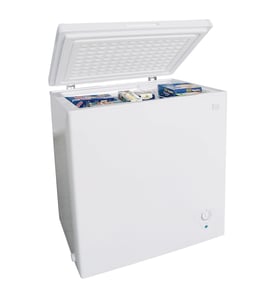

How many cubic feet is a Kenmore freezer model 25316542107?
The cubic-foot capacity for Kenmore chest freezer model 25316542107 is listed in the product specifications for that exact model. Use the 25316542107 owner's manual to find the stated capacity (often shown as “capacity” or “cu. ft.”) and match it to your unit’s model/serial tag.
Where to find the capacity for model 25316542107
Check these spots in order; they are the fastest ways to get the exact number for your freezer:
- The specifications section in the 25316542107 owner's manual
- The Energy Guide label (often on the exterior or included paperwork)
- The model and serial label (commonly on the left exterior wall on chest models)
- Any original sales receipt or product listing that includes “cu ft”
What to look for in the manual
Capacity is typically shown near other key specs. When you find it, it may be labeled as:
- “Capacity”
- “Total capacity”
- “Cubic feet (cu. ft.)”
| Label you may see | What it means |
|---|---|
| Capacity / Total capacity | The freezer’s storage volume in cubic feet |
| Model/Serial tag | Confirms you are reading specs for the correct unit |
Why it matters
Knowing the exact cubic feet helps you plan food storage, choose baskets/dividers, and compare energy use accurately. It also prevents ordering the wrong accessories when similar Kenmore 253-series chest freezers look alike.
Last updated: January 2026
What are the most common issues with 25316542107?
The most common issues we see with the Kenmore 25316542107 chest freezer are temperature problems (not cold enough or too cold), lid seal leaks that cause frost buildup, and electrical or control issues that stop the compressor from running. Use the 25316542107 owner's manual to confirm normal operation and control settings.
Common symptoms and what they usually point to
- Freezer not cold enough: dirty/blocked condenser area, weak compressor start components, failing compressor, or a control problem
- Runs constantly: warm room location, frequent lid openings, lid gasket leak, or thermostat/control not cycling correctly
- Heavy frost or ice: lid not sealing, lid left ajar, humid air entering, or frequent openings
- No interior light or light stays on: door switch or light socket issue
- Tripping breaker: wiring issue, compressor electrical problem, or a shorted component
Quick checks we recommend first
- Set the temperature control to a mid setting and give it 24 hours to stabilize.
- Verify the lid closes fully and the gasket makes full contact all the way around.
- Make sure airflow around the cabinet is not blocked and the condenser area is clean.
- Listen for the compressor: a steady hum is normal; repeated clicking can indicate a start issue.
- If your model displays codes, use the Kenmore electronic control module freezer error codes reference.
Parts commonly involved (when symptoms match)
| Symptom | Common part to inspect | Example part on this model |
|---|---|---|
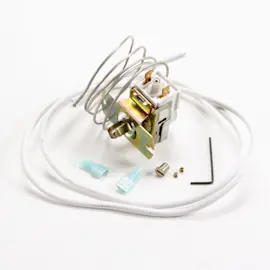
| Warm temps or constant running | Temperature control | Freezer temperature control thermostat 216714601 |
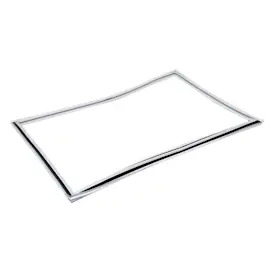
| Frost buildup at lid | Lid seal | Frigidaire freezer lid gasket, white 216481211 |
| Light problems | Door switch or socket | Freezer door switch 216822900 or freezer light socket 297139501 |
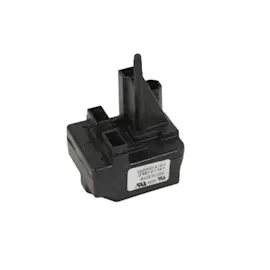
| No cooling, electrical hum/clicking | Compressor system | Compressor 5304507765 |
Why it matters
Catching a lid-seal leak or control problem early prevents excessive frost, long run times, and food temperature swings. That also reduces strain on the sealed system (compressor and refrigerant components).
Last updated: March 2026
What is the life expectancy of a chest freezer?
A Kenmore chest freezer like model 25316542107 typically lasts 16 years. In normal home use, most chest freezers run 12 to 20 years, making them one of the longest-lasting kitchen appliances when they are kept clean, level, and properly ventilated.
What affects how long a chest freezer lasts
- Room temperature and placement: keep it in the coolest practical area, away from heat sources and direct sunlight.
- Lid seal condition: a leaking gasket makes the compressor run longer and shortens component life.
- Defrosting and cleaning habits: heavy frost buildup reduces efficiency and stresses the sealed system.
- Power quality and outages: frequent outages and restarts are hard on the compressor.
- How it is loaded: avoid overloading with warm food; allow time for temperatures to stabilize after adjustments.
Quick lifespan guide (typical)
| Item | Typical range | What you can do |
|---|---|---|
| Chest freezer overall lifespan | 12 to 20 years | Keep lid sealed, defrost as needed, maintain airflow |
| “Average” expectation | About 16 years | Follow routine care and cleaning |
| Major life-limiting failures | Compressor or sealed system | Address overheating, poor ventilation, and heavy run time |
Signs your freezer is nearing end of life
- Runs almost constantly or struggles to hold temperature
- Excessive frost returns quickly after defrosting
- Unusual clicking, buzzing, or repeated start attempts
- Warm spots or thawing food despite correct settings
- Condensation around the lid area (possible gasket leak)
Why it matters
Knowing the typical lifespan helps you decide whether to repair or replace. If your 25316542107 is approaching the 12 to 20 year range, we focus first on low-cost fixes (cleaning, lid seal checks, temperature control issues) before investing in major sealed-system repairs.
For model-specific operating and care guidance, follow the 25316542107 owner's manual.
Last updated: January 2026