



What is the most common problem with whirlpool dryers?
The most common Whirlpool dryer complaint (including Whirlpool model WHD560CHW2) is the dryer won’t start. In many cases, the root cause is simple (power supply, door not fully closed, or control settings), but it can also involve a failed switch or control component.
- Confirm the outlet has power; reset the house breaker if needed.
- Make sure the door closes firmly and the latch engages.
- Verify the cycle is selected and Start is pressed and held as required.
- If the controls are unresponsive, unplug the dryer for 2 minutes and retry.
- If an error code is showing, use Whirlpool electronic control model dryer error codes.
If basic checks pass and the dryer still won’t run, these model-compatible parts are common suspects:
- Door switch (if the dryer thinks the door is open): inglis dryer door switch W11551763
- User interface or wiring issue (buttons respond inconsistently): harness, user interface W11459337
- Main control not sending power to run components: appliance control unit (acu) W11565028
| What you notice | What it often means | What to do next |
|---|---|---|
| No lights, no response | Power supply issue | Check breaker/outlet, cord/terminal connections |
| Lights on, won’t run | Door not sensed closed or control issue | Check door closure, then test door switch |
| Starts then stops quickly | Safety sensing, control logic, or load/door issue | Re-seat door, power reset, check for error codes |
A “won’t start” problem is common because the dryer has multiple safety and control inputs (door switch, electronic control, wiring). Identifying whether it’s power, a switch, or the control helps you avoid replacing the wrong part.
Last updated: January 2026
What is the average lifespan of a whirlpool dryer?
A Whirlpool dryer typically lasts about 10 years on average. For your Whirlpool WHD560CHW2 dryer, real-world lifespan depends most on airflow (lint and ducting), load size, and how hard the drum support system works over time.
- Average: ~10 years
- Common range: 8 to 12 years
- Often achievable with good care: 12 to 15 years
- Restricted airflow from lint buildup (long dry times and overheating)
- Overloading the drum (extra strain on rollers, belt system, and motor)
- Running with a worn drum support system (squealing, thumping, vibration)
- Skipping filter cleaning and periodic internal lint removal
- Moisture and corrosion around electrical connections
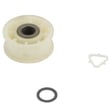
If your WHD560CHW2 starts getting noisy or takes longer to dry, these are common wear items to inspect or replace:
| Symptom | More likely cause | What to check first |
|---|---|---|
| Squealing or thumping | Drum support wear | Rollers and idler pulley |
| Long dry times | Airflow restriction | Lint filters, ducts, heat exchanger cleaning |
| Stops mid-cycle | Overheating or control issue | Airflow, then diagnostics |
A dryer that is forced to run hot or run longer than normal wears out the motor, drum supports, and controls faster. Keeping airflow strong and fixing noise early usually adds years of service life.
For this Whirlpool dryer style, we recommend starting with filter care and airflow basics: how to care for filters in a Whirlpool hybrid heat pump dryer.
Last updated: January 2026
What are the downsides of a heat pump dryer?
Heat pump dryers like the Whirlpool WHD560CHW2 typically cost more up front and often take longer to dry than conventional electric or gas dryers. They also rely on clean filters and good airflow; when airflow is restricted, dry times can increase noticeably.
- Higher purchase price compared with many vented electric or gas dryers
- Longer cycle times (especially on bulky loads or when you select lower-heat settings)
- More maintenance points: lint screens and heat-exchanger areas must be kept clean
- Sensitive to installation conditions: tight closets, high ambient humidity, or poor clearance can slow drying
- Different “feel” of drying: lower temperatures can make loads feel warm-damp until they cool for a minute
Even though this is a ventless-style drying system, performance still depends on airflow through the machine.
- Clean the primary lint filter every load; replace it if it is warped or damaged (see assembly, filter - primary lint W11483547)
- Keep the secondary lint area clean and make sure the access door closes fully (see dryer secondary lint screen door W11611670)
- Avoid overloading; heat pump systems dry best with room for tumbling
- Use the correct cycle for the fabric and load size; “eco” options can be slower by design
- If you see error codes related to airflow or temperature, use how to care for filters in a Whirlpool hybrid heat pump dryer to stay on top of routine cleaning
| Feature | Heat pump dryer (like WHD560CHW2) | Conventional vented dryer |
|---|---|---|
| Up-front cost | Higher | Often lower |
| Drying temperature | Lower, gentler | Higher, faster |
| Typical dry time | Longer | Shorter |
| Maintenance focus | Filters, heat-exchanger airflow | Vent duct, lint screen |
Longer dry times and higher up-front cost are the main tradeoffs for energy-efficient, lower-heat drying. Keeping filters and lint paths clean helps your Whirlpool WHD560CHW2 dry closer to its normal performance and reduces nuisance shutdowns.
Last updated: January 2026
What brand of dryer has the least problems?
No single dryer brand can be identified as having the “least problems” for every year and survey, and we cannot tie a lowest-problem ranking to the Whirlpool WHD560CHW2 specifically using model-verified data. In practice, reliability depends heavily on maintenance, installation, and how the dryer is used.
For your Whirlpool WHD560CHW2 dryer, the best way to minimize problems is to keep airflow and filters clean and address early wear symptoms (noise, vibration, long dry times) before they escalate.
- Clean the primary lint filter every load
- Keep any secondary lint areas and air paths clear
- Avoid overloading; it increases strain on drum support and drive parts
- Level the dryer to reduce vibration and premature wear
- Investigate new squeaks, thumps, or scraping promptly
Because reliability rankings vary by source and methodology, we recommend comparing brands using consistent criteria.
| What’s being measured | Why it changes results | What to look for |
|---|---|---|
| Service-call rate | Depends on who is surveyed and service network coverage | Large sample size, recent data |
| Failure rate by component | Some brands have known weak points in certain model lines | Breakdown by model series |
| Owner satisfaction | Includes noise, drying time, features, not just failures | Verified owner reviews |
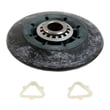
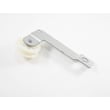
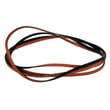
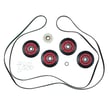
If your WHD560CHW2 starts rumbling, squealing, or vibrating, these model-compatible parts are common wear items to inspect or replace:
A brand name alone does not prevent downtime. Good lint and filter care, proper leveling, and quick attention to early symptoms usually reduce repairs more than switching brands.
Last updated: January 2026








