Owner’s manual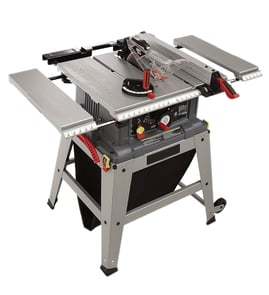

Are all table saw arbor nuts the same size?
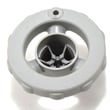
No. Table saw arbor nuts are not all the same size or thread; they must match the arbor shaft on your specific saw. On the Craftsman 315218060, the correct arbor nut and washers are the ones specified for that model in the 315218060 owner's manual.
What is standardized (and what is not)
Many 10-inch table saw blades share a common arbor hole size, but that does not guarantee the arbor nut is universal.
- Blade arbor hole is often standardized (commonly 5/8 inch on many 10-inch blades)
- Arbor shaft diameter and threads vary by saw design
- Arbor nut size (wrench size) varies by manufacturer and model
- Washer style and orientation can be model-specific
- Thread direction can vary (some saws use left-hand threads)
What we know for Craftsman 315218060
Your manual describes installing a standard blade by placing the blade on the arbor shaft, then installing the blade washer and blade nut, and tightening securely. It also notes the washer orientation (the dome side faces outward) and that everything should be snug against the arbor housing.
Quick fit check (before you buy or swap parts)
Use these checks to avoid cross-threading or an unsafe setup:
- Unplug the saw before touching the arbor area
- Confirm the nut threads on smoothly by hand for several turns
- Verify the blade washer seats flat and the dome side faces outward
- Tighten with the correct wrenches (your saw includes large and small blade wrenches)
- Spin the blade by hand to confirm it turns freely before reinstalling the throat plate
Why it matters
Using the wrong arbor nut or washer can prevent the blade from clamping correctly. That can cause blade wobble, poor cut quality, and a higher risk of kickback.
Helpful DIY references
If you are changing blades as part of troubleshooting cut quality or alignment, these guides help:
| Task | Best match | When to use it |
|---|---|---|
| Replace the blade | How to replace a table saw blade | Dull blade, burning, rough cuts |
| Improve cut accuracy | Table saw bad angle cuts | Bevel or miter cuts are off |
If you need to look up replacement parts by model number, start with the parts list for this model, or search by model at Sears PartsDirect.
Last updated: February 2026
How much is a Craftsman professional table saw 315218060?
A Craftsman 315218060 table saw is typically priced based on condition, included accessories (stand, fence, miter gauge), and whether it is running smoothly; most used 10-inch Craftsman table saws like this commonly sell in the mid-hundreds of dollars, with clean, fully working setups bringing more.
What drives the price most
- Condition and completeness: rip fence, miter fence, blade wrenches, guards, and the leg stand all add value.
- Cut quality: smooth height and bevel adjustments, accurate bevel indicator, and consistent rip cuts.
- Motor health: strong startup, steady blade speed under load, no burning smell.
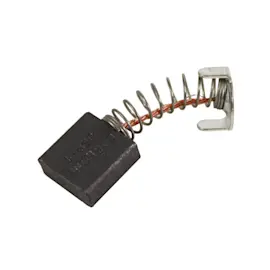
- Wear items: blade condition, motor brushes (if applicable), and switch/cord condition.
- Local market: prices vary by region and season.
Quick pricing guide (typical used-market ranges)
| Condition of your 315218060 | What it usually includes | Typical price range (USD) |
|---|---|---|
| Needs work | Missing parts or won’t run reliably | $50 to $150 |
| Working, average wear | Runs and cuts, cosmetic wear | $150 to $300 |
| Clean and complete | Fence and miter setup present, adjustments work well | $250 to $450 |
| Refurbished or upgraded | Tuned, new wear parts, quality blade | $350 to $550 |
How to estimate your saw’s value accurately
- Confirm the exact model and configuration using the plate on the motor housing and the owner's manual.
- Test key functions: blade height travel, bevel tilt lock, and fence locking.
- Make a few test cuts; burning, wandering, or rough cuts usually point to alignment or blade issues.
- List what is included (stand, miter fence, sliding miter table, wrenches).
Why it matters
Table saw pricing is heavily tied to safety and performance. A saw that starts reliably, holds alignment, and has complete guarding and fence components is worth significantly more than one missing key hardware or needing electrical repair.
If you need replacement parts for the Craftsman 315218060, we recommend starting with the model parts list, or searching by model number on Sears PartsDirect.
Last updated: February 2026
Can you use an 8 inch blade on a 10 inch table saw?
Yes; on the Craftsman 315218060 table saw you can use a smaller blade (including an 8-inch blade) as long as it has the correct arbor hole and is rated for at least the saw’s RPM. Keep in mind the saw’s maximum blade capacity is 10 inches, so smaller blades reduce cutting depth.
What’s safe and what changes with an 8-inch blade
Using a smaller diameter blade is typically fine for certain tasks, but it changes how the saw performs.
- Cutting depth decreases (an 8-inch blade cuts shallower than a 10-inch blade)
- Guard and splitter alignment may not match the smaller blade’s diameter; verify clearance before powering on
- Arbor hole must match; do not use blades with incorrect size holes
- Blade speed rating matters; use a blade rated at or above the saw’s no-load speed
- Use correct washers and arbor nut; never use incorrect or defective blade washers/bolts
Dado note for this model (important)
If your real goal is dadoes or grooves, this model is designed for a 6-inch stacked dado set (up to 13/16 inch wide) and it requires an optional dado throat plate. It is not designed for an adjustable (wobble) dado, and it cannot make a bevel dado cut. See the 315218060 owner's manual for the exact setup steps and safety notes.
Quick comparison
| Setup | Typical use | What to watch for |
|---|---|---|
| 10-inch blade (max capacity) | General ripping and crosscutting | Full depth, standard guarding fit |
| 8-inch blade | Shallower cuts, specialty blades | Reduced depth, check guard clearance and speed rating |
| 6-inch stacked dado set (supported) | Dados and grooves | Needs dado throat plate; no adjustable dado |
Why it matters
Blade diameter affects cut capacity, guarding, and kickback risk. Before any cut, we recommend confirming all adjustments are secure, keeping the blade sharp, and using the rip fence or miter fence (never freehand). For technique and setup help, see how to replace a table saw blade.
If you need replacement parts for your Craftsman 315218060, start with the parts list for this model, or search by model number on Sears PartsDirect.
Last updated: February 2026
What not to do with a table saw?
For the Craftsman 315218060 table saw, do not cut freehand, reach over or behind the blade, stand in line with the blade, or operate with guards removed; these actions greatly increase kickback risk and serious injury. Follow the safety rules in the owner's manual every time you use the saw.
Top “don’ts” that prevent kickback and contact injuries
- Do not perform any operation “freehand”; always guide the work with the rip fence or miter fence.
- Do not stand or place any part of your body in line with the blade path.
- Do not reach behind, over, or within about 3 inches of the blade for any reason.
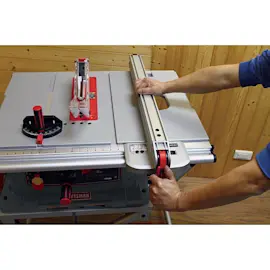
- Do not use the rip fence as a cutoff gauge when crosscutting; move the rip fence out of the way.
- Do not release the workpiece until it is pushed completely past the blade (use a push stick when needed).
- Do not rip warped, twisted, or bowed lumber, or stock without a straight edge to ride the fence.
Setup and workspace mistakes to avoid
- Do not operate the saw on the floor; mount it securely to a workbench or approved leg stand.
- Do not leave tools, cutoff pieces, or scrap wood on the table while the saw is running.
- Do not use the saw in damp or wet locations, or expose it to rain.
- Do not use an undersized extension cord; it can cause low power and overheating.
Quick safety checklist (before you cut)
| Check | What “good” looks like | What to fix before cutting |
|---|---|---|
| Guarding | Blade guard and anti-kickback parts installed when the cut allows | Reinstall/repair before through-cuts |
| Fences | Rip fence parallel; miter fence used for crosscuts | Realign and verify lock-down |
| Work support | Long/wide stock supported at rear and sides | Add outfeed/side support |
| Work area | Clear tabletop, good lighting, stable stance | Remove clutter, improve lighting |
Why it matters
Most table saw injuries happen during a moment of instability: a freehand cut, a pinch between fence and blade, or a kickback that pulls hands toward the blade. Good guarding, correct fence use, and solid support keep the cut predictable.
Parts and help
If you need replacement items for your Craftsman 315218060 (such as guarding components, fence parts, or switches), use the parts list for this model or search by model number on Sears PartsDirect.
Last updated: February 2026
Are craftsman table saws any good?
Craftsman table saws are a strong value for many DIYers and hobbyists: they deliver solid cutting performance for the price and stay accurate when the fence, blade, and bevel settings are kept aligned. For Craftsman model 315218060, setup and adjustment details are in the 315218060 owner's manual.
What “good” means for a table saw
A table saw is “good” when it makes repeatable, square cuts and runs smoothly without bogging down. On most saws, results depend more on tuning and blade choice than the brand name.
Common strengths
- Good power for basic ripping and crosscutting
- Serviceable design when kept clean and adjusted
- Standard 10-inch blade format for broad blade options
Common limitations to watch
- Fence alignment and locking consistency
- Bevel and height mechanisms needing periodic cleaning
- Dull or wrong blade causing burning, binding, and rough cuts
Quick accuracy and safety checklist
- Use a sharp, clean blade installed correctly
- Keep the workpiece off the blade before switching ON (reduces kickback risk)
- Square the blade to the table at 90 degrees with a combination square
- Set the fence parallel to the blade
- Lock bevel and height adjustments firmly before cutting
Blade choice: the biggest “quality” factor
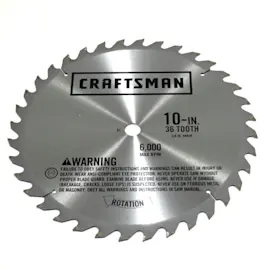
Your 315218060 manual recommends a 10-inch carbide combination blade for general use and switching blade styles for specific operations.
| Task | Typical blade type | Result |
|---|---|---|
| General cuts | Combination blade | Balanced speed and finish |
| Ripping | Rip blade (fewer teeth) | Faster feed, less strain |
| Fine crosscuts | Fine-finish blade | Cleaner edges |
Why it matters
A tuned saw cuts straighter and is safer; proper alignment and the right blade reduce binding and kickback.
For parts and diagrams for Craftsman 315218060, use the model parts list or search by model number on Sears PartsDirect.
Last updated: February 2026