Owner’s manual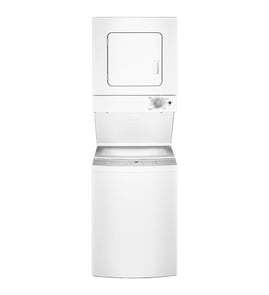


What are the most common issues with 41790802990?
For the Kenmore 41790802990 stacked laundry center, the most common problems are no-heat or overheating in the dryer, the dryer not starting, washer not draining or filling, and excessive noise or vibration. These issues usually trace to airflow restrictions, switches/thermostats, the drain pump, or worn bearings.
Common symptoms and what typically causes them
- Dryer runs but no heat: failed operating thermostat or high-limit thermostat, restricted venting, or lint buildup.
- Dryer overheats or shuts off: clogged lint path, crushed vent hose, or a high-limit thermostat opening.
- Dryer will not start: door switch circuit issue, start switch failure, or wiring/connection problem.
- Washer will not drain: clogged pump, blocked drain hose, or debris in the pump.
- Washer will not fill: water supply turned off, kinked inlet hose, or a sticking inlet valve.
- Loud squeal, rumble, or thump: worn drum bearing components or a failing motor.
Quick checks we recommend first
- Unplug the unit; for gas models, shut off the gas supply.
- Clean the lint screen and confirm strong airflow at the outside vent.
- Check the washer drain hose for kinks and verify the standpipe is not backing up.
- Confirm hot and cold water valves are fully open.
- Look for loose fasteners and obvious rubbing or scraping noises.
Parts that commonly fix these issues (when diagnosed)
| Symptom | Common part to test/replace | Example from this model’s parts |
|---|---|---|
| No heat/overheating | Thermostat | Dryer operating thermostat 3204307 or kelvinator dryer high-limit thermostat 3204267 |
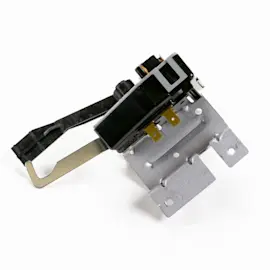
| Dryer won’t start | Start switch or door-switch circuit | Start switch 134399700 or laundry center dryer door switch wire harness 131786400 |
| Washer won’t drain | Drain pump | Pump 137221600 |
| Poor drying | Lint restriction | Dryer lint filter 5304516871 |
Why it matters
Catching airflow and drainage problems early prevents repeat shutdowns, long dry times, water leaks, and avoidable wear on the motor, drum, and bearings.
Where to confirm steps and specs
Use the wiring diagram, troubleshooting, and disassembly guidance in the 41790802990 owner’s manual before testing electrical parts.
Last updated: March 2026
What is the average lifespan of 41790802990?
The average lifespan of the Kenmore 41790802990 stacked laundry center is about 13 years with normal household use and routine maintenance. Keeping airflow clear in the dryer and preventing washer drain issues are the two biggest factors in reaching that lifespan.
What affects lifespan the most
- Dryer airflow and heat control: clean the lint screen every load and keep the venting clear
- Washer draining: avoid coins, pins, and small items that can stress the drain system
- Load size: frequent overloading shortens motor, bearing, and suspension life
- Water quality: hard water can increase valve and internal buildup issues
- Basic upkeep: tightening loose fasteners and addressing small leaks early
Maintenance checklist (high impact, low effort)
- Clean the lint screen; replace it if torn or warped (see dryer lint filter 5304516871)
- Vacuum lint from the exhaust duct path periodically
- Run the washer with correct detergent amount to reduce residue
- Check fill hoses for bulges or leaks and replace as needed
- Listen for new squeals or grinding; address drum or bearing wear early
Typical lifespan by component (what usually fails first)
| Component area | Common symptom | Typical action |
|---|---|---|
| Dryer heat/airflow | Long dry times, overheating | Clean venting; test thermostats |
| Washer drain | Won’t drain, water left in tub | Check pump and drain path |
| Drive/bearings | Squeal, rumble, poor spin | Inspect bearings and supports |
| Controls/switches | Won’t start, intermittent | Test switch/timer circuits |
Why it matters
A laundry center is two appliances in one cabinet; when airflow or draining is neglected, heat and moisture stress the dryer motor, thermostats, washer pump, and bearings. Staying ahead of lint and clogs is the simplest way to get the full service life.
For model-specific care and maintenance intervals, follow the 41790802990 owner’s manual.
Last updated: March 2026
What is the capacity of the Kenmore 400 Series washer?
The Kenmore 41790802990 stacked laundry center is a different product than a “Kenmore 400 Series washer,” so the 400 Series capacity does not directly apply to this model. For the correct capacity for model 41790802990, we use the specifications listed in the 41790802990 owner's manual.
How to find the exact capacity for model 41790802990
Capacity is typically listed in the specs section of the manual (often near installation, dimensions, or electrical requirements). Use these quick checks:
- Look for a “Specifications” or “Features” section
- Search the PDF for “cu. ft.”, “capacity”, or “volume”
- Confirm you are reading the washer section (not the dryer section)
- Match the model number on the rating label to 41790802990
- If you only see load guidance (water level, fill level), use that as operating guidance, not capacity
Why “Kenmore 400 Series” can be misleading
“400 Series” is a retail series name used across multiple Kenmore washers. Capacity varies by design (top-load vs. front-load, compact vs. full-size, laundry center vs. standalone), so the only reliable match is the model-specific spec.
Common capacity ranges (for context)
| Washer type | Typical capacity range |
|---|---|
| Compact top-load | 1.5 to 2.5 cu. ft. |
| Standard top-load | 3.0 to 4.0 cu. ft. |
| Large-capacity top-load | 4.5 to 6.0 cu. ft. |
Why it matters
Using the correct capacity helps prevent overloading, improves cleaning, and reduces out-of-balance spinning. Your manual also includes practical loading guidance, such as not overfilling beyond the tub’s recommended dry-load level.
Last updated: February 2026