 Owner’s manual
 Error Codes


How to replace an ice maker in a side by side refrigerator?
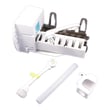
To replace the ice maker in your Kenmore 3639562512 side-by-side refrigerator, we unplug the refrigerator, shut off the water supply, remove the ice bin, then remove the mounting screws, disconnect the wire harness, and install the new ice maker. Follow the 3639562512 owner's manual for safety notes and access details.
- Unplug the refrigerator (controls set to OFF still leave power to some circuits).
- Shut off the household water supply to the refrigerator.
- Lift the ice maker feeler arm to STOP (up) to prevent cycling.
- Pull out the ice storage bin to create working room.
- Keep fingers away from the ejector mechanism when power is connected.
- Remove the ice bin.
- Take out the ice maker mounting screws.
- Pull the ice maker forward slightly and unplug the wire harness connector.
- Transfer any brackets, fill cup, or clips from the old unit if required.
- Position the new ice maker, reconnect the harness, and reinstall screws.
- Turn water back on, plug the refrigerator in, and lower the feeler arm to ON.
- Freezer temperature is cold enough for ice production.
- Feeler arm is down (not in STOP).
- Water line is on and not kinked.
- Discard the first batch of ice.
| Symptom | Most common cause | What we check |
|---|---|---|
| No ice | Feeler arm in STOP, water off, freezer too warm | Arm position, water supply, freezer temp |
| Small/hollow cubes | Restricted water flow | Shutoff valve and supply line |
| Ice tastes stale | Old cubes or dirty bin | Empty and wash bin regularly |
- Housing WR30X10093 (ice maker kit)
- Dr reces asm WR17X11653 (dispenser ice chute door kit)
Correct installation prevents leaks, protects the wiring connection, and avoids “no ice” problems caused by leaving the feeler arm in STOP (up) or the water supply turned off.
Last updated: February 2026
What are the most common problems with Kenmore refrigerators?
The most common issues we see on Kenmore refrigerators like model 3639562512 are ice maker and dispenser problems, weak or warm cooling, water leaks, unusual noises, and frost buildup. Many of these trace back to airflow, temperature settings, or a few serviceable parts and maintenance steps in the 3639562512 owner's manual.
- Ice maker not making ice: confirm the water supply is on, the freezer is cold enough, and the ice maker feeler arm is not in the STOP (up) position.
- Ice tastes or smells bad: discard old cubes and wash the ice bin; empty the bin about every 30 days.
- Not cooling well: verify temperature controls are set correctly and vents are not blocked by food packages.
- Water leaking or puddles: check for a clogged defrost drain, a loose water line connection, or a cracked reservoir.
- Noisy or vibrating: level the refrigerator; slight vibration is normal, but rattling often comes from the unit not sitting solidly on the floor.
- Lights not working: unplug before servicing; a failed bulb or door switch is common.
| Symptom | Most common cause | What we recommend |
|---|---|---|
| Ice maker stopped | Feeler arm up, water off, freezer too warm | Check arm position, water supply, freezer temp |
| Warm fridge/freezer | Airflow blocked, dirty condenser coils | Clear vents; clean coils yearly |
| Rattling | Unit not level, supply line tapping wall | Adjust front rollers; move unit slightly |
| Interior light out | Bulb, socket, or door switch | Replace bulb; inspect switch/socket |
If troubleshooting points to a failed component, these model-compatible parts are commonly involved:
- Lighting issues: refrigerator light bulb 40A15, terminal socket WR2X9391, refrigerator light switch WR23X427
- Frost buildup/defrost issues: refrigerator defrost thermostat WR50X122, refrigerator defrost control WR9X489, refrigerator defrost heater harness WR51X442
- Ice and dispenser issues: dr reces asm WR17X11653, refrigerator solenoid arm assembly WR62X23154, refrigerator ice container assembly WR17X4310
Catching small issues early (dirty condenser coils, a mis-leveled cabinet, an ice maker arm in STOP) prevents bigger problems like poor cooling performance, recurring leaks, and premature compressor strain.
Last updated: February 2026
Where is the model number on a Kenmore side by side refrigerator?
On Kenmore side-by-side refrigerator model 3639562512, the model number is printed on the appliance identification label inside the fresh food (refrigerator) compartment. We use that label information to match the correct parts list and the correct Kenmore documentation for your exact unit.
- Open the refrigerator (fresh food) door and look along the inside cabinet walls.
- Check near the upper side wall and around the front frame area.
- Look for a label that lists Model and Serial.
- If the label is hard to read, use a flashlight and take a close-up photo.
- Write the model number exactly as shown (for this page, it is 3639562512).
Most Kenmore ID labels include both a model number and a serial number. Use this quick guide so you record the right information:
| Label item | What it’s used for | Example format |
|---|---|---|
| Model number | Identifies the exact refrigerator design and parts | 3639562512 |
| Serial number | Identifies the specific unit built | Letters and numbers |
The model number is the key to getting the right refrigerator parts and repair instructions. Even small model differences can change which items fit, such as a light bulb, door switch, ice dispenser parts, or defrost components.
Use the model number to confirm diagrams and procedures in the owner's manual. If you are troubleshooting dispenser issues, our DIY guide on how to disassemble a Kenmore refrigerator dispenser also helps you access common dispenser components safely.
Last updated: February 2026





