Error Codes





Do you remove cardboard from the bottom of a Whirlpool refrigerator?
For the Whirlpool WRF560SMHZ03 bottom-mount refrigerator, we leave the cardboard-like panel on the bottom or rear base in place. That panel is a protective cover and airflow guide for the condenser area; removing it can reduce cooling performance and expose components.
What that “cardboard” piece does
On many Whirlpool refrigerators, the fiberboard panel is designed to:
- Direct airflow across the condenser coils
- Protect wiring and moving parts near the compressor
- Reduce dust buildup in critical areas
- Help keep the unit operating efficiently
When you should remove it (rare)
Only remove a bottom/rear cover temporarily when you are doing a specific maintenance task, then reinstall it.
Common examples:
- Cleaning dust from the condenser area
- Inspecting for a water leak or drain pan overflow
- Checking the condenser fan (if your design has one)
If the panel is torn, warped, or won’t fasten securely, replace it with the correct cover for your model.
Quick check: shipping material vs. installed panel
| What you see | Typical location | What to do |
|---|---|---|
| Loose cardboard, tape, foam blocks | Around doors, shelves, drawers | Remove and discard |
| Fastened fiberboard panel (screws/clips) | Rear lower section or bottom base | Leave installed |
| Thin plastic film | On stainless doors/trim | Peel off |
Why it matters
That cover helps your WRF560SMHZ03 move heat out of the sealed system efficiently. If airflow is disrupted, the compressor can run longer, temperatures can drift, and energy use can increase.
For step-by-step help with condenser-area airflow and cooling symptoms, use our guide: how to fix your evaporator cooling fan.
Last updated: February 2026
How do I stop ice build up in the bottom of my freezer?
Ice on the freezer floor in your Whirlpool WRF560SMHZ03 happens when defrost meltwater cannot drain to the pan and refreezes into a sheet. Clearing the defrost drain and making sure the freezer door seals tightly stops the repeat freeze cycle.
Fix it fast (most common solution)
- Unplug the refrigerator.
- Remove the freezer drawer/basket so you can access the freezer floor.
- Melt the ice with towels and a shallow pan of hot water (or a hair dryer on low, kept moving).
- Locate the drain opening at the back of the freezer floor or behind the rear panel.
- Flush the drain with hot water until it flows freely to the drain pan underneath.
- Clean the drain trough so food particles and ice chips do not re-clog it.
Check these common causes
- Clogged defrost drain: Water backs up and freezes on the floor.
- Door not sealing: Humid air leaks in, creating extra frost and more meltwater.
- Drawer not closing fully: Baskets or packages can prevent a full seal.
- Blocked airflow: Overpacking can block vents and increase frost.
Parts to consider if sealing or “door open” issues are involved
| What you notice | What to check | Part that fits this model |
|---|---|---|
| Moisture or frost around the door edge | Door gasket condition and fit | Refrigerator gasket panel WPW10460580 |
| Light seems to stay on, or door alarm behavior | Door switch operation | Refrigerator door switch W11396033 |
Why it matters
A recurring ice sheet can keep the drawer from closing, restrict airflow, and cause longer run times. Fixing the drain and sealing issues prevents repeat ice buildup and helps maintain stable freezer temperatures.
Step-by-step help
Use our guide: how to get rid of refrigerator puddles. The same drain-clearing steps apply to freezer-floor ice.
Last updated: February 2026
What is the most common problem with a whirlpool refrigerator?
The most common Whirlpool refrigerator problem is a cooling issue caused by airflow or defrost trouble, such as frost buildup on the evaporator that blocks cold air from circulating. On a Whirlpool WRF560SMHZ03 bottom-mount refrigerator, start by checking for heavy frost, warm temps, and fan noise changes. See our Whirlpool refrigerator error codes for quick symptom clues.
Most common symptoms you will notice
- Fresh food section warm but freezer seems closer to normal
- Frost or ice buildup on the back wall inside the freezer
- Refrigerator runs a lot, or temperatures swing
- Weak airflow from vents, or vents blocked by ice
- Unusual buzzing or clicking, especially near the compressor area
Quick checks we recommend (in order)
- Confirm temperatures: Set refrigerator to about 37°F and freezer to about 0°F; wait 24 hours.
- Listen for the evaporator fan: When the doors are closed, you should typically hear a steady fan sound.
- Look for frost patterns: Heavy, snowy frost often points to a defrost system issue.
- Clean airflow paths: Make sure vents are not blocked by food packages.
- Check door sealing: A poor seal can drive moisture in and create frost.
Parts that commonly relate to cooling and defrost symptoms
If your checks point to airflow, temperature sensing, or defrost-related behavior, these model-matched parts are commonly involved:
| Symptom | Commonly involved part | What it affects |
|---|---|---|
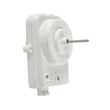
| Warm fridge, weak airflow | Refrigerator evaporator motor WPW10464673 | Moves cold air from the evaporator into the compartments |
| Temps swing, odd readings | Refrigerator thermistor W11724692 | Senses temperature so the control can regulate cooling |
| Clicking, hard starts | Refrigerator capacitor WPW10662129 | Helps the compressor start and run efficiently |
Why it matters
Cooling and defrost problems usually get worse over time. Frost buildup and restricted airflow can make the compressor run longer, raise energy use, and lead to food spoilage. Catching the symptom early helps you avoid bigger repairs.
Last updated: February 2026