Owner’s manual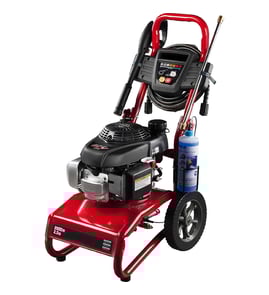




Are Craftsman gas pressure washers any good?
Craftsman gas pressure washers like model 580752590 are a solid choice for typical home cleaning when they are assembled correctly, used with the right spray tip, and maintained on schedule. Most performance complaints come from setup issues, clogged nozzles, leaks, or skipped maintenance rather than a lack of cleaning power (see the owner's manual).
A good gas pressure washer should deliver consistent pressure, start reliably, and run without excessive vibration or leaks.
Common signs you are getting normal performance:
- Strong, steady spray with the correct tip installed
- No pulsing or surging when you hold the trigger
- No water leaks at the hose, gun, or quick-connects
- Engine runs smoothly without hunting or stalling
- Minimal vibration and no “walking” across the ground
Many real-world problems are caused by wear items, tip selection, or basic upkeep.
| Symptom | Most common cause | What to check first |
|---|---|---|
| Low pressure | Clogged/wrong spray tip | Clean or swap tips; consider a pressure washer spray nozzle set 311185GS |
| Pulsing pressure | Restricted water supply or air in line | Confirm full-flow hose, no kinks, water under 100°F |
| Leaks at wand/tip | Worn quick-connect seal or damaged connector | Inspect quick-connect; replace damaged connector such as nozzle quick-connector 195983ACGS if applicable |
| Excessive vibration | Loose hardware or worn isolators | Tighten fasteners; inspect vibration components like briggs & stratton Craftsman pressure washer vibration kit 192134GS |
The manual calls out several practices that directly affect durability and safety.
- Use the correct spray tip; avoid aiming the red (0°) tip at glass or fragile surfaces
- Check hose connections and inspect for kinks, cuts, or damage before each use
- Supply water that is not hotter than 100°F
- Keep at least 5 ft. of clearance around the unit for safe exhaust ventilation
- Never operate with broken or missing parts or bypass safety devices
Gas pressure washers are hard on pumps, hoses, and fittings. Correct tip choice, good water supply, and routine checks prevent the “it worked great once, then got weak” cycle and help the machine last longer.
Last updated: February 2026
Can I use SAE 30 instead of 10W30 in my pressure washer?
Yes. For the Craftsman 580752590 gas pressure washer, we use high-quality detergent engine oil (API service SF, SG, SH, SJ or higher); SAE 30 is acceptable in warmer weather, and 10W30 is also acceptable across a wider temperature range. See the oil viscosity chart in the owner's manual.
Use the outdoor temperature to choose viscosity:
- SAE 30: best for warm conditions; below about 40°F (4°C) it can cause hard starting
- 10W30: good all-around choice; above about 80°F (27°C) it can increase oil consumption (check level more often)
- Synthetic (API SJ or higher, energy conserving): acceptable at all temperatures
| Outdoor temperature | Recommended oil choice | What to watch for |
|---|---|---|
| Below 40°F (4°C) | 10W30 (or synthetic) | Easier starting than SAE 30 |
| 40°F to 80°F (4°C to 27°C) | SAE 30 or 10W30 | Normal operation |
| Above 80°F (27°C) | SAE 30 (or synthetic) | 10W30 may use more oil |
- Use detergent oil; do not use non-detergent oil
- Do not use special oil additives
- Check the oil level before each use and keep it at the proper level
Oil viscosity affects starting, lubrication, and engine wear. Using SAE 30 in cold weather can make the engine hard to start, and using 10W30 in high heat can increase oil consumption, which raises the risk of running low on oil.
Last updated: February 2026
Does Craftsman have a lifetime warranty on pressure washers?
No. For the Craftsman 580752590 gas pressure washer, the Craftsman limited warranty is 2 years from the date of purchase for defects in materials or workmanship; if the unit is used commercially or as a rental, coverage is 90 days. See the warranty section in the owner's manual.
The warranty is focused on manufacturing defects, not normal wear or maintenance.
Typically covered
- Defects in materials or workmanship within the warranty period
- Repair, or replacement if repair is not possible
- Consumer (non-commercial) use within the 2-year window
Not covered (common examples listed in the manual)
- Wear items such as spray guns, hoses, nozzle extensions, nozzles, filters, and spark plugs
- Damage from accidents
- Problems caused by operating or maintaining the pressure washer contrary to the instructions
- Fuel-related issues (improper fuel mixture, contaminated fuel, stale fuel)
| Use type | Warranty length | What to expect |
|---|---|---|
| Homeowner/consumer use | 2 years | Coverage for defects in materials/workmanship |
| Commercial or rental use | 90 days | Shorter coverage window |
Warranty coverage is easiest to protect when the pressure washer is operated and maintained as instructed. Routine checks like inspecting the high-pressure hose, cleaning the water inlet screen, and keeping debris off the unit help prevent avoidable failures that are not warranty-related.
Last updated: February 2026
Is it worth repairing a pressure washer?
Yes, repairing a pressure washer is worth it when the fix is small (clogged nozzle, worn O-ring, leaking spray connection, damaged spray tip) or when the machine is otherwise in good shape. For a Craftsman 580752590 gas pressure washer, we use a simple cost rule: if the repair is over about half the cost of replacing the unit, replacement is usually the better value.
Use this quick checklist before you buy parts or schedule service:
- Compare the repair total (parts + labor) to the price of a comparable new pressure washer
- If the repair is under ~50%, repair is usually the smart move
- If the repair is over ~50%, replacement is usually the better value
- If you need the washer for frequent work, include downtime and repeat failures in the decision
- If the engine runs well and pressure is the only issue, repairs are often worthwhile
These are common, lower-cost fixes that often restore performance:
- Replace a worn or clogged spray tip or quick connector
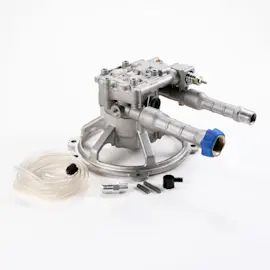
- Clean the water inlet screen and purge air from the pump
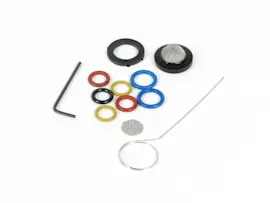
- Replace leaking seals or O-rings (never “seal” leaks with sealant)
- Replace a damaged spray nozzle set
Helpful parts that match this model include:
- Pressure washer spray nozzle set 311185GS
- Nozzle quick-connector 195983ACGS
- Briggs & stratton nozzle 195983ADGS
These issues can get expensive fast, especially if labor is involved:
| Problem area | Typical outcome | Why it gets costly |
|---|---|---|
| Pump failure or severe internal leak | Replace pump or unit | Parts cost plus labor; performance may still be inconsistent |
| Engine problems (hard starting, low power) | Tune-up or engine repair | Multiple parts and diagnostics add up |
| Frame/base damage | Structural repair | Can affect alignment, vibration, and safety |
Pressure washers store high pressure in the hose and spray gun even after the engine stops. Our manual guidance is to always point the spray gun in a safe direction and release pressure when stopping, and to replace (not repair) a high-pressure hose if it leaks. For safe operation and maintenance intervals, follow the owner's manual.
Last updated: February 2026