Owner’s manual
 Error Codes


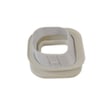
How to reset a Samsung refrigerator ice maker?
To reset the ice maker on your Samsung RF28HFEDBSR, we press and hold the ice maker Test/Reset button (usually behind the ice bucket) until you hear a chime or the unit starts a test cycle. After a successful reset, allow up to 24 hours for normal ice production.
Quick reset steps (most common)
- Remove the ice bucket/ice container so you can access the ice maker.
- Locate the Test/Reset button (often blue/gray, sometimes marked with an arrow).
- Press and hold the button until you hear a chime (typically several seconds).
- Reinstall the bucket and make sure it seats fully.
- Wait for the harvest cycle to complete; then give the refrigerator time to refill and freeze.
For button location and model-specific notes, follow the steps in the RF28HFEDBSR owner's manual.
If the reset does not “take”
Try these checks in order:
- Power cycle: unplug the refrigerator (or switch off the breaker) for 2 minutes, then restore power and retry the reset.
- Ice bucket fit: confirm the bucket is pushed all the way in; a mis-seated bucket can stop dispensing and harvesting.
- Freezer temperature: set the freezer to 0°F; warmer temps slow or stop ice production.
- Water supply: verify the shutoff valve is fully open and the water line is not kinked.
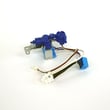
- Fill issues: if you hear no water during the cycle, the refrigerator water inlet valve DA62-04027A is a common suspect.
What to expect after a reset
| What you notice | What it usually means | What we do next |
|---|---|---|
| Chime and movement | Reset started correctly | Wait for ice to refill |
| No chime, no movement | Ice maker not entering test | Power cycle, retry |
| Cycle runs but no water | Water not reaching ice maker | Check supply, valve, filter |
Why it matters
A reset forces a test cycle that helps clear minor control glitches and confirms whether the ice maker can harvest and call for water. That saves time before replacing parts like the water inlet valve or ice maker components.
For deeper troubleshooting, use why your Samsung fridge stopped making ice and how to fix it.
Last updated: February 2026
What is the common problem with Samsung fridge ice maker?
On the Samsung RF28HFEDBSR, the most common ice maker problems are ice production stopping, ice clumping or freezing in the ice room, and weak or no dispensing. These issues usually trace back to airflow restrictions from frost, water supply problems, or an ice maker that needs a reset and inspection.
Most common symptoms and what they usually mean
- No ice at all: ice maker turned off, freezer too warm, or water not reaching the ice maker
- Small, hollow, or slow-making cubes: restricted water flow (often a filter or supply issue)
- Ice clumps or frost buildup near the ice maker: warm air leaks or poor airflow in the ice room
- Ice won’t dispense: ice jam in the bucket or an internal ice path obstruction
- Intermittent ice: temperature swings, door openings, or partial freeze-up around the ice maker
Quick checks we recommend first (10 to 20 minutes)
- Confirm the ice maker is ON and not in a “child lock” or “ice off” mode (steps vary by control panel; see the RF28HFEDBSR owner's manual).
- Set temperatures to typical targets:
- Freezer: 0°F
- Fresh food: 37°F
- Dump the ice bin, break up clumps, and reseat the bin fully.
- Look for frost or a “snowy” look around the ice room; that points to an airflow or sealing issue.
- If water dispensing is also weak, focus on the water supply side first.
Parts that commonly solve ice maker complaints on this model
| What’s happening | Common fix area | Example part for RF28HFEDBSR |
|---|---|---|
| No fill, slow fill, hollow cubes | Water supply into fridge | Refrigerator water inlet valve DA62-04027A |
| Frost buildup, poor ice room airflow | Fan or airflow components | Refrigerator ice maker evaporator fan DA97-12540A |
| Ice jams, cracked bin, poor dumping | Ice storage and routing | Refrigerator ice container DA97-14474A |
Why it matters
Ice maker issues are often a symptom of a bigger problem (temperature control, airflow, or water flow). Fixing the root cause prevents repeat freeze-ups, protects food temperatures, and reduces strain on components like the evaporator fan and control system.
Related help: why your Samsung fridge stopped making ice and how to fix it
Last updated: February 2026
What's the lifespan of a bottom freezer fridge?
A bottom-freezer refrigerator like the Samsung RF28HFEDBSR typically lasts 15 to 20 years with normal household use. Real-world lifespan depends most on compressor run time, door-seal condition, and how well the condenser and defrost system are maintained; we use the RF28HFEDBSR owner's manual for model-specific care guidance.
Typical lifespan and what changes it
Most bottom-mount and French door refrigerators land in the same general range, but usage and maintenance move the needle.
- 15 to 20 years is the typical lifespan for bottom-freezer units
- Heavy use (large family, frequent door openings) shortens life
- Poor airflow around the cabinet increases compressor wear
- Dirty condenser area raises operating temperature and run time
- Weak door gaskets cause warm-air leaks and frost, stressing fans and defrost parts
What usually fails first (and what it looks like)
These are common wear items and symptoms we see on bottom-mount refrigerators.
| What you notice | Common system involved | What to check first |
|---|---|---|
| Warm fresh food section, freezer OK | Fresh food airflow/evaporator area | Frost buildup, fan noise, vents blocked |
| Ice maker stops or ice clumps | Ice room airflow or ice maker system | Ice bin, fan operation, water supply |
| Water under crisper or on floor | Defrost drain system | Drain trough and drain tube for ice blockage |
| Temps swing up and down | Sensors/control | Verify settings, look for error codes, check sensor connections |
If you are chasing ice production problems, our DIY guide why your Samsung fridge stopped making ice and how to fix it walks through the most common causes and checks.
Maintenance that adds years
A few simple habits reduce compressor load and prevent icing issues.
- Keep door gaskets clean and sealing flat (no gaps at corners)
- Leave space behind and above the refrigerator for ventilation
- Avoid overpacking; keep air vents clear in both compartments
- Level the cabinet so doors close fully and consistently
- Address puddles and drain clogs early (before ice builds up)
Why it matters
A refrigerator that runs longer and hotter than it should wears out the compressor and inverter sooner, and it also increases frost and fan strain. Keeping airflow, seals, and drainage in good shape is the most reliable way to reach the full 15 to 20 year lifespan.
Last updated: February 2026