Error Codes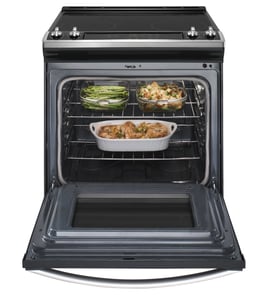




Are Jenn-Air ovens gas or electric?
Jenn-Air ovens can be gas, electric, or dual-fuel depending on the model. The JES8850AAB is an electric range, so its oven uses electric heating elements (bake and broil) rather than a gas burner.
How to tell if your Jenn-Air oven is gas or electric
Check these quick identifiers on the appliance and in your parts list:
- Model number prefix: Many Jenn-Air model families are clearly gas or electric by series (your JES8850AAB is electric).
- Power connection: Electric ranges typically use a 240V cord connected at a terminal block.
- Heating parts: Electric ovens use a bake element and broil element; gas ovens use an igniter and gas valve.
- Cooktop type: Electric ranges often have radiant elements under a smooth top; gas ranges have burner grates and caps.
What “electric range” means for JES8850AAB
On the JES8850AAB, the oven heat is produced by electric elements. If you are troubleshooting “no heat” or uneven baking, the most common checks are the bake element, broil element, and power supply connection.
| Feature | Electric oven (like JES8850AAB) | Gas oven |
|---|---|---|
| Heat source | Electric elements | Gas burner flame |
| Common no-heat causes | Failed element, loose power connection, control issue | Failed igniter, gas supply issue, valve issue |
| Typical symptom | Element not glowing or heats weakly | Igniter clicks/glows but burner does not light |
Parts that commonly relate to electric-oven heating
If the oven is not heating correctly, these model-matched parts are often involved:
- Bake element WP74010750 (primary heat source for Bake)
- Maytag range broil element W11676350 (top heat source for Broil)
- Terminal block WPW10245259 (where the power cord connects; loose or burned connections can cause power loss)
Why it matters
Gas vs. electric determines the correct troubleshooting path and replacement parts. Ordering an igniter for an electric range, or an element for a gas range, leads to delays and repeat repairs.
Last updated: January 2026
What are common problems with Jenn-Air stoves?
Common problems on a Jenn-Air electric range like model JES8850AAB include the oven not heating, surface elements not working or cycling incorrectly, temperature inconsistency, and power or control issues. Many fixes start with checking power, then testing common wear parts such as heating elements, switches, and door seals.
Most common symptoms and likely causes
- Oven will not heat or heats weakly: failed bake element, wiring issue, or a temperature sensing problem
- Broil works but bake does not (or vice versa): failed heating element for that mode
- Surface element will not turn on or only works on one setting: failed infinite switch or radiant element
- Oven light not working: burned-out bulb or loose socket connection
- Door not sealing, long preheat, uneven baking: worn door gasket or door hinge alignment issue
Quick checks we recommend first
- Confirm power: make sure the range is getting full power at the breaker (a partially tripped breaker can cause odd heating problems).
- Look for visible damage: blistering, cracks, or burn spots on elements; melted wiring at the terminal block.
- Try a simple reset: turn the breaker off for 1 minute, then back on.
- Check the door seal: gaps or hardened gasket material can cause heat loss and uneven cooking.
Parts that commonly solve these problems on JES8850AAB
| Symptom | Part to check first | Example part for this model |
|---|---|---|
| No bake heat | Bake element | Bake element WP74010750 |
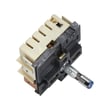
| Surface element not regulating | Surface element control switch | Range surface element control switch W11120791 |
| No power or intermittent power | Terminal block and cord connection | Terminal block WPW10245259 |
| Heat escaping, uneven baking | Door gasket | Door gasket WPW10162384 |
Why it matters
Heating and control problems often start as minor performance issues (slow preheat, uneven baking) and can progress to no-heat conditions or electrical connection damage. Catching a failing element, switch, or terminal connection early helps prevent bigger repairs.
Last updated: January 2026
How long should a Jenn-Air oven last?
A Jenn-Air electric range like model JES8850AAB typically lasts 15 to 20 years. Lifespan depends most on how often you cook, how hot you run the oven (self-clean cycles add stress), and whether key heating and door-seal parts stay in good condition.
Typical lifespan and what affects it
Most electric ovens and ranges reach the 15 to 20 year range when the heating system and temperature control stay stable.
- Cooking frequency: daily high-heat use shortens life faster than occasional baking.
- Self-clean use: frequent self-clean cycles can overheat wiring, controls, and sensors.
- Ventilation and heat management: blocked vents can trap heat around controls.
- Door seal condition: a worn gasket leaks heat and forces longer run times.
- Electrical health: loose power connections can cause overheating and failures.
Parts that commonly determine whether you repair or replace
If the oven is not heating evenly or takes too long to preheat, these are common repair points for an electric range.
| Symptom | Common cause | Example part for JES8850AAB |
|---|---|---|
| Oven won’t heat or heats weakly | Failed bake element | Bake element WP74010750 |
| Heat leaks, long cook times | Worn door gasket | Door gasket WPW10162384 |
| Oven light out | Burned-out bulb | Range oven light bulb WP74009925 |
Quick checks that help you estimate remaining life
- Confirm the oven reaches and holds set temperature (use an oven thermometer).
- Inspect the bake element for blisters, cracks, or burned spots.
- Check the door for a firm, even seal all the way around.
- Watch for repeated breaker trips or a burning smell (stop using and have it serviced).
- If surface burners act erratically, suspect a control switch or element issue.
Why it matters
A range that is leaking heat or struggling to maintain temperature uses more energy, cooks less evenly, and puts extra strain on components. Replacing a failed wear part (like an element or gasket) often restores normal performance and extends the useful life of the range.
Last updated: January 2026