Owner’s manual
 Error Codes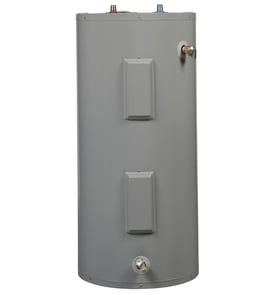



What is the typical cost to replace a 50 gallon water heater?
Replacing a 50-gallon water heater like the American E1F50RD045V typically runs $800 to $2,500 installed (unit plus labor). Costs can land closer to $650 for a straightforward swap, or exceed $3,000 when venting, electrical, access, or code upgrades are involved; especially for emergency service.
What drives the price up or down
- Fuel type and efficiency: electric tank replacements are often simpler than gas venting work; high-efficiency models cost more.
- Installation difficulty: tight closets, attics, crawlspaces, or long carry distances add labor.
- Code and safety updates: expansion tank, seismic strapping, drain pan, shutoff valve, or T and P discharge piping changes.
- Electrical work: new breaker, wire, disconnect, or correcting improper wiring.
- Disposal and permits: haul-away fees and local permit requirements.
Typical cost ranges (quick planning table)
| Scenario | What’s included | Typical installed range |
|---|---|---|
| Basic like-for-like electric swap | Remove old tank, set new tank, reconnect water and power | $800 to $1,600 |
| Moderate complexity | Some plumbing rework, new shutoff/expansion components, permit | $1,400 to $2,500 |
| High complexity | Difficult access, significant code upgrades, after-hours/emergency | $2,500 to $3,500+ |
Model-specific notes for E1F50RD045V
We cannot price a replacement based on the model number alone because the final installed cost depends more on your home’s plumbing and electrical setup than on the tank model. For safe installation requirements and checklist items (like drain pan, discharge line routing, and electrical grounding), use the E1F50RD045V use & care manual.
Why it matters
A water heater replacement quote that seems “high” often includes required safety items (like a properly installed temperature and pressure relief valve and discharge line) that help prevent leaks, scalding risk, and pressure problems.
Last updated: January 2026
What is the life expectancy of a 50 gallon electric water heater?
A 50-gallon electric water heater typically lasts 10 to 15 years. For the American E1F50RD045V, the exact lifespan depends most on water quality, sediment buildup, and maintenance (especially flushing and anode-rod inspection), not just the tank size.
What affects lifespan the most
- Anode rod condition: a depleted anode lets the tank corrode faster.
- Sediment and scale: buildup can overheat elements and accelerate tank wear.
- Water chemistry: hard water and aggressive water shorten tank life.
- Temperature setting: higher settings increase stress on components.
- Installation environment: freezing risk, poor drainage, or chronic moisture can create problems.
Maintenance that helps you reach the 10 to 15 year range
We recommend following the maintenance intervals and procedures in the E1F50RD045V use & care manual. Key items include:
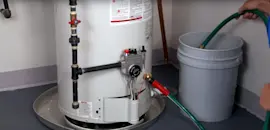
- Flush the tank about every 6 months to reduce sediment.
- Inspect the anode rod about every 3 years; replace it if it is heavily depleted.
- Test the temperature and pressure (T&P) relief valve yearly for proper operation.
- Keep access covers and insulation properly in place after any service.
Helpful parts for this model (when maintenance points to replacement)
| What you are servicing | What it does | Model-compatible part |
|---|---|---|
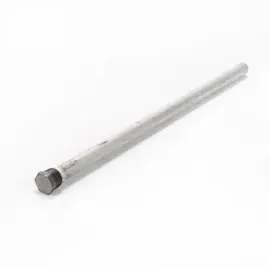
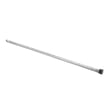
| Anode rod | Protects the tank from corrosion | Water heater anode rod 100109594 |
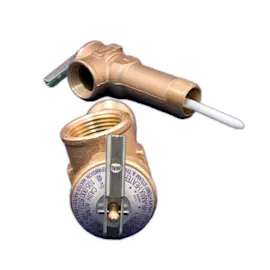
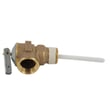
| T&P relief valve | Helps prevent unsafe pressure/temperature | T&p valve 100108279 |
| Drain valve | Used for draining and flushing | Drain valve 100109106 |
Signs it is nearing end of life
- Rusty or discolored hot water
- Water in the drain pan or signs of tank seepage
- Rumbling or popping noises during heat-up (sediment)
- Frequent loss of hot water even after thermostat checks
Why it matters
A water heater usually fails from internal tank corrosion or sediment-related overheating. Staying ahead of flushing and anode-rod replacement can delay tank failure and help keep heating elements and thermostats from working harder than they should.
Last updated: January 2026
How many watts is e1f50rd045v?
For the American Water Heaters model E1F50RD045V, the exact wattage is not a single fixed number we can confirm from the model identifier alone; this model family can be built with different element wattage ratings. We recommend verifying the wattage on the water heater data plate or on the heating element itself (as outlined in the E1F50RD045V manual).
How to confirm the wattage on your E1F50RD045V
We use the same checks a technician would use because they match the heater you actually have.
- Check the data plate near the element access door; it lists voltage and wattage.
- Check the element flange or terminal block; many elements have the wattage stamped on them.
- Confirm supply voltage (commonly 208/240V on residential electric models) before buying parts.
- Match the replacement element rating to the original element rating.
- Turn off power at the breaker before opening access covers.
Common electric water heater element wattages (what you may see)
These are typical residential electric element ratings; your unit’s actual rating must match the data plate/element marking.
| Supply voltage | Common element wattage | Notes |
|---|---|---|
| 240V | 4500W | Very common on 50-gallon electric heaters |
| 240V | 5500W | Faster recovery, higher electrical demand |
| 208V | 3500W to 4500W | Often used where 208V service is present |
If you need to replace the heating element
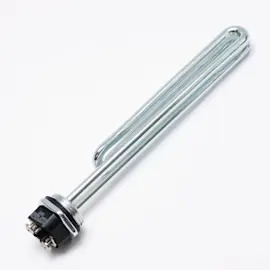
For this model, a compatible replacement is listed as element 100108290. When replacing an element, the manual notes the replacement must be the same style and the same voltage/wattage rating as the original.
- Shut off power and verify it is off.
- Drain the tank to below the element level.
- Replace the gasket if needed.
- Refill the tank completely before restoring power (dry-firing ruins elements).
Why it matters
Using the wrong wattage can cause slow hot water recovery, nuisance breaker trips, or premature element failure. Matching the original rating keeps performance and electrical load correct for your E1F50RD045V.
Last updated: January 2026
Can you replace parts on a water heater?
Yes. On the American water heater model E1F50RD045V, many serviceable components can be replaced (such as thermostats, heating elements, the T&P valve, and the anode rod) to restore performance and help extend the heater’s usable life; follow the safety steps in the E1F50RD045V manual.
Parts you can commonly replace on E1F50RD045V
These are typical replaceable items on this model and are often involved in “no hot water,” “not enough hot water,” leaks at fittings, or odor issues:
- Heating element(s) (must match the original voltage and wattage rating)
- Thermostat(s) and high-limit reset components
- Temperature and pressure relief valve (T&P valve)
- Drain valve
- Anode rod (helps protect the tank from corrosion)
- Dip tube (affects hot water delivery and recovery)
If you’re sourcing parts for this model, examples include the water heater anode rod 100109594 and the t&p valve 100108279.
Safety and “when to stop” guidance
Electric water heaters combine high voltage and hot, pressurized water. We recommend these basics before any inspection or replacement:
- Shut off power at the breaker and verify power is off
- Let water cool if needed; hot water can scald
- Close the cold water inlet valve before opening the system
- Depressurize by opening a hot water faucet
- Drain the tank as needed before removing an element or drain valve
- If wiring, insulation, or thermostats have been wet, have a qualified technician inspect before restoring power
Quick part-to-symptom guide
| Symptom | Common part to check | Notes |
|---|---|---|
| No hot water | Thermostat, heating element | Also check breaker and high-limit reset |
| Not enough hot water | Lower element, thermostats | Sediment can reduce recovery |
| Dripping from relief valve | T&P valve, thermal expansion control | Also check excessive water pressure |
| Rotten egg odor | Anode rod | Anode reactions can cause odor |
Why it matters
Replacing the right part can be a cost-effective repair, but it also helps prevent repeat failures (for example, sediment buildup can shorten heating element life). Using the correct replacement part and following the correct procedure protects the tank, wiring, and your home.
Last updated: January 2026
Is it cheaper to repair or replace a water heater?
For an American water heater model E1F50RD045V, it’s usually cheaper upfront to repair common service parts (like thermostats, heating elements, or a leaking drain valve). Replacement typically costs more, but it’s the better long-term choice when the tank is leaking or the unit is near the end of its normal lifespan.
How we decide for model E1F50RD045V
We look at whether the problem is a serviceable component versus a tank issue. The E1F50RD045V owner’s manual includes troubleshooting and maintenance guidance that helps separate “repairable” symptoms from conditions that call for replacement.
Repair is usually the better value when:
- You have no hot water but the tank is not leaking (often electrical supply, thermostat, or element related).
- Hot water is insufficient due to a failed control or sediment.
- The temperature and pressure relief valve is dripping because of a valve issue or system pressure.
- The drain valve is seeping.
- The tank is otherwise solid and you want the lowest immediate cost.
Replacement is usually the better value when:
- The tank itself is leaking (not just a fitting or valve).
- The heater has repeated failures from heavy sediment or corrosion.
- You need a different size or faster recovery to match household demand.
Common repairs that can keep costs down
These are typical “repair-first” items for this model:
- Water heater anode rod 100109594 (helps slow tank corrosion)
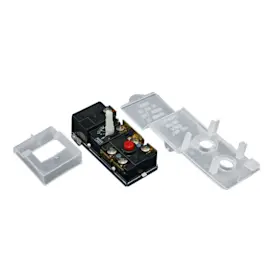
- Lwr t-stat 100108421 and top t-stat 100108683 (temperature control)
- Element 100108290 (heating)
- Drain valve 100109106 (leaks at the drain outlet)
- T&p valve 100108279 (safety valve issues)
Quick cost-benefit comparison
| Situation | Usually cheaper now | Usually better long-term |
|---|---|---|
| Failed thermostat or heating element | Repair | Repair |
| Dripping T&P valve (valve-related) | Repair | Repair |
| Tank leak from the body of the heater | Replace | Replace |
| Frequent breakdowns plus heavy sediment | Depends | Replace |
Why it matters
A repair can restore hot water quickly and avoid the higher cost of a full replacement. But once the tank is compromised, replacing the water heater prevents ongoing leakage risk and repeated service calls.
Last updated: January 2026