Owner’s manual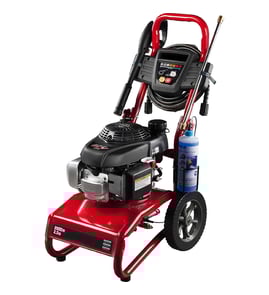




What kind of gas goes in a Craftsman 3000 PSI pressure washer?
For the Craftsman pressure washer model 580752510, use clean, fresh unleaded gasoline with a minimum 87 octane (87 AKI) rating. Avoid old fuel and do not mix oil into the gas (this is a 4-cycle engine setup on most units of this type).
- Use unleaded gasoline only
- Minimum 87 octane (87 AKI)
- Buy fuel you will use within 30 days
- Keep the gas can sealed to reduce moisture contamination
- If the washer will sit, add a fuel stabilizer before storage
| Item | Do | Don’t |
|---|---|---|
| Octane | 87 AKI or higher | Lower than 87 AKI |
| Fuel freshness | Fresh, clean fuel | Stale or varnished fuel |
| Ethanol blends | Use typical pump gas in moderation | Store long-term with ethanol fuel in the tank |
| Oil | Keep engine oil in crankcase | Mix oil into the gasoline |
Using the right gasoline helps the engine start easier, run smoother under load, and reduces carburetor varnish that can cause surging, stalling, or a no-start condition.
- For fuel and starting steps specific to your unit, follow the 580752510 owner’s manual.
- If you are troubleshooting rough running after fueling, use pressure washer engine losing power for the most common causes and checks.
Last updated: February 2026
How much does it cost to get a pressure washer fixed?
For a Craftsman pressure washer model 580752510, repair costs typically run $20 to $50 for small leak fixes (seals, O-rings, hoses), $100 to $200 for common pump issues (valves or unloader-related problems), and $200 to $500 when a full pump replacement makes more sense than rebuilding. See the 580752510 owner's manual for model-specific maintenance and setup steps that can prevent repeat failures.
- Minor leaks and fittings: $20 to $50
- Chemical injection or siphon issues: $25 to $100
- Pump performance problems (valves, unloader symptoms): $100 to $200
- Major pump repair or replacement: $200 to $500
- Labor/diagnostic fees: often added on top of parts
If your 580752510 is leaking, losing pressure, or not drawing soap, these parts are often involved:
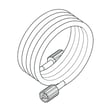
- Pressure washer hose 84006753 (split hose, damaged coupler, external leaks)
- Pressure washer chemical injector hose (soap pickup problems, cracked injector line)
- Outlet tube kit (leaks at pump outlet connections)
- Retainer clip (loose connection that causes spraying or seepage)
- O-rings and seals (small parts, big impact on pressure)
| Symptom | Most common cause | Typical cost outcome |
|---|---|---|
| Water leaking at a connection | Worn O-ring, loose fitting, damaged hose | Low ($20 to $50) |
| Low pressure or surging | Clogged nozzle, air leak, unloader sticking | Medium ($100 to $200) |
| Won’t draw detergent | Injector hose/chemical system issue | Low to medium ($25 to $100) |
| No pressure and pump noise | Internal pump wear/valve damage | High ($200 to $500) |
Pressure washer repairs get expensive when a small leak or restriction is ignored. Running a pump with air leaks, clogged spray tips, or low water supply can quickly turn a low-cost seal or hose fix into a pump-level repair.
For step-by-step troubleshooting that helps you decide whether you are looking at a simple adjustment or a pump repair, use solving pressure washer problems.
Last updated: February 2026
Is it worth repairing a pressure washer?
Yes, repairing a pressure washer is worth it when the fix is a common wear item (hose, injector hose, fittings) and the total repair cost stays under about half the price of a comparable new unit. For a Craftsman 580752510, we start by checking the simplest, highest-failure parts before considering pump or engine replacement.
- Repair if the problem is a leak, worn hose, clogged chemical injector, or a loose connection
- Repair if the engine runs well and pressure loss is intermittent (often a valve, O-ring, or unloader-related issue)
- Replace if the pump housing is cracked or the engine has low compression and won’t run reliably
- Replace if multiple major systems are failing (pump plus engine plus frame/wheels)
- Repair if you can do the work yourself and only need a few parts and basic tools
| Situation | What it usually means | Best move |
|---|---|---|
| Leaking or burst high-pressure line | Hose or coupler wear | Repair |
| No soap draw | Injector hose or injector restriction | Repair |
| Low or surging pressure | Unloader/check valve/O-ring issues | Repair first |
| Engine won’t start repeatedly | Fuel, ignition, or internal engine issue | Diagnose; replace if internal |
These are common, cost-effective fixes on many gas pressure washers, including Craftsman 580752510:
- Pressure washer hose 84006753 for leaks, bulges, or damaged fittings
- Pressure washer chemical injector hose 705076 when detergent won’t siphon
- Pressure washer retainer clip 703976 when a connection won’t stay secured
A pressure washer’s pump and engine are the expensive core components. If those are healthy, replacing smaller items like a pressure washer hose, injector hose, or clips restores performance quickly and avoids the cost of a full replacement.
- Use the 580752510 owner’s manual to confirm operating setup, maintenance intervals, and correct hose and chemical injection use.
- If pressure is low or surging, follow the steps in solving pressure washer problems to narrow the cause before buying major parts.
Last updated: February 2026
What is the most common problem with pressure washers?
Low water pressure (often felt as weak or pulsing spray) is the most common problem we see on Craftsman gas pressure washers like model 580752510. The usual causes are restricted water supply, air trapped in the pump, a clogged spray tip, small leaks, or a sticking unloader valve.
- Make sure the garden hose is fully open and not kinked, collapsing, or too long.
- Remove and clean the spray tip/nozzle; grit here is a top cause of low pressure.
- Purge air from the pump: connect water, hold the trigger until flow is steady, then start the engine.
- Check for leaks at the hose, gun, and quick-connects; even small drips reduce pressure.
- Confirm you are using the correct spray tip; wider tips reduce pressure at the surface.
| What you notice | Most likely cause | Best next step |
|---|---|---|
| Weak pressure all the time | Water supply restriction, clogged nozzle, inlet screen | Verify strong hose flow; clean nozzle and inlet screen |
| Pressure surges or pulses | Air in pump, unloader valve issue | Purge air; inspect unloader operation |
| Pressure drops under load | Hose leak, restriction, worn pump valves | Inspect hose and fittings; service pump controls |
A damaged or internally restricted high-pressure hose is a frequent culprit. Inspect the pressure washer hose 84006753 for cuts, bubbles, soft spots, or crushed sections. Also verify the chemical injector line is not cracked or leaking at connections.
Low flow and trapped air make the pump run hotter and wear faster. Fixing water supply, nozzle, and leak issues first restores cleaning power and helps protect the pump.
- Follow the setup and operating steps in the 580752510 owner’s manual to confirm correct priming, hose routing, and spray tip use.
- If pulsing continues after cleaning the nozzle and purging air, use how to replace a pressure washer unloader valve to address a common pressure-control failure.
Last updated: February 2026
What PSI should my pressure washer be?
Your Craftsman gas pressure washer model 580752510 is designed to run at its rated maximum pressure (commonly listed around 3,100 PSI for this model family) when the correct spray tip is installed and water supply is adequate. Confirm the exact rating and operating details in the 580752510 owner's manual.
Use the lowest effective pressure and the widest tip that still cleans well.
- 1,200 to 1,900 PSI: vehicles, patio furniture, grills (gentle cleaning)
- 2,000 to 2,800 PSI: decks, fences, siding (keep distance to prevent damage)
- 2,900 to 3,100 PSI: driveways, sidewalks, heavy grime (higher risk of etching)
- Soap/low pressure mode: applying detergent through the injector
Most “low pressure” complaints come from flow restrictions, air in the line, or a worn hose or tip.
- Use a clean, correct spray tip; a partially clogged tip drops pressure fast
- Verify full water flow from the spigot; avoid long, undersized garden hoses
- Purge air: run water through the wand until steady before starting the engine
- Check quick-connects and fittings for leaks
- Inspect the high-pressure hose for bulges, soft spots, or seepage; replace if damaged (example: pressure washer hose 84006753)
| Spec | What it changes | What you notice |
|---|---|---|
| PSI | Impact force at the surface | Better “cutting” on stuck-on grime |
| GPM | Water volume | Faster rinsing and quicker cleaning |
| Tip angle | Effective pressure | More control, less surface damage |
Running higher PSI than the surface can handle can gouge wood, strip paint, and etch concrete. Matching PSI, tip angle, and distance gives strong cleaning results while protecting decks, siding, and driveways.
Last updated: February 2026