Owner’s manual
 Error Codes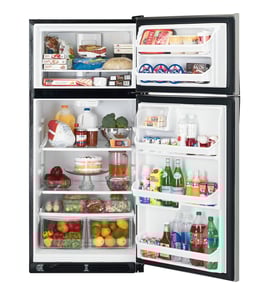



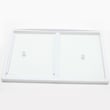
What water filter fits my Kenmore fridge?
For Kenmore top-mount refrigerator model 25368979801, the correct water filter depends on whether your refrigerator is equipped with a built-in water filtration system. Many top-mount models use an external (inline) filter or no filter at all; we recommend confirming the filtration setup in the 25368979801 owner's manual before buying a replacement.
Use these quick checks to match the filter type to your exact setup:
- Look for a filter housing inside the fresh food compartment (often upper right) or in the base grille
- Check for a filter status light or reset button on the temperature control area
- If you have an ice maker only (no dispenser), you may have an inline filter behind the refrigerator or under the sink
- If there is no filter housing and no inline filter, your model may not use a replaceable water filter
- Confirm the filter style and replacement interval in the 25368979801 owner's manual
| Setup on the refrigerator | What it usually means | What to do next |
|---|---|---|
| No filter housing, ice maker only | Often uses an inline filter or none | Check behind the unit and follow the manual’s water line routing |
| Filter housing inside fridge or grille | Uses a cartridge-style filter | Match the cartridge number listed in the manual |
| Under-sink filtration system | Filter is not a refrigerator part | Replace the under-sink filter on its schedule |
Using the correct filter protects water flow to the ice maker and helps prevent taste and odor issues. The wrong filter (or forcing a “close enough” fit) can cause leaks, low ice production, or restricted water flow.
If you do have a replaceable filter, our guide on how to replace the water filter in a Kenmore refrigerator walks through the common replacement and reset steps.
Last updated: January 2026
What is the upper part of a fridge called?
In a Kenmore top-mount refrigerator model 25368979801, the upper section is the freezer compartment. It’s the area designed to keep foods frozen, and on some setups it also supports ice making and cold-air circulation for the fresh-food section (see the 25368979801 owner's manual).
- Keeps food at freezing temperatures for long-term storage
- Helps maintain overall cooling by supporting airflow through the cabinet
- Often includes door shelves and an interior storage area (interior stays more temperature-stable)
- May be paired with an automatic ice maker on some models
| Section | Typical temperature | Main purpose | Common items |
|---|---|---|---|
| Freezer (upper) | 0°F | Frozen storage | Meat, frozen meals, ice cream |
| Fresh-food (lower) | 37°F | Short-term chilled storage | Produce, dairy, leftovers |
The manual guidance for this style of refrigerator is to load the freezer in a way that protects temperature and airflow:
- Avoid adding too much warm food at once (it slows freezing)
- Leave space between packages so cold air can circulate
- Store hard-to-freeze items (like ice cream) in the freezer interior, not the door
- Keep vents clear so the evaporator fan can move air properly
Knowing the upper section is the freezer helps with troubleshooting and food safety. For example, warm freezer temps can affect ice cream first, and blocked airflow can reduce cooling performance in both compartments.
Last updated: January 2026
What is a top mount refrigerator?
A top-mount refrigerator is a classic refrigerator layout where the freezer compartment is on top and the fresh-food (refrigerator) compartment is below. Your Kenmore 25368979801 is a top-mount design, which makes frozen items easy to reach while keeping everyday refrigerated foods at waist level.
In a top-mount refrigerator like the Kenmore 25368979801, the cabinet is split into two main temperature zones:
- Upper compartment: freezer section (colder, for frozen foods and ice)
- Lower compartment: fresh-food section (for produce, dairy, drinks)
- Single cooling system: cold air is produced at the evaporator and circulated to both sections
- Door layout: two separate doors, one for freezer and one for refrigerator
Top-mount refrigerators are popular because they are simple, efficient, and easy to maintain.
- Typically lower purchase and repair cost than many specialty configurations
- Often good freezer capacity for the overall footprint
- Fewer complex features means fewer failure points (compared with some dispenser-heavy designs)
- Main tradeoff: you bend more to reach crisper drawers and lower shelves
| Refrigerator style | Freezer location | Best for |
|---|---|---|
| Top-mount | Top | Simple storage, strong value, easy freezer access |
| Bottom-freezer | Bottom | Frequent fresh-food access at eye level |
| Side-by-side | Left side | Narrow door swing, equal access to both sections |
| French door | Bottom drawer | Wide fresh-food shelves, entertaining |
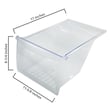
Knowing you have a top-mount refrigerator helps when you are troubleshooting cooling issues, planning door reversal, or choosing storage parts like crisper drawers and shelves. For model-specific operating and layout details, use the 25368979801 owner's manual.
Last updated: January 2026
What is the ER if code on a Kenmore Elite?
On Kenmore refrigerators, an “ER IF” style message is used on some models to indicate an airflow problem related to the freezer fan system. For Kenmore model 25368979801, use the model’s diagnostic and operating information in the 25368979801 owner's manual and treat the code as a freezer airflow check: fan operation, frost blockage, and door sealing.
- Power reset: unplug the refrigerator for 5 minutes, then restore power.
- Confirm the freezer door closes and seals fully; warm air leaks create frost that blocks airflow.
- Look for heavy frost on the freezer back wall; that points to restricted airflow or a defrost problem.
- Listen for the evaporator fan in the freezer when the compressor is running; it should run smoothly.
- Make sure vents are not blocked by food packages or the ice bin.
| Symptom you notice | What it points to | What we do next |
|---|---|---|
| No fan sound, warm freezer | Fan not running | Inspect fan area and wiring; replace failed fan motor if needed |
| Grinding or buzzing | Fan blade hitting ice or debris | Defrost and clear obstruction; replace damaged blade |
| Frost returns quickly | Defrost system or door leak | Check door gasket and defrost controls |
| Ice production slows | Ice area not staying cold | Restore airflow, then monitor ice output |
If you confirm a fan or frost issue in the freezer, these model-matched parts are commonly related:
- Refrigerator evaporator fan motor 241854301 (fan not running or intermittent)
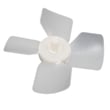
- Refrigerator evaporator fan blade 5308000010 (rubbing, cracked, or out of balance)
- Refrigerator defrost bi-metal thermostat 5303918202 (frost control problems that can lead to fan blockage)
The freezer evaporator fan moves cold air through the freezer and into the fresh food section. When airflow drops, temperatures rise, frost builds faster, and ice production becomes slow or stops.
Last updated: January 2026